Explains Laparoscopic Surgeon Dr Amita Jain
The gallbladder, a small pear-shaped organ located beneath the liver, plays a crucial role in our digestive system. It stores bile produced by the liver. When required, it releases bile through ducts into the small intestine, aiding fat digestion in meals. Sometimes gallstones can form due to excessive accumulation of bile salts, cholesterol, and bilirubin often leading to gallbladder removal.
A gallbladder removal or cholecystectomy is usually performed for this reason. While this procedure is common and often alleviates painful symptoms, it can bring about changes in digestion that individuals should be aware of. India’s top laparoscopic surgeon for gallbladder Dr Amita Jain delves deep into the topic.
What is the Role of Gall Bladder in Digestion?
Dr. Jain explains when we consume fatty foods, our gallbladder releases bile into the small intestine. Bile helps emulsify fats, breaking them down into smaller particles that enzymes can easily digest. This process aids the body in absorbing essential nutrients from fats.
Digestive Changes Post-Gallbladder Removal
After the gallbladder removal, bile is no longer stored and released in the same way. Instead, it flows directly from the liver into the small intestine through bile ducts. While the body can still digest fats, the absence of a gallbladder can lead to adjustments in digestion:
Fat Digestion
Some individuals might experience difficulty digesting fatty foods initially. Without the gallbladder’s concentrated release of bile, the process of breaking down fats might be less efficient.
Postcholecystectomy Diarrhoea
After the gallbladder removal, some people may face recurring diarrhea, termed post-cholecystectomy diarrhea. This occurs due to unregulated bile flow into the small intestine due to the absence of the gall bladder, causing frequent watery stools. However, this issue gradually improves over time.
Sphincter of Oddi Dysfunction
Sometimes, patients experience continuous upper abdominal pain following gallbladder removal. This is known as the Sphincter of Oddi dysfunction (SOD), a functional gastrointestinal disorder, that occurs when the sphincter of Oddi valve present in the small intestine doesn’t relax properly, causing pain lasting over 30 minutes that may extend to the back or shoulder.
This prevents the bile and pancreatic juices from entering the small intestine. Treatment involves medication or endoscopic retrograde cholangiopancreatography (ERCP).
Constipation
Some patients may even experience temporary constipation due to the effect of the pain medications taken post-cholecystectomy.
Stone stuck in the Bile Duct
After gallbladder surgery, a gallstone might stay in the bile duct, causing bile flow blockage to the small intestine. This causes post-surgery symptoms like pain, fever, nausea, vomiting, bloating, and jaundice. Additional treatment may be required to eliminate these retained bile duct gallstones.
Dietary Changes
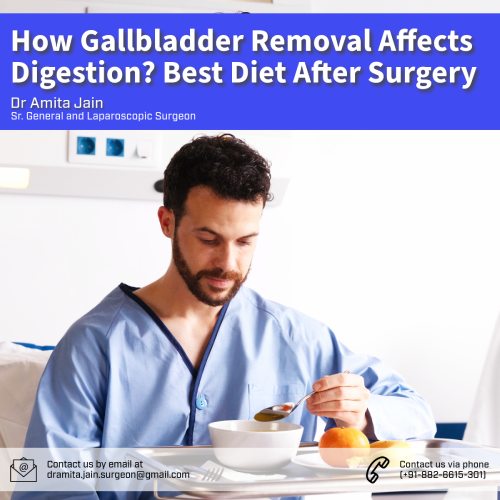
- Avoid high-fat, fried, and greasy foods for at least a week after surgery. Instead, opt for low-fat foods or fat-free foods.
- Avoid foods like beans, broccoli, and milk that cause bloating.
- Eat small frequent meals during the day.
- Consume low-fat dairy products like skimmed milk or low-fat yogurt.
- Increase your fiber intake slowly to aid your digestion process. Add soluble fibers like oats and barley to your diet.
- Gradually reduce caffeine intake to ease stomach acid production, bloating, and pain.
While adjusting to these changes might require some patience and dietary modifications, many individuals continue to enjoy a healthy and satisfying diet after the procedure. Hence, it is advisable to consult your doctor for your optimal digestive well-being.
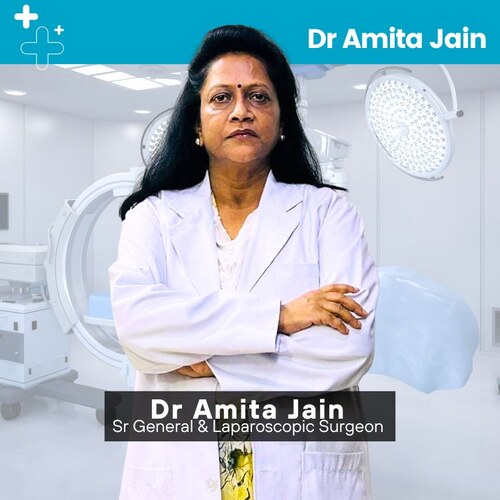
Dr Amita Jain, one of the most experienced General and Laparoscopic Surgeons in Delhi, is widely recognised for her expertise in hernia, piles, gallbladder, fissure, and fistula surgeries. With an outstanding career spanning over 29 years, Dr Amita Jain has earned her place among the top General and Laparoscopic surgeons in Delhi and India, known for her precision, compassion, and consistent surgical excellence. She was the Professor of Surgery at the Army College of Medical Sciences and Base Hospital, Delhi Cantt. In 1994, she was commissioned as a surgeon under the United Nations Mission in Congo.
Dr Amita Jain currently serves as the Head of Department, Laparoscopic and Trauma Surgery at Artemis Lite Hospital (Delhi), Senior General and Laparoscopic Surgeon at Rosewalk – Luxury Maternity Hospital in Delhi and Rainbow Children Hospitals (at Malviya Nagar and Panchsheel Park, New Delhi)
Dr Amita Jain has successfully performed a wide range of complex general surgeries, including both open and minimally invasive procedures, with a strong focus on trauma care, onco-surgical techniques, and reconstructive surgeries. Her medical specialisation includes – Gallbladder surgeries, appendix removal surgeries, hernia repair surgeries, Pilonidal Sinus treatments, varicose vein and piles surgeries, fistula surgeries and fissure surgeries.
Dr Amita Jain has also authored some of the key medical journals and publications, like ResearchGate, IJSR
Note: the articles are written with Dr Amita Jain’s professional insights and referring to her medical publications.