Advanced Minimally Invasive Fistula Treatment and Surgery in Delhi
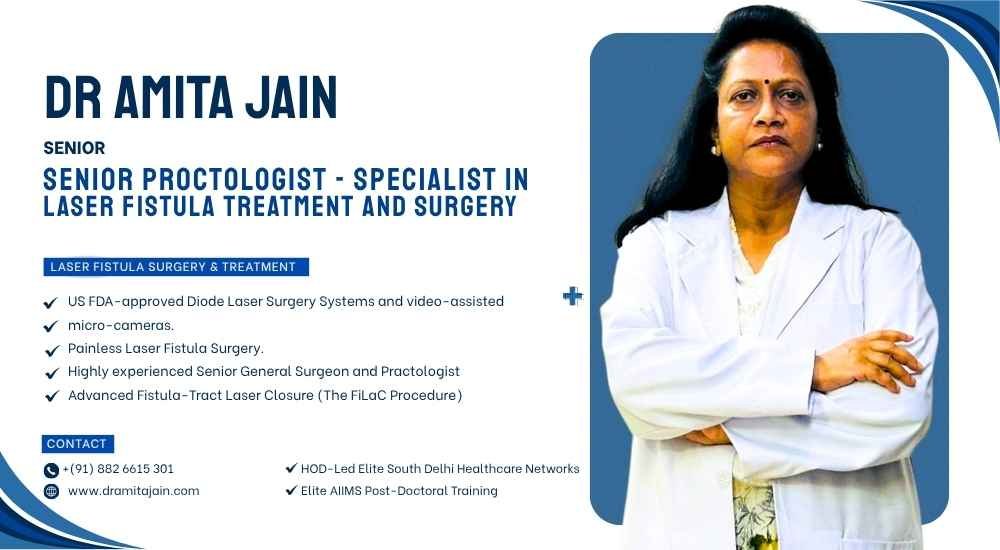
Meet Dr Amita Jain – Expert Care, Muscle-Preserving Laser Procedures, and Lasting Relief from Complex Tracks by a Leading Senior Proctologist & Senior General Surgeon
"With over 29 years of surgical experience—including my time as a frontline military surgeon—I am committed to providing honest, patient-first care. My goal is to offer you the most advanced, muscle-preserving treatments that ensure a highly successful, clean, and pain-free recovery. Because a fistula is a structural tunnel, it cannot heal on its own or through medications. We carefully map your unique track anatomy, advising a precise, non-cutting or minimally invasive procedure only to securely close the track while completely safeguarding your natural bowel control."
Dr Amita Jain, Sr General, Proctologist and Specialist Laser Fistula Surgeon in Delhi and India
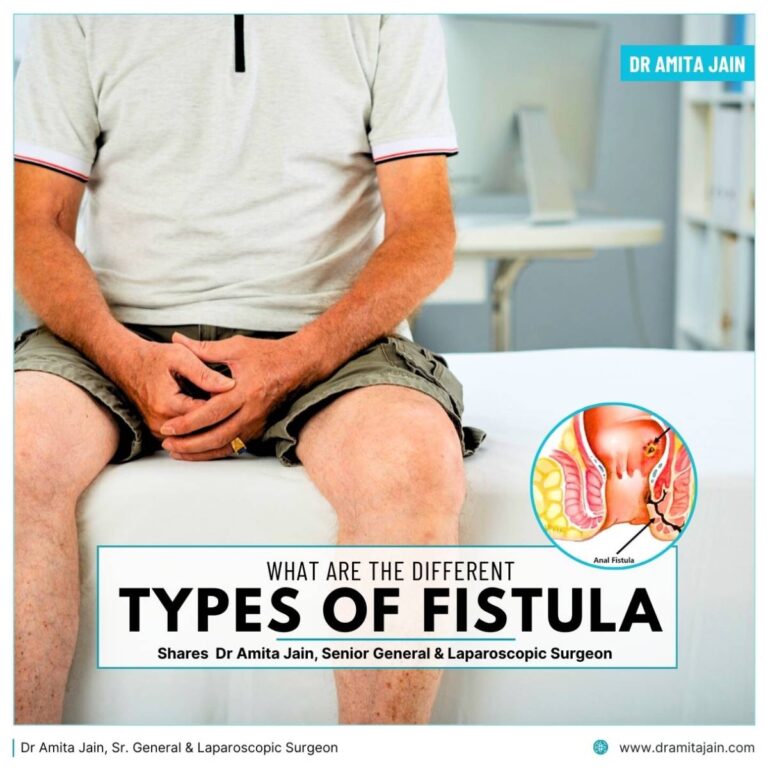
A fistula is an abnormal, tunnel-like track that connects an infected gland deep inside the lower passage to an external opening on the skin surrounding the area. This condition typically develops after a deep infection or fluid collection fails to heal completely. A fistula causes chronic discomfort, localized swelling, persistent throbbing pain, and a continuous, foul-smelling discharge of fluid, or blood that stains clothing and severely impacts daily lifestyle.

Dr Amita Jain Senior Proctologist and Senior General Surgeon for Fistula Treatment?
Unlike early-stage swellings, every type of fistula requires a surgical intervention or clinical procedure to heal completely. Because a fistula is a physical tunnel running through muscle, antibiotics can only temporarily suppress an active infection, but they cannot close the tract.
The primary classification depends entirely on how the track travels through your internal and external sphincter control muscles (the rings responsible for bowel control). Knowing your specific type dictates whether you can receive a quick, straightforward cure or if you require an advanced, multi-stage muscle-preserving approach.
Intersphincteric Fistula Surgery
What it means: The tunnel runs strictly in the space between the internal and external muscle layers. It stays very low and close to the lower opening, completely bypassing the main outer control muscle. This is the most common type.
Is surgery needed? Yes. A procedure is required to close the tract permanently.
Surgical Approach: Because it does not involve the critical outer control muscles, it is the easiest to treat. Dr Amita Jain can perform a standard Fistulotomy (laying the tunnel open so it heals cleanly from the inside out) or utilize advanced Laser Fistula Closure to collapse the track with zero open wounds.
Transsphincteric Fistula Surgery
What it means: The tunnel travels directly through both layers of your internal and external control muscles before exiting to the outer skin.
Is surgery needed? Yes. It absolutely requires a surgical procedure to heal.
Surgical Approach: Traditional open cutting is strictly avoided for high transsphincteric tracks. Slicing through these control muscles with a knife poses an exceptionally high risk of permanent muscle weakness. Dr Amita Jain utilizes specialized muscle-preserving surgeries like Laser Treatment (FiLaC) or the LIFT procedure to isolate and tie off the tunnel while leaving the control muscles completely intact.
Suprasphincteric Fistula Surgery
What it means: This is a highly complex, high-level track. The tunnel extends upward, loops completely over the top of the entire control muscle apparatus, and then tracks back down to meet the outer skin.
Is surgery needed? Yes. Advanced surgical management is mandatory to clear the deep track.
Surgical Approach: Traditional cutting or unroofing is completely impossible here because it would destroy your entire bowel control mechanism. Dr Amita Jain manages these cases using a multi-stage approach. Treatment begins with placing a non-cutting Draining Seton (a medical thread) to continuously clear out hidden infection, followed weeks later by a modern laser sealing or tissue flap procedure once the track matures safely.
Extrasphincteric Fistula Surgery
What it means: This is the rarest and most complicated type of fistula. The tunnel completely bypasses the control muscle complex entirely. It starts high up inside the lower bowel or pelvic cavity—often triggered by deep pelvic infections or inflammatory bowel conditions—and tracks straight down to the outer skin.
Is surgery needed? Yes. It requires highly specialized, comprehensive surgical intervention.
Surgical Approach: Standard cutting will not work because the root of the problem is inside the pelvis or upper passage. Dr Amita Jain treats this by first performing a customized pelvic or abdominal procedure to fix the primary disease source high inside the body, ensuring the external drainage track can finally close permanently.

Types of Modern Fistula Surgeries Offered by Dr Amita Jain
When managing fistulas, Senior General Surgeon Dr Amita Jain utilizes state-of-the-art, minimally invasive surgical options designed to maximize cure rates while completely eliminating the risk of muscle damage:
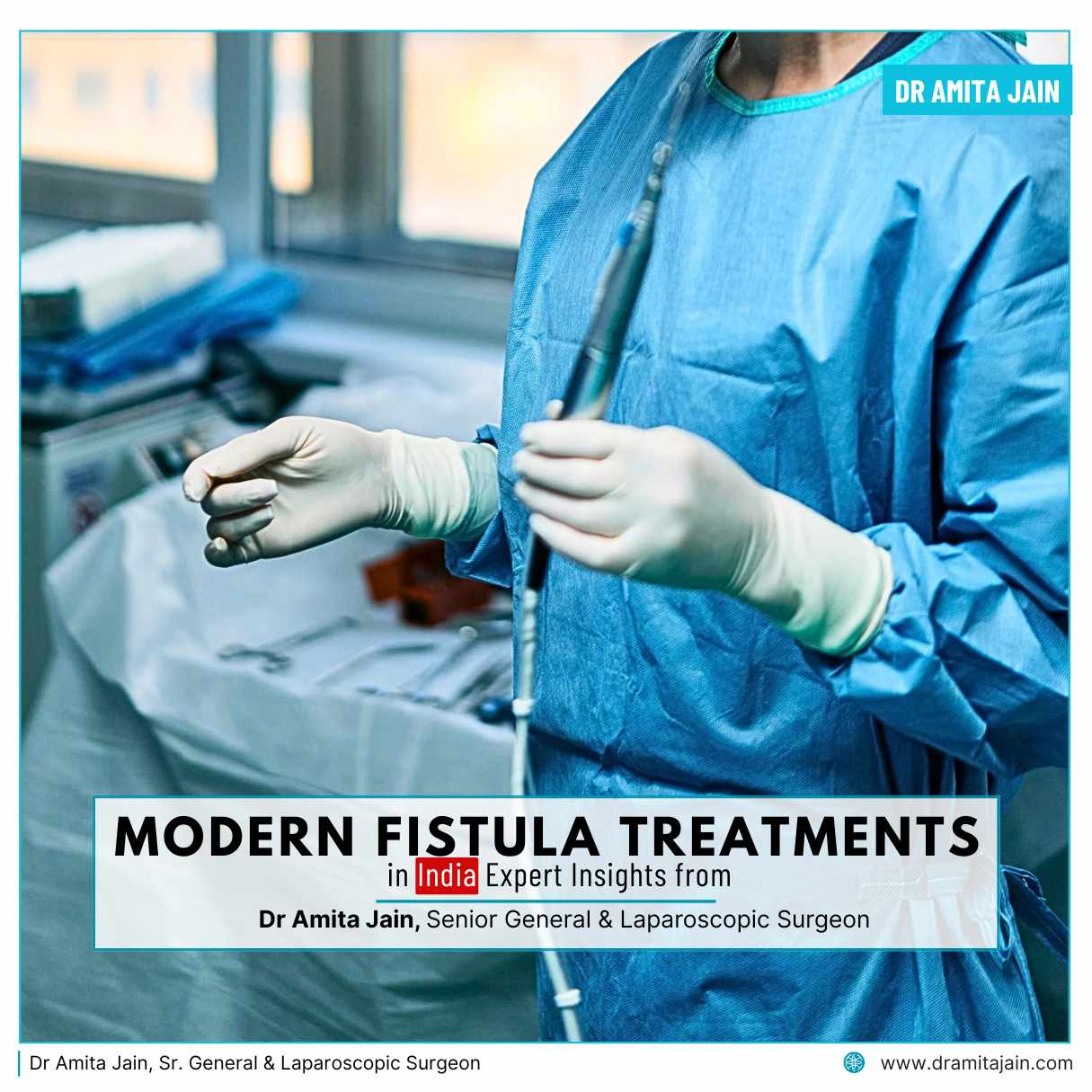
- Fistula Laser Closure (FiLaC): This is a highly advanced, non-cutting technique. Dr Jain inserts a flexible radial laser fiber directly into the mapped fistula tunnel. The laser delivers precise thermal energy that destroys the infected lining and collapses the tract shut from the inside out. This procedure involves no major incisions, no painful open wounds, minimal downtime, and zero damage to the control muscles.
- LIFT Procedure (Ligation of Intersphincteric Fistula Tract): An exceptionally elegant, muscle-preserving surgery best suited for complex transsphincteric tracks. Dr Jain makes a tiny incision in the safe gap between the muscle layers, locates the fistula tunnel, ties it shut with fine stitches on both ends, and safely removes the infected core tissue without touching any control muscle fibers.
- Video-Assisted Anal Fistula Treatment (VAAFT): For complex or recurring tracks, a specialized endoscope equipped with a high-definition micro-camera is guided through the fistula. This allows Dr Jain to view the internal tract and hidden branching tunnels clearly on a screen, ensuring every micro-pocket of infection is fully cleaned and sealed.
- Medicated Draining Seton Placement: For highly inflamed, complex, or fluid-filled tracks, a thin, flexible medical thread is kept inside the tunnel. This acts as a safe drain, preventing new painful swellings from forming and allowing the tissue to thicken and mature safely before a definitive laser closure is performed.
Fistula Treatments Offered By Dr Amita Jain
Clinic Network : Currently serving as the Senior General, Laparoscopic, and Laser Proctology Surgeon at:
- Fortis C-Doc Hospital : OPD, B-16, Nehru Place Flyover, opp. Devika Tower, Chirag Enclave, Greater Kailash, New Delhi, Delhi 110048
- Rosewalk Luxury Maternity Hospital : OPD, N-88, Block N, Panchsheel Park North, Panchsheel Park, New Delhi, Delhi 110017.
- Madhukar Rainbow Children's Hospital : OPD, FC-29 5, Geetanjali Marg, near Malviya Nagar, Block A, Shivalik Colony, Malviya Nagar, New Delhi, Delhi 110017
- Daffodils By Artemis Super Speciality Hospital: OPD, F-44, Block F, East of Kailash, New Delhi - 110065.
Clinical Classification: Mapping the Path to Recovery
In proctology, the location of the fistula track relative to the sphincter muscles determines the surgical strategy. Dr Jain utilizes this precise classification to ensure the highest success rates:
Swipe left to view full table ↔
| Fistula Classification |
Anatomical Complexity |
Dr Amita Jain’s Surgical Strategy |
Recovery Impact |
| Intersphincteric |
Track stays between the internal and external muscles. |
FiLaC (Laser) or Simple Fistulotomy. |
Fastest: Minimal tissue involvement; Day-care. |
| Transsphincteric |
Track crosses both internal and external muscles. |
VAAFT or LIFT to protect muscle fibers. |
Precision: Focused on 100% bowel control preservation. |
| Suprasphincteric |
Track loops over the top of the sphincter muscles. |
Advanced Laser Sealing with track curettage. |
High Complexity: Managed with trauma-grade precision. |
| Extrasphincteric |
Track starts in the rectum/colon and bypasses sphincters. |
Complex Reconstruction or Flap procedures. |
Specialized: Requires AIIMS-level surgical expertise. |
Recovery Timeline: Laser vs. Traditional Surgery
Google rewards clear data that helps patients make informed decisions:
| Feature |
Laser Fistula Treatment (FiLaC) |
Traditional Open Surgery |
| Hospital Stay |
Day-care (Same day) |
2 to 4 Days |
| Pain Level |
Minimal / Painless |
Moderate to High |
| Bowel Control |
100% Muscle Preservation |
Risk of Incontinence |
| Return to Work |
24 to 48 Hours |
2 to 3 Weeks |
Do not let chronic pain or embarrassing discharge alter your daily life. Get an accurate anatomical mapping and a customized, muscle-preserving treatment plan today from one of Delhi's top senior specialists. You can call or text via WhatsApp directly to connect with our care coordinator.
- Healthcare Networks: South Delhi (Fortis C-DOC Hospital | Rosewalk Hospital | Rainbow Children’s Hospital | Daffodils by Artemis Hospital)
- Call to Book Now: +91 8826615301
- WhatsApp for Quick Scheduling: Chat on WhatsApp
Consult Dr Amita Jain
Frequently Asked Questions
Why do fistulas form in the lower passage?
A fistula typically starts from a small gland inside the lower passage that becomes blocked and infected, forming a collection of pus. If this fluid drains out but the tunnel it created does not heal, it leaves behind a permanent, open track connecting the inner gland to the outer skin.
Can a fistula heal completely with antibiotics alone?
No, antibiotics cannot close a fistula track. While antibiotics are highly effective at controlling an active bacterial infection or reducing surrounding swelling, they cannot physically melt away or seal the structural tunnel. A proper surgical or laser procedure is mandatory to close it permanently.
What happens if a fistula is left untreated for a long time?
Leaving a fistula untreated can cause a simple tunnel to become highly complex. Over time, the trapped infection can create multiple branching tracts, form recurrent painful swellings, and cause chronic inflammation that gradually weakens the surrounding control muscles.
Is a laser fistula procedure completely safe for bowel control?
Yes, advanced laser fistula closure (FiLaC) is specifically designed to maximize safety for bowel control. Because the procedure seals the tunnel from the inside out using precise heat energy, it completely avoids cutting or slicing the control muscles, preserving your natural functions.
How soon can I return to work after laser fistula surgery?
Because laser surgery involves no major cutting or large open wounds, recovery is very fast. Most patients experience very little discomfort, are walking comfortably within a few hours of the procedure, and can safely return to light office work and daily routines within 24 to 48 hours.