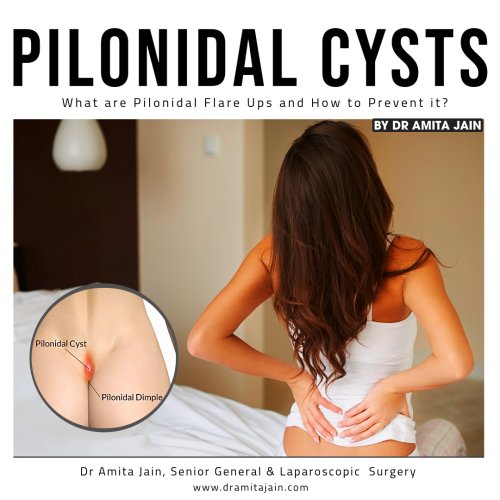
Pilonidal Sinus Treatment in Delhi by Leading Senior Proctologist & Senior General Surgeon
Dr Amita Jain, MBBS, MS (General Surgery, Gold Medalist), Fellowship (AIIMS) | Ex-Professor of Surgery | 30+ Years of Clinical Excellence | Specialist in Minimally Invasive Laser (SiLaC) & Endoscopic (EPSiT) Pilonidal Sinus Surgery
Recognized as one of India's foremost authorities in minimally invasive proctology and sacrococcygeal tract repair, Dr Amita Jain brings more than 30 years of elite surgical leadership to the modern management of complex pilonidal disease in Delhi NCR.
With a distinguished track record encompassing over 1,00,000 completed surgical procedures, her clinical foundations were forged under extreme pressure as the first woman trauma surgeon commissioned in the Indian Army, serving with distinction through the Kargil War and international deployment under the United Nations flag in the Congo.
Today, alongside her academic role as Professor of Surgery at Rama Medical College Hospital and Research Centre (Delhi-NCR), Dr Jain directs specialized daycare surgical services at Fortis C-DOC, Rosewalk Hospital, Rainbow Children’s Hospital, and Daffodils by Artemis, pioneering scar-minimizing laser (SiLaC) and video-endoscopic (EPSiT) treatments that eliminate painful open wound dressings and prevent disease recurrence.
Quick Summary for Patients
Surgeon: Dr Amita Jain
MBBS, MS (General Surgery, Gold Medalist), AIIMS Post-Doctoral Fellow, Ex-Indian Army Surgeon (30+ Years Surgical Experience).
Education & Credentials:
- MBBS: NSCB Govt. Medical College, Jabalpur (MP)
- MS (General Surgery – Gold Medalist): NSCB Govt. Medical College, Jabalpur (MP)
- Fellowship: Post-Doctoral Fellow, All India Institute of Medical Sciences (AIIMS, New Delhi)
- Medical Registration Number: 10883
Academic Appointments:
Care Model
Advanced Laser Track Ablation (SiLaC), Video-Assisted Endoscopic Ablation (EPSiT), Flap Reconstruction for Recurrent Cavities (Limberg / Karydakis Flap), No Painful Daily Gauze Packings, Painless Daycare Anesthesia, and Rapid 24–48 Hour Recovery.
Procedures Offered
Laser Pilonidal Sinus Treatment (SiLaC), Endoscopic Pilonidal Sinus Treatment (EPSiT), Emergency Drainage of Acute Natal Cleft Abscess, Flap Transposition for Recurrent / Complex Sinuses, Pit-Picking (Bascom Procedure), and Post-Op Permanent Laser Hair Reduction Coordination.
Pilonidal Disease Explained: Identifying Your Symptoms & Best Keyhole Solutions
Simplified Patient Guide: Pilonidal Sinus Stages, Symptoms & Treatment
| Condition & Clinical Stage |
Main Symptoms & Signs |
Recommended Surgical Approach |
Recovery & Sitting Timeline |
Acute Pilonidal Abscess
(Sudden Emergency) |
Severe throbbing pain, red inflamed lump near tailbone, inability to sit, fever |
Emergency Micro-Incision Drainage
Immediate pus evacuation under local numbing; relieves agony instantly
|
Immediate Relief
Back to desk work in 24–48 hrs
|
Chronic Pilonidal Sinus
(Single / Double Pits) |
Recurrent pus/bloody discharge, staining on innerwear, persistent itch or mild tailbone ache |
Laser Ablation (SiLaC) / EPSiT
High-energy radial laser or micro-endoscope vaporizes tract and clears ingrown hair without open wounds
|
Daycare (Same day home)
Comfortable sitting in 24 hrs; work in 2 days
|
| Complex Multi-Branched Sinus |
Multiple sinus openings draining fluid across the buttock cleft with deep tissue fibrosis |
Video-Assisted EPSiT + Track Sealing
Camera-guided clearance of all branching secondary tracts followed by radial laser coagulation
|
Daycare to 24 Hours
Resume routine in 3–4 days
|
Recurrent Pilonidal Sinus
(Failed Past Surgery) |
Sinus reopens after earlier open surgery; non-healing wound in the midline cleft |
Asymmetric Flap Reconstruction
Karydakis or Limberg flap shifts scar away from the midline, flattening the natal cleft
|
24 to 48 Hours
Normal sitting within 7–10 days
|
| Early / Asymptomatic Natal Pit |
Tiny pinhole openings noticed near the tailbone; no active infection yet |
Conservative Management / Pit-Picking
Meticulous local hygiene, follicular extraction, and prophylactic laser hair reduction
|
Outpatient Clinic Care
Zero downtime
|

Clinical Insight from Dr Amita Jain
"Pilonidal sinus disease is not primarily an infection of the bone or spine; it is an acquired condition where friction, deep natal cleft anatomy, and loose hair follicles create a foreign-body tract. The traditional surgical approach—cutting out a massive hole and leaving it to heal over months—causes immense mental and physical trauma. With modern minimally invasive laser (SiLaC) and endoscopic (EPSiT) technologies, we clean the entire tract from the inside and seal it with targeted energy. This preserves healthy tissue, eliminates painful wound packings, drops recurrence down to negligible levels, and allows patients to sit comfortably within 24 hours."
- Dr Amita Jain, Senior General, Proctologist & Laparoscopic Surgeon at Fortis C-DOC Hospital, Rosewalk Hospital, Rainbow Children’s Hospital, and Daffodils by Artemis Hospital.
How Senior Proctologist Dr Amita Jain Treats Pilonidal Sinus: The Advanced Laser & Endoscopic Protocol?
A proctologist specializes in anorectal and sacrococcygeal tract pathologies. Rather than cutting out large, painful craters via outdated wide excisions, Senior Proctologist Dr Amita Jain treats pilonidal sinus disease using a tissue-preserving, closed-cavity approach:
Endoscopic Clearance (EPSiT)
A 3 mm micro-camera enters the sinus pit to locate and mechanically extract trapped hair nests and deep debris under direct monitor magnification.
Radial Laser Track Obliteration (SiLaC)
A 360-degree radial diode laser fiber delivers controlled thermal energy to sterilize, denature, and seal the epithelialized sinus walls from the inside out.
Anatomical Cleft Modification (for Recurrent Cases)
Advanced off-midline flap mobilization (Limberg/Karydakis) to flatten the high-friction midline furrow, eliminating the mechanical root cause of relapse.
This specialized proctology protocol eliminates painful open wound packings, reduces recurrence rates to under 2%, and allows patients to sit comfortably and return to work within 24 to 48 hours.
Why Patients Choose Dr Amita Jain for Pilonidal Sinus Treatment in Delhi?
Managing a pilonidal sinus requires specialized clinical judgment to stop the cycle of painful recurrences:
Pioneer in Modern Laser (SiLaC) & EPSiT Techniques
Dr Jain avoids large, mutilating open excisions whenever possible. By deploying micro-endoscopic cameras and radial laser energy, infected tracts and trapped hair nests are eliminated through 2 mm to 3 mm entry ports.
Elimination of Painful Daily Wound Packings
Traditional wide surgery leaves an open crater requiring agonizing daily gauze changes for 8 to 12 weeks. Dr Jain’s laser and flap techniques eliminate open craters, ensuring clean, closed healing.
Army Trauma Discipline & Tissue Preservation
Her background as an Indian Army surgeon ensures disciplined, micro-surgical handling that protects sensitive sacrococcygeal tissues and minimizes scarring.
Flap Expertise for Complex / Recurrent Cases
When previous open surgeries have failed elsewhere, Dr Jain executes advanced off-midline flap repairs (Limberg / Karydakis flaps) that flatten the deep cleft and permanently prevent friction-induced recurrence.
Holistic Protocol to Prevent Relapse
Complete cure involves treating both the tract and the root cause. Her clinical care includes coordinated medical guidance for post-procedure laser hair reduction to achieve long-term relapse prevention.
In-Depth Natal Cleft Dynamic Assessment
Proctologists understand that pilonidal disease is an acquired anatomical condition driven by negative suction pressure in the natal cleft. Dr. Jain evaluates cleft depth, skin thickness, and hair follicle patterns before selecting an intervention.
Laser Proctology Precision (SiLaC & EPSiT)
Dr. Jain preserves intact cutaneous bridges. Energy is focused exclusively on the diseased tract lining, ensuring zero damage to adjacent muscle or healthy gluteal fat.
No Painful Gauze Packing
Unlike traditional wide excision that leaves a cavernous open wound needing daily packing for 8–12 weeks, Dr. Jain’s proctological treatments are stitchless or closed, requiring only a tiny protective dressing for 1–2 days.
Integrated Relapse Prevention
Beyond surgical closure, her proctology protocol includes long-term cleft hygiene guidance and coordinated sacral laser hair epilation to prevent fresh loose hairs from re-penetrating the skin.

Comprehensive Categorization & Treatment Modalities
Dr Amita Jain organizes pilonidal treatments according to anatomical depth, tract branching, and recurrence history:
1. Minimally Invasive Laser Surgery (SiLaC – Sinus Laser Closure)
Ideal for uncomplicated, single or multi-pit chronic sinuses.
- A specialized 360-degree radial diode laser fiber is introduced directly into the sinus tract.
- Thermal laser energy cleanly vaporizes granulation tissue, destroys the epithelial lining, and seals the channel shut without open cutting.
2. Video-Assisted Endoscopic Treatment (EPSiT)
- A high-definition fistuloscope (micro-camera) is guided through the external pit into the pilonidal cavity.
- Provides direct visual control on a monitor to identify hidden hair nests, debris, and internal secondary branches.
- Micro-forceps extract all trapped hairs, followed by electro-cautery or laser ablation of the cavity wall under continuous saline irrigation.
3. Asymmetric Cleft-Lifting & Flap Reconstruction (For Recurrent Cases)
Indicated for large, chronic cavities or cases where prior traditional surgeries failed.
- Karydakis Flap / Limberg Transposition: Resects scarred midline tissue and mobilizes a well-vascularized skin flap, moving the scar laterally away from the high-sweat, high-friction midline furrow.
- Flattening the natal cleft eliminates the mechanical suction effect that draws loose hair into the skin.
4. Acute Abscess Management
- Emergency bedside or minor-OT decompression under painless local anesthesia.
- Relieves immediate tension and throbbing pain, clears active pus, and sterilizes the cavity in preparation for definitive laser closure once inflammation subsides.
Comparison: Modern Laser / EPSiT vs. Conventional Wide Open Excision
| Clinical Parameter |
Dr Jain’s Laser (SiLaC) / EPSiT |
Conventional Wide Open Excision |
| Surgical Technique |
Targeted internal track vaporization via 2–3 mm micro-ports |
Wide surgical cutting leaving an open crater |
| Pain Level |
Mild to minimal; controlled with simple oral tablets |
Severe and prolonged; intense pain during daily dressing changes |
| Wound Care & Dressing |
Small water-resistant dressing; zero daily gauze packings |
Agonizing daily open cavity gauze packing for 6 to 12 weeks |
| Hospital Stay |
Daycare (Home in 2 to 4 hours) |
2 to 4 days hospitalization |
| Ability to Sit Comfortably |
Within 24 to 48 Hours |
2 to 4 weeks before sitting without significant discomfort |
| Return to Work / College |
2 to 3 Days |
4 to 8 Weeks of bed rest |
| Recurrence Rate |
Low (< 2–4%) when combined with hair reduction |
High (15% to 30% due to deep midline cleft scarring) |
| Cosmetic Appearance |
Natural natal cleft preserved with near-invisible micro-marks |
Large, distorted, disfiguring scar at the base of the spine |

Warning Signs: When to Seek Immediate Medical Evaluation
Do not attempt to squeeze, burst, or ignore a painful swelling at the base of your tailbone. Consult an experienced surgeon immediately if you experience:
Sudden, Throbbing Pain Above the Buttocks
Difficulty sitting, leaning back, or sleeping comfortably.
Visible Redness & Warmth
A firm, tender lump developing between the buttocks, signaling an acute abscess.
Continuous Foul-Smelling Discharge
Persistent pus, yellow fluid, or blood staining clothes or bedding.
Fever with Chills
A high body temperature accompanied by severe localized pain indicates spreading infection requiring emergency drainage.
Standardized Daycare and Patient Recovery Pathway
Pre-Operative Assessment
Gentle clinical examination to map all active pits and secondary openings. A targeted soft-tissue ultrasound or pelvic MRI is arranged if extensive internal branching is suspected.
Painless Daycare Procedure
Performed under painless short general anesthesia, twilight sedation, or local anesthesia. The hair nests are completely evacuated, and tracts are sealed internally using laser energy.
Immediate Mobilization
Patients wake up pain-free and walk independently within 1 to 2 hours of the procedure.
Swift Return to Routine
Same-day discharge with simple oral antibiotics and mild pain medication. Most patients return to their desk jobs, driving, and normal college routines within 48 to 72 hours without wound dressing hurdles.
Patient Testimonials
★★★★★
"Highly recommended. Dr Amita Jain was consulted for my 80+ year mother. Dr Jain’s was very professional and her diagnoses was accurate . Dr Jain carried out the surgery at Rosewalk Hospital which was successful and my mother’s recovery was quick."
★★★★★
"Dr Amita Jain has been a great blessing to us. She performed my mother's gall bladder surgery, which went remarkably smoothly and without any issues. Initially, she thoroughly explained every detail of the procedure to us, ensuring we fully understood it. After the surgery, my mother was moved to the ward within just 30-40 minutes. Dr. Jain's approach to both pre-operative and post-operative care was outstanding and significantly contributed to my mother's swift recovery. Not only was Dr. Jain highly professional, but she also provided us with warmth and reassurance, making us feel confident about the success of the surgery."
★★★★★
I had 21 mm (2.1 cm) Gallbladder stone. My consulting doctor and surgeon was Col.Doctor Amita Jain. It gives me immense pleasure to share that she not only apprised me about Gallstones reactions on body in a very detailed and simple manner but also helped me to arrive at a decision logically to remove the diseased organ from the body at the earliest. As for most of us, any surgical decisions are tough to take, but Doctor Col. Amita Jain explained me very well and made it very easy for me to finalize. All throughout my journey of treatment she was very cordial, supportive, friendly and most jovial. She gave me immense courage at every step fortifying my mental and physical health. ...
★★★★★
"Thank you mam for kind gesture and complete information helping me to take right decision about my umbilical hernia. Really appreciate your help helping me physically and financially. I am happily on my course to recovery now."
★★★★★
"We recently consulted Dr. Amita Jain for a family member’s Pilonidal sinus surgery. She is extremely knowledgeable, confident, soft-spoken, and compassionate. The surgery went smoothly, and she made sure we were comfortable throughout. Dr. Amita was always responsive on WhatsApp/phone and even called us to check on the patient. Highly recommend her for her expertise and caring nature."
★★★★★
"From the initial consultation to the post-op care, she provided one-on-one attention that made me feel comfortable in every step. Her extensive experience and knowledge in haemorrhoid surgery were evident from the start, reassuring me that I was in safe hands. She took the time to thoroughly explain the procedure and answered all of my questions. She was available and responsive to any concerns or inquiries throughout the journey. I highly recommend Dr Amita Jain for her expertise in the field. I am grateful to Dr and her team. Warm Regards."
Consultation Centers Across South Delhi
- Fortis C-Doc Hospital : OPD, B-16, Nehru Place Flyover, opp. Devika Tower, Chirag Enclave, Greater Kailash, New Delhi, Delhi 110048
- Rosewalk Luxury Maternity Hospital : OPD, N-88, Block N, Panchsheel Park North, Panchsheel Park, New Delhi, Delhi 110017.
- Madhukar Rainbow Children's Hospital : OPD, FC-29 5, Geetanjali Marg, near Malviya Nagar, Block A, Shivalik Colony, Malviya Nagar, New Delhi, Delhi 110017
- Daffodils By Artemis Hospitals: F-44, Block F, East of Kailash, New Delhi, Delhi 110065
- Call to Book Now: +91 8826615301
- WhatsApp for Quick Scheduling: Chat on WhatsApp
Note : Medically Reviewed by Dr. Amita Jain | Senior Surgeon & HOD | Updated November 2026
Frequently Asked Questions (FAQ) on Pilonidal Sinus Treatment, Surgery and Recovery
Can a pilonidal sinus heal on its own or with antibiotics alone?
No. Antibiotics can temporarily reduce acute redness and pain, but they cannot remove the hair nest, dead skin cells, and epithelialized tunnel buried under the skin. Once the antibiotic course finishes, the discharge and swelling will recur. Permanent cure requires definitive closure of the tract via laser (SiLaC), EPSiT, or flap reconstruction.
How painful is laser pilonidal sinus surgery compared to traditional surgery?
Laser pilonidal surgery causes very little discomfort because there is no deep cutting of skin or muscle. Patients experience mild soreness for 24 to 48 hours, easily managed with basic oral tablets. In sharp contrast, traditional open surgery causes significant, continuous pain because a large cavity is left open to be packed with gauze every single day for weeks.
When can I sit normally and return to work or driving after laser treatment?
Most patients sit comfortably to eat and relax within 24 hours of surgery. You can return to desk jobs, light walking, and driving within 2 to 3 days. High-impact sports, swimming, and heavy gym squats can safely resume after 3 to 4 weeks.
Why do pilonidal sinuses come back, and how does Dr Amita Jain prevent recurrence?
Pilonidal sinuses typically return after traditional surgery because the deep, sweaty midline cleft remains untouched, continuing to trap loose hair. Dr Jain minimizes recurrence to less than 2% by:
- Clearing all micro-hair nests using endoscopic camera visualization (EPSiT).
- Sealing the entire tract wall with 360-degree laser energy.
- Performing off-midline flap reconstructions for complex cases to eliminate the deep cleft furrow.
- Recommending post-operative laser hair removal across the sacral region to permanently eliminate loose hair follicles.
Will I need painful daily dressing changes after laser surgery?
No. One of the greatest benefits of laser surgery (SiLaC) and EPSiT is that no deep open cavity is created. A small waterproof protective dressing is placed over the micro-entry points for 24 to 48 hours, after which normal washing and showering are resumed. You will never have to endure painful daily gauze packings.


 Read on Google