A hernia is a common yet often underestimated condition that can range from mildly uncomfortable to life-threatening if not treated on time. While many hernias start small and cause little pain, ignoring certain symptoms can lead to serious complications that require immediate medical attention. Understanding when hernia pain becomes an emergency can help prevent long-term damage and ensure timely treatment explains Dr Amita Jain who is a senior general and laparoscopic surgeon and one of the most experienced hernia surgeon in India.

What is a Hernia?
A hernia occurs when an internal organ or tissue pushes through a weak spot in the surrounding muscle or connective tissue. The most common types include inguinal (groin), umbilical (near the navel), incisional (through a surgical scar), and hiatal (upper stomach). Initially, a hernia may appear as a soft bulge that becomes more noticeable while coughing, bending, or lifting heavy objects.
Most hernias can be managed with surgery, but if the herniated tissue becomes trapped or its blood supply is cut off—a condition known as strangulated hernia—it becomes a medical emergency.
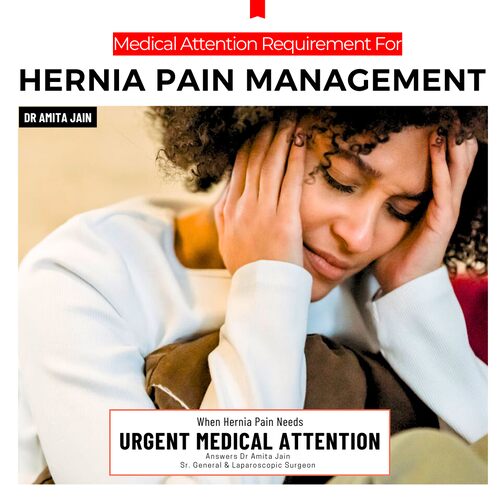
When Hernia Pain Becomes an Emergency?
Hernia pain that suddenly intensifies or is accompanied by other alarming symptoms should never be ignored. If you experience severe or persistent pain, nausea, vomiting, fever, or notice that the hernia bulge has become hard, discolored, or tender, seek immediate medical help. These signs may indicate obstruction or strangulation of the intestine, which can lead to tissue death and life-threatening infection if not treated urgently.
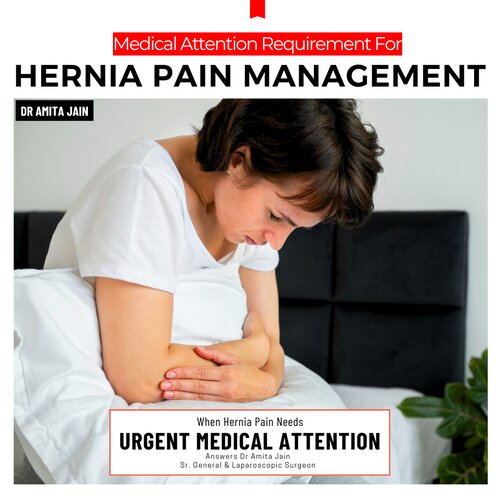
Prompt Diagnosis and Treatment
Early diagnosis can prevent complications and reduce the need for emergency surgery. A physical examination, along with imaging tests like ultrasound or CT scan, helps determine the severity and best treatment approach. Surgical repair is the most effective and permanent solution for most hernias, especially when performed before complications arise.
While mild hernia discomfort can often be managed temporarily, any sudden change in pain intensity, swelling, or associated symptoms demands urgent attention. Timely consultation with a qualified surgeon can make the difference between a routine repair and a medical emergency.
If you suspect a hernia or experience worsening pain, consult Dr. Amita Jain, Delhi’s leading General & Laparoscopic Surgeon, for expert diagnosis and minimally invasive treatment options.

Dr Amita Jain is one of India’s most distinguished and experienced female surgeons and proctologists, known for her unmatched expertise in general, advanced laparoscopic, and laser proctology surgery. With over 30 years of surgical excellence, Dr Amita Jain has built a reputation for precision, compassionate care, and advanced surgical techniques.
Dr Jain has successfully performed a wide range of complex general surgeries, including both open and minimally invasive procedures, with a strong focus on trauma care, onco-surgical techniques, and reconstructive surgeries. Her medical specialisation includes: gallbladder surgeries, appendix removal surgeries, hernia repair surgeries, Pilonidal Sinus treatments, varicose vein and piles surgeries, fistula surgeries and fissure surgeries.
Dr Jain, currently serves as Senior Consultant and Head of Department (General, Laser, Proctology and Laparoscopic Surgeries) across premier medical networks in South Delhi:
Daffodils by Artemis Hospitals: Spring Meadows, East of Kailash, New Delhi. Book Appointment
Fortis C-DOC Hospital: B-16, Chirag Enclave, New Delhi. Book Appointment
Rosewalk Luxury Multi-Specialty & Maternity Hospital: Panchsheel Park, New Delhi. Book Appointment
Rainbow Children’s Hospital: Malviya Nagar, New Delhi. Book Appointment
Learn More about Dr Amita Jain.
Dr Amita Jain has also authored some of the key medical journals and publications, like ResearchGate, IJSR
Note: This article is written and reviewed by Dr Amita Jain, while referring to her medical journals and publications.