Gallbladder stones, also known as gallstones, are a common digestive health issue that many people live with unknowingly. While some stones remain silent and harmless, others can trigger severe pain and serious complications. One of the most important factors doctors consider while deciding treatment is the size of the gallbladder stone. Understanding how stone size relates to symptoms and risk can help you know when to stay calm and when to seek medical attention, says Dr Amita Jain, who is a senior general and laparoscopic surgeon and one of the leading gallstone removal surgeons in Delhi and India.

What Is a Gallbladder Stone?
Gallbladder stones are hardened deposits that form inside the gallbladder, a small pear-shaped organ located beneath the liver. The gallbladder stores bile, a digestive fluid that helps break down fats. When bile contains too much cholesterol, bilirubin, or not enough bile salts, it can crystallise and gradually turn into stones.
Gallstones can vary widely in number and size. Some people may have a single stone, while others develop multiple stones at the same time. Their size can range from tiny grains of sand to stones as large as a golf ball.
Why Gallbladder Stone Size Matters?
The size of a gallstone plays a crucial role in determining symptoms, complications, and treatment. Smaller stones are more likely to move and block bile ducts, while larger stones tend to stay in the gallbladder but may cause chronic inflammation. Doctors often assess stone size using ultrasound or other imaging tests before recommending management options.
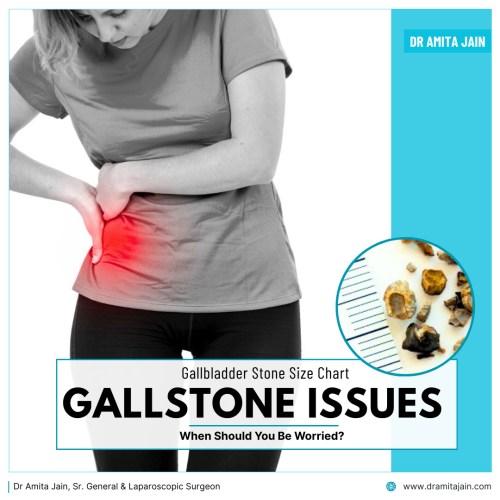
Gallbladder Stone Size Chart and What It Means
Very Small Stones (Less than 5 mm)
These stones are often compared to sand or tiny grains. They may not cause symptoms initially, but they carry a higher risk of slipping into the bile duct. This can lead to serious problems like bile duct blockage, pancreatitis, or jaundice. Even though they are small, they should not be ignored if symptoms appear.
Small Stones (5–10 mm)
Stones in this range may cause intermittent pain, especially after fatty meals. The risk of duct obstruction is still present. If symptoms such as recurring abdominal pain, nausea, or vomiting occur, medical evaluation becomes important.
Medium Stones (10–20 mm)
These stones are more likely to stay inside the gallbladder but can cause gallbladder inflammation (cholecystitis). Pain episodes may become more frequent and intense. Doctors often recommend surgical removal if symptoms are persistent.
Large Stones (More than 20 mm)
Large gallstones usually do not move easily, but they can irritate the gallbladder lining over time. Long-standing large stones are associated with chronic inflammation and, in rare cases, an increased risk of gallbladder cancer. Surgical removal is commonly advised even if symptoms are mild.
Symptoms That Signal a Problem
Regardless of size, gallstones become concerning when they start causing symptoms. Warning signs include sudden pain in the upper right abdomen, pain radiating to the back or right shoulder, nausea, vomiting, bloating, fever, or yellowing of the skin and eyes. These symptoms suggest complications and require prompt medical attention.
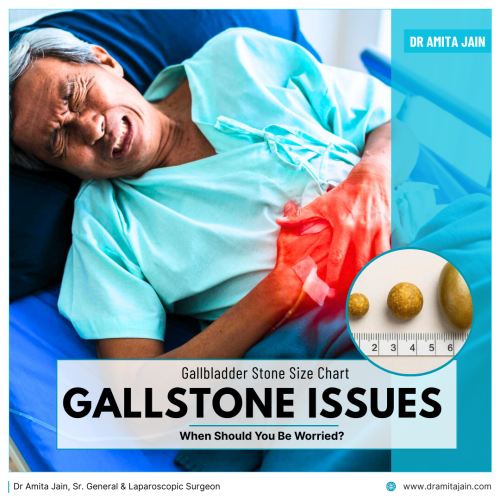
When Should You Be Worried?
You should be concerned if gallstones of any size cause repeated pain or digestive discomfort. Small stones become worrisome when they migrate into bile ducts, while larger stones are of concern due to long-term risks. Asymptomatic stones may only require monitoring, but symptomatic stones usually need active treatment.
Doctors also consider factors such as age, diabetes, pregnancy, and overall health while deciding the best approach. Waiting too long after symptoms appear can increase the risk of infection or emergency surgery.
Gallbladder stone size is an important indicator, but it is not the only factor that determines risk. Even tiny stones can cause serious complications, while large stones may remain silent for years. The key is to pay attention to symptoms and seek medical advice early. Proper evaluation and timely treatment can prevent complications and ensure long-term digestive health.

Dr Amita Jain, one of the most experienced General and Laparoscopic Surgeons in Delhi, is widely recognised for her expertise in hernia, piles, gallbladder, fissure, and fistula surgeries. With an outstanding career spanning over 29 years, Dr Amita Jain has earned her place among the top General and Laparoscopic surgeons in Delhi and India, known for her precision, compassion, and consistent surgical excellence. She was the Professor of Surgery at the Army College of Medical Sciences and Base Hospital, Delhi Cantt. In 1994, she was commissioned as a surgeon under the United Nations Mission in Congo.
Dr Amita Jain currently serves as the Head of Department, Laparoscopic and Trauma Surgery at Artemis Lite Hospital (Delhi), Senior General and Laparoscopic Surgeon at Rosewalk – Luxury Maternity Hospital in Delhi and Rainbow Children Hospitals (at Malviya Nagar and Panchsheel Park, New Delhi)
Dr Amita Jain has successfully performed a wide range of complex general surgeries, including both open and minimally invasive procedures, with a strong focus on trauma care, onco-surgical techniques, and reconstructive surgeries. Her medical specialisation includes – Gallbladder surgeries, appendix removal surgeries, hernia repair surgeries, Pilonidal Sinus treatments, varicose vein and piles surgeries, fistula surgeries and fissure surgeries.
Dr Amita Jain has also authored some of the key medical journals and publications, like ResearchGate, IJSR
Note: the articles are written with Dr Amita Jain’s professional insights and referring to her medical publications.