Summary
- After gallbladder removal, fried foods can be difficult to digest initially, so they should be avoided for a few weeks and reintroduced slowly.
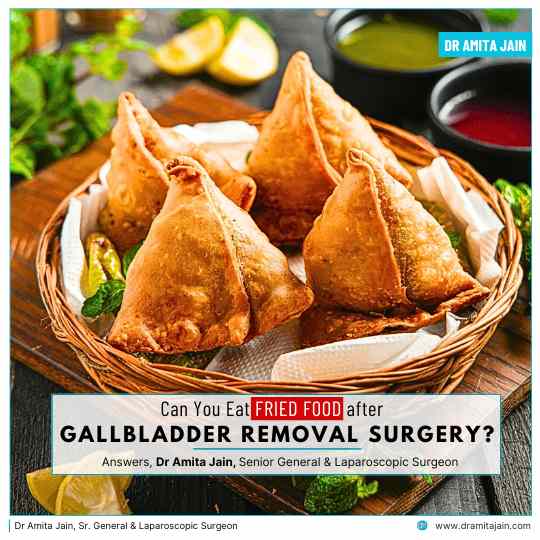
- Indian fried foods like samosas, kachoris, poori, and pakoras can trigger discomfort, so they should be eaten only in moderation and in lighter forms when possible.
- If symptoms like pain, diarrhoea, or nausea occur after eating fried food, it’s important to stop and consult your doctor or surgeon immediately.
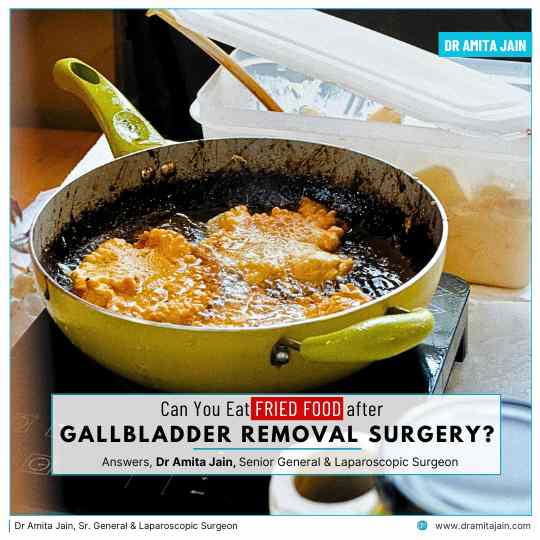
Gallbladder removal surgery, also known as cholecystectomy, changes how your body digests fats. The gallbladder’s job is to store and release bile in response to fatty meals. After it’s removed, bile flows directly from the liver into the intestine in a steady but less concentrated way. Because of this, your body may struggle to process oily and fried foods, especially in the early recovery phase. Knowing how to reintroduce such foods safely is essential, says Dr Amita Jain, a Senior General and Laparoscopic Surgeon and a specialist gallbladder removal surgeon in Delhi and NCR.
Can You Safely Eat Fried Food After Gallbladder Surgery?
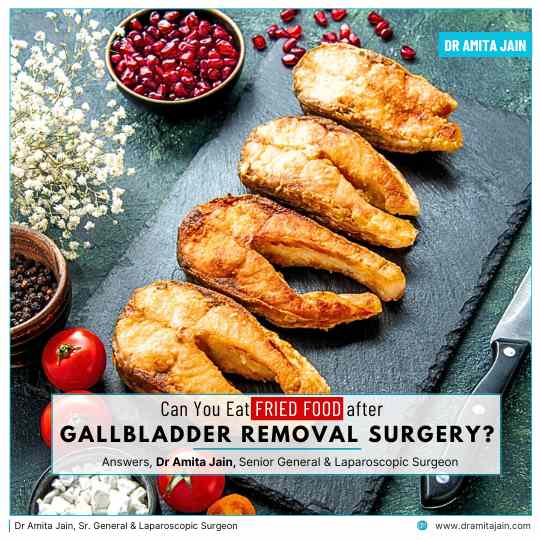
Yes, but not immediately and only in moderation. In the weeks following surgery, your digestive system is still adjusting. Eating fried food too early or in large quantities can lead to bloating, loose motions, nausea, or abdominal discomfort. This is because your body is not yet efficient at breaking down high-fat meals.
Why Can Fried Foods Trigger Discomfort?
Without the gallbladder, bile is no longer released in a controlled burst when you eat fatty food. Instead, it trickles continuously into the intestine. Fried foods require a stronger bile response for proper digestion, and this mismatch can cause indigestion and gut irritation.
“After gallbladder removal, it’s not about giving up fried foods forever—it’s about relearning balance, choosing moderation, and respecting your body’s new way of digestion.” – Dr Amita Jain, Senior General and Laparoscopic Surgeon and a Specailist Gallbladder Removal doctor (Cholecystectomy) in Delhi and India.
When and How to Reintroduce Fried Foods?
It’s generally advised to avoid fried foods completely for at least 4–6 weeks after surgery. During this time, a low-fat diet helps your digestive system stabilise. After that, you can slowly reintroduce fried items in very small portions and observe how your body reacts. Moderation is key—overeating fried food can quickly bring back symptoms.
Indian Fried Foods: What to Watch Out For
Indian fried foods tend to be rich and heavy, making them harder to digest post-surgery. Items like samosas, kachoris, and pakoras are deep-fried and often spicy, which can irritate the digestive tract. Poori and bhature, commonly eaten with curries, combine oil with refined flour, making them particularly heavy.
Snacks such as aloo tikki and bread pakora may also feel too greasy initially. These foods are not forbidden forever, but they should be approached cautiously and eaten occasionally rather than regularly.
Making Fried Foods Easier on Your Stomach
As your body adapts, you can make small changes to enjoy these foods more comfortably. Choosing shallow-fried or air-fried versions of dishes like tikki or pakora reduces oil content. Eating smaller portions and avoiding very spicy or heavily oily preparations can also help. Having such foods during the daytime rather than late at night may improve digestion.
Pay Attention to Warning Signs
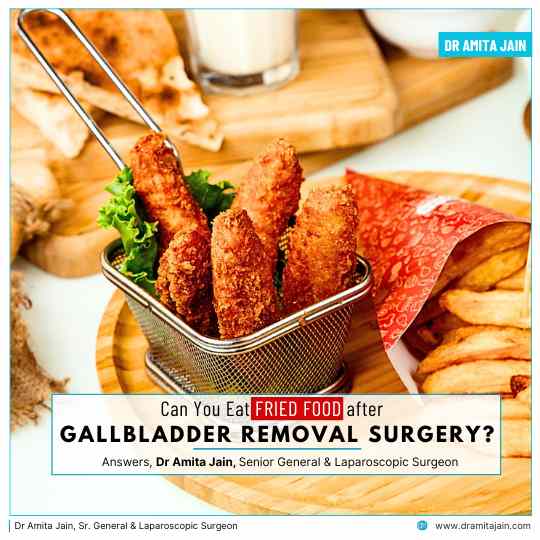
Your body will give clear signals if something isn’t sitting well. If you experience persistent pain, severe diarrhea, vomiting, or unusual discomfort after eating fried food, it’s important not to ignore it. Consult your doctor or surgeon immediately to rule out complications and get proper guidance.
Fried foods can be reintroduced after gallbladder removal, but only in moderation and after giving your body enough time to heal. Start slow, keep portions small, and choose lighter versions when possible. Most importantly, if any problem arises, seek medical advice without delay rather than pushing through discomfort.
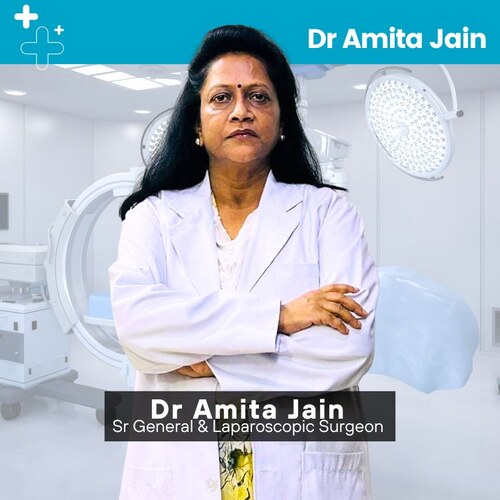
Dr Amita Jain is one of India’s most distinguished and experienced female surgeons and proctologists, known for her unmatched expertise in general, advanced laparoscopic, and laser proctology surgery. With over 30 years of surgical excellence, Dr Amita Jain has built a reputation for precision, compassionate care, and advanced surgical techniques.
Dr Jain has successfully performed a wide range of complex general surgeries, including both open and minimally invasive procedures, with a strong focus on trauma care, onco-surgical techniques, and reconstructive surgeries. Her medical specialisation includes: gallbladder surgeries, appendix removal surgeries, hernia repair surgeries, Pilonidal Sinus treatments, varicose vein and piles surgeries, fistula surgeries and fissure surgeries.
Dr Jain, currently serves as Senior Consultant and Head of Department (General, Laser, Proctology and Laparoscopic Surgeries) across premier medical networks in South Delhi:
Daffodils by Artemis Hospitals: Spring Meadows, East of Kailash, New Delhi. Book Appointment
Fortis C-DOC Hospital: B-16, Chirag Enclave, New Delhi. Book Appointment
Rosewalk Luxury Multi-Specialty & Maternity Hospital: Panchsheel Park, New Delhi. Book Appointment
Rainbow Children’s Hospital: Malviya Nagar, New Delhi. Book Appointment
Learn More about Dr Amita Jain.
Dr Amita Jain has also authored some of the key medical journals and publications, like ResearchGate, IJSR
Note: This article is written and reviewed by Dr Amita Jain, while referring to her medical journals and publications.