Learn More about it from Dr Amita Jain India’s Leading Surgeon for Varicose Veins
In today’s fast-paced life, health and well-being are very important. We strive to maintain a balanced lifestyle, exercise regularly, and eat nutritious foods to keep our bodies in peak condition. However, despite our best efforts, certain health issues can still creep into our lives. Varicose veins are one such concern that often plagues individuals, especially those leading sedentary lives or with a genetic predisposition.
Let us delve deep into the topic as explained by the laparoscopic surgeon for varicose veins Dr. Amita Jain.
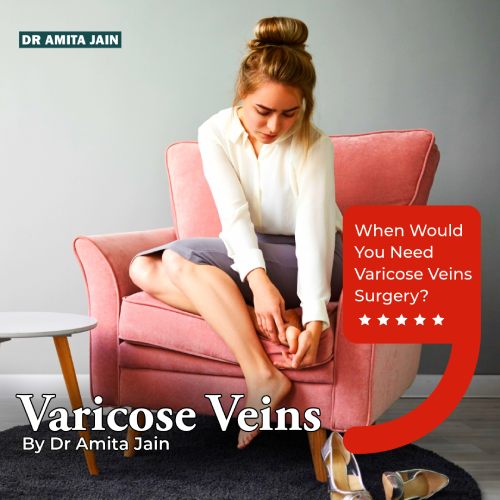
What is a Varicose Vein?
Varicose veins are enlarged, swollen, twisted veins found just under the surface of the skin. These red or bluish-purple-colored veins usually develop on the legs, either on the inside of the leg or behind the knee.
Varicose veins, though not usually severe, can cause discomfort and complications. Some people may find it embarrassing as it is very prominent.
What are the Causes?
Varicose veins typically occur when the one-way valves in the veins become weak or damaged, causing blood to pool in the veins thus leading to their enlargement and twisting. Genetics plays a significant role.
- Age-related wear and tear affect vein valves, causing blood accumulation.
- Women, due to hormonal changes during pregnancy and menopause, are more susceptible.
- Pregnancy elevates pelvic vein pressure, leading to leg varicose veins.
- Obesity increases vein pressure and varicose vein risk.
- Prolonged sitting or standing contributes to varicose vein development.
What are the Symptoms?
The most common symptoms are:
- Visible, bulging veins that are blue or purple in colour
- Aching or throbbing pain in the affected area, often after standing or sitting for extended periods.
- Muscle cramps especially at night
- The affected leg may feel heavy after exercise or while sleeping.
- Itching or a burning sensation around the affected veins
- Appearance of irregular whitish patches at the ankles
What is the diagnosis?
Besides physical examination, ultrasound imaging or venograms are used to diagnose the condition.
When is surgery needed?
- When lifestyle changes like regular exercise, maintaining a healthy weight, wearing compression stockings to improve blood circulation doesn’t help.
- Varicose veins can cause superficial thrombophlebitis, a condition where blood clots form in surface veins, potentially leading to pain and complications.
- Venomous ulcers or skin sores
- When varicose veins lead to skin changes such as inflammation, ulcers, or discoloration, surgery may be necessary to prevent further complications.
- Sometimes veins close to the skin burst causing minor bleeding
- Dermatitis, an itchy rash, potentially causing bleeding or skin ulcers if scratched or irritated.
- Deep Vein Thrombosis (DVT) Risk: If your varicose veins are associated with a higher risk of developing DVT, surgery may be recommended to address the underlying venous insufficiency.
- Cosmetic Concerns: Some individuals opt for surgery for cosmetic reasons to remove unsightly varicose veins.
What are the treatment options?
- High Ligation and Vein Stripping: A traditional surgical method involving anesthesia, tying off, and removing affected veins through small incisions without disrupting leg blood circulation.
- Sclerotherapy: Used for smaller varicose and spider veins, it entails injecting a chemical solution to collapse and fade the affected veins.
- Endovenous Laser Ablation (EVLA) or Radiofrequency Ablation (RFA): Minimally invasive techniques using heat energy to close problematic veins, redirecting blood flow.
- Ambulatory Phlebectomy: Minimally invasive, it removes surface-level varicose veins through small incisions, suitable for smaller veins.
Prevention is always better than cure. So, make sure you look after yourself well so as to avoid any surgery. However, it is always advisable to consult a doctor in case you experience any symptoms of varicose veins.
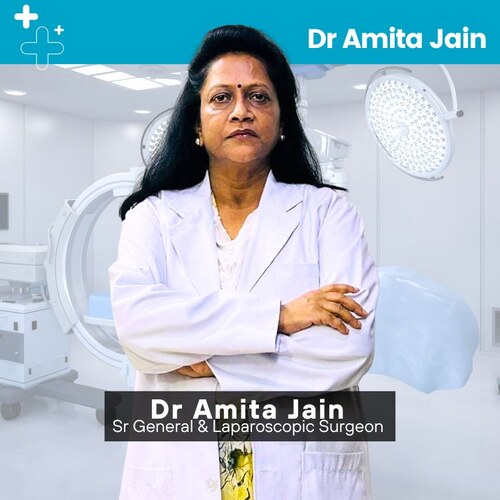
Dr Amita Jain, one of the most experienced General and Laparoscopic Surgeons in Delhi, is widely recognised for her expertise in hernia, piles, gallbladder, fissure, and fistula surgeries. With an outstanding career spanning over 29 years, Dr Amita Jain has earned her place among the top General and Laparoscopic surgeons in Delhi and India, known for her precision, compassion, and consistent surgical excellence. She was the Professor of Surgery at the Army College of Medical Sciences and Base Hospital, Delhi Cantt. In 1994, she was commissioned as a surgeon under the United Nations Mission in Congo.
Dr Amita Jain currently serves as the Head of Department, Laparoscopic and Trauma Surgery at Artemis Lite Hospital (Delhi), Senior General and Laparoscopic Surgeon at Rosewalk – Luxury Maternity Hospital in Delhi and Rainbow Children Hospitals (at Malviya Nagar and Panchsheel Park, New Delhi)
Dr Amita Jain has successfully performed a wide range of complex general surgeries, including both open and minimally invasive procedures, with a strong focus on trauma care, onco-surgical techniques, and reconstructive surgeries. Her medical specialisation includes – Gallbladder surgeries, appendix removal surgeries, hernia repair surgeries, Pilonidal Sinus treatments, varicose vein and piles surgeries, fistula surgeries and fissure surgeries.
Dr Amita Jain has also authored some of the key medical journals and publications, like ResearchGate, IJSR
Note: the articles are written with Dr Amita Jain’s professional insights and referring to her medical publications.