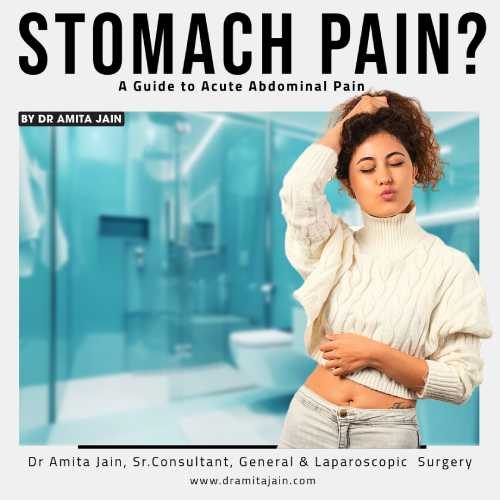
In the fast-paced life of modern day, prioritizing health often takes a backseat. However, sudden abdominal pain, often dismissed as “stomachaches,” can originate from various organs or areas including the digestive system, abdominal wall, chest, pelvis, or back. Abdominal pain can be of various types.
Today, we will learn about acute abdominal pain, from Dr Amita Jain, a top laparoscopic and abdomen surgeon in India.
What is acute abdomen pain?
Abdominal pain can occur anywhere between the ribs and the pelvis and is often not a cause for concern, as most issues can be easily diagnosed and treated by a doctor.
However, acute abdomen refers to a sudden, severe abdominal pain often accompanied by nausea or vomiting, and most patients with this condition appear severely ill requiring immediate medical attention.
What are the causes?
An acute abdomen can be caused by various conditions, including acute appendicitis, cholecystitis, pancreatitis, and diverticulitis. Acute peritonitis, resulting from the rupture of a hollow viscus or as a complication of inflammatory bowel disease or malignancy, is another cause.
Vascular events such as mesenteric ischemia and ruptured abdominal aortic aneurysm also lead to acute abdominal pain. Obstetric and gynecologic causes include ruptured ectopic pregnancy and ovarian torsion, while urologic conditions like ureteral colic and pyelonephritis can present similarly.
Disorders outside the abdomen, such as heart attack, pneumonia, and testicular torsion, can cause abdominal pain. Less common causes include diabetic ketoacidosis, porphyria, sickle cell disease, and certain bites and poisons, such as black widow spider bites, heavy metal or methanol poisoning, and scorpion stings.
Necrotizing enterocolitis may develop in newborns, with midgut volvulus peaking at 40% in the first week, 50% in the first month, and 75% in the first year. Intussusception occurs commonly at 9-24 months, while appendicitis is a prevalent cause of acute pediatric abdominal pain.
What are the symptoms of acute abdominal pain?
Some symptoms may indicate:
- Sudden, severe abdominal pain: A hallmark symptom of acute abdomen, characterized by intense and abrupt pain in the abdominal region.
- Abdominal distention: The abdomen appears visibly swollen or bloated, extending beyond its normal size.
- Symptoms of shock: Manifestations of shock, such as rapid heart rate, low blood pressure, sweating, and confusion, may occur as the body reacts to the underlying cause.
- Symptoms of peritonitis: Peritonitis, or inflammation of the abdominal lining, can result in constant pain or exacerbation of pain upon gentle touch or pressure to the area.
What about the examination?
Examinations could include:
- Doctors conduct a thorough assessment of acute abdomen, beginning with a detailed medical history, focusing on pain location, characteristics, and accompanying symptoms like heartburn or nausea. They evaluate life style, medical history, and pregnancy possibility in women. Physical examination involves assessing general appearance, skin, listening to bowel sounds, palpating for tenderness or masses, and performing specific exams to narrow down potential diagnoses and guide diagnostic tests.
- Lab tests: Doctors may order lab tests like CBC, CMP, renal and liver function tests, pancreatic enzyme assays (amylase, lipase), and inflammatory markers (C-reactive protein, erythrocyte sedimentation rate) to diagnose acute abdomen causes.
- Imaging studies like ultrasonography of the abdomen, Computed Tomography (CT) scan, X-ray, Magnetic Resonance Imaging (MRI), etc are often done to identify any anomalies in the abdominal organs.
Treatment
Treatment for acute abdomen depends on its cause. If surgery is required, rapid intervention is crucial, with consultation and immediate action by a surgeon. For non-surgical cases, treatment involves stabilizing vital signs, fluid/electrolyte replenishment, broad-spectrum antibiotics, pain relief, and anti-emetics to manage nausea and vomiting.
Surgery may be necessary for conditions like inflammation, ulcers, appendicitis, cholecystitis, hernias, or bowel resection. Laparoscopic procedures offer quicker recovery and reduced discomfort compared to traditional methods.
Prevention
You can prevent acute abdomen by maintaining a healthy lifestyle: eating balanced meals, exercising regularly, attending routine healthcare check-ups, and quitting smoking. Although many causes are unavoidable, these measures can significantly reduce the risk.
While it is important to recognize the seriousness of acute abdominal pain, prompt medical attention is vital. Understanding its varied causes, thorough medical examination, and tailored treatment plans can alleviate suffering and save lives. Adopting a healthy lifestyle and regular medical check-ups are essential steps towards preventing such emergencies.

Dr Amita Jain, one of the most experienced General and Laparoscopic Surgeons in Delhi, is widely recognised for her expertise in hernia, piles, gallbladder, fissure, and fistula surgeries. With an outstanding career spanning over 29 years, Dr Amita Jain has earned her place among the top General and Laparoscopic surgeons in Delhi and India, known for her precision, compassion, and consistent surgical excellence. She was the Professor of Surgery at the Army College of Medical Sciences and Base Hospital, Delhi Cantt. In 1994, she was commissioned as a surgeon under the United Nations Mission in Congo.
Dr Amita Jain currently serves as the Head of Department, Laparoscopic and Trauma Surgery at Artemis Lite Hospital (Delhi), Senior General and Laparoscopic Surgeon at Rosewalk – Luxury Maternity Hospital in Delhi and Rainbow Children Hospitals (at Malviya Nagar and Panchsheel Park, New Delhi)
Dr Amita Jain has successfully performed a wide range of complex general surgeries, including both open and minimally invasive procedures, with a strong focus on trauma care, onco-surgical techniques, and reconstructive surgeries. Her medical specialisation includes – Gallbladder surgeries, appendix removal surgeries, hernia repair surgeries, Pilonidal Sinus treatments, varicose vein and piles surgeries, fistula surgeries and fissure surgeries.
Dr Amita Jain has also authored some of the key medical journals and publications, like ResearchGate, IJSR
Note: the articles are written with Dr Amita Jain’s professional insights and referring to her medical publications.