Gallstones are a common digestive issue that affects millions of people worldwide. They form when substances in the bile, such as cholesterol or bilirubin, harden into stone-like particles. While surgery to remove the gallbladder—known as a cholecystectomy—is a common and effective treatment, many people wonder: Can gallstones return even after gallbladder removal?
The answer is both yes and no—it’s not typical for new stones to form in the gallbladder (since it’s gone), but similar stones can still develop in the bile ducts. To understand this better, let’s explore why gallstones form, what gallbladder removal entails, and how stones can appear again afterwards, as explained by Dr Amita Jain, a leading senior general and laparoscopic surgeon and one of the most experienced surgeons for gallbladder stone removal surgery in Delhi and India.
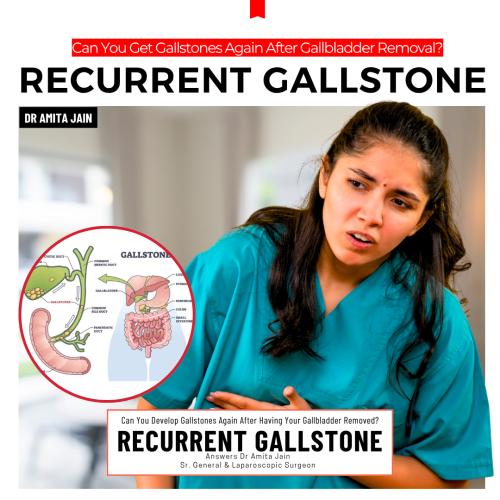
Why Do Gallstones Happen?
Gallstones develop when the chemical composition of bile becomes imbalanced. Bile, produced by the liver and stored in the gallbladder, helps digest fats. Normally, bile contains just enough chemicals to dissolve cholesterol and other substances. But when there’s too much cholesterol or bilirubin, or when the gallbladder doesn’t empty properly, these substances can crystallise and form stones. Common causes include:
- Excess cholesterol in bile: The liver may secrete more cholesterol than bile can dissolve.
- Impaired gallbladder function: When bile stays too long in the gallbladder, it becomes concentrated and stones can form.
- Bile composition changes: Conditions like liver disease, obesity, rapid weight loss, or diabetes can alter bile’s makeup.
- Genetic and lifestyle factors: Family history, fatty diets, and sedentary habits increase the risk.
Women, people over 40, and those with obesity or certain metabolic conditions are more likely to develop gallstones.
What Is Gallbladder Removal (Cholecystectomy)?
Gallbladder removal surgery, or cholecystectomy, is performed when gallstones cause severe pain, infection, or blockages. The procedure can be done in two ways:
- Laparoscopic cholecystectomy: A minimally invasive surgery using small incisions and a camera.
- Open cholecystectomy: A traditional surgery involving a larger incision.
After the gallbladder is removed, bile flows directly from the liver into the small intestine instead of being stored. Most people can digest food normally afterwards, although some may notice mild changes in bowel habits.
The surgery effectively prevents gallstones from forming in the gallbladder again—because it’s no longer there. However, this doesn’t completely eliminate the possibility of stones forming elsewhere in the biliary system.
Can Gallstones Reappear After Gallbladder Removal?
Yes, gallstones can still form in the bile ducts, even after gallbladder removal. These stones are known as primary bile duct stones (if they form after surgery) or retained stones (if they were present before the surgery and went unnoticed).
After the gallbladder is gone, bile still flows through a network of ducts connecting the liver and small intestine. If the bile is still rich in cholesterol or bilirubin, stones may develop within these ducts. These stones can block bile flow, causing symptoms similar to gallbladder stones—such as abdominal pain, nausea, jaundice, or fever.

How to Prevent Gallstones After Surgery?
While you can’t always control bile chemistry, you can reduce your risk through lifestyle and dietary changes:
- Maintain a healthy weight: Obesity increases cholesterol levels in bile.
- Avoid rapid weight loss: Losing weight too quickly can trigger imbalances that cause stones.
- Eat a balanced diet: Include fibre-rich foods, fruits, vegetables, and healthy fats while limiting fried and fatty foods.
- Stay hydrated: Adequate water intake helps bile remain balanced.
- Regular exercise: Improves metabolism and reduces cholesterol buildup.
Regular check-ups and imaging tests can help detect any complications early if symptoms recur after surgery.
Gallbladder removal significantly lowers the risk of gallstone recurrence—but it doesn’t make it impossible. Stones can still form in the bile ducts if bile chemistry remains unbalanced. The key to long-term digestive health lies in maintaining a healthy lifestyle, following a balanced diet, and staying alert to any symptoms like abdominal pain or jaundice. With proper care and awareness, most people live comfortably after gallbladder removal without facing further stone-related issues.

Dr Amita Jain is one of India’s most distinguished and experienced senior surgeons who has conducted more than 1,00,000 successful surgeries, and has covered a wide spectrum of general and minimally invasive procedures. Dr Amita Jain is refered as the pioneer surgeon in the fields of Gallbladder stone removal surgery, appendix removal surgery, hernia repair surgery, Pilonidal Sinus treatments, varicose vein and piles surgery, fistula surgery and fissure surgeries.
With an outstanding career spanning over 29 years, Dr Amita Jain has earned her place among the top General and Laparoscopic surgeons in Delhi and India, known for her precision, compassion, and consistent surgical excellence. She was the Professor of Surgery at the Army College of Medical Sciences and Base Hospital, Delhi Cantt. In 1994, she was commissioned as a surgeon under the United Nations Mission in Congo.
Dr Amita Jain currently serves as the Head of Department and Senior Consultant for General, Laparoscopic and Trauma Surgery at Artemis Lite Hospital, Rosewalk – Luxury Maternity Hospital in Delhi (Panchsheel Park, Delhi) and Rainbow Children Hospitals (Malviya Nagar, Delhi).