In today’s fast-paced world, health often takes a backseat. Between work deadlines, family responsibilities, and digital distractions, we tend to overlook our bodies until something goes wrong. One such silent yet common health concern is gallstones — hard deposits that form in the gallbladder due to imbalanced bile composition. When left unchecked, these stones can cause severe abdominal pain, nausea, and other digestive discomforts.
To help you understand this condition better, Dr Amita Jain, who is a top general and laparoscopic surgeon, and experienced gallstone specialist in Delhi explains the different types of gallbladder stones and shares essential dietary tips to manage and prevent them.
What Is the Gallbladder and How Do Gallstones Form?
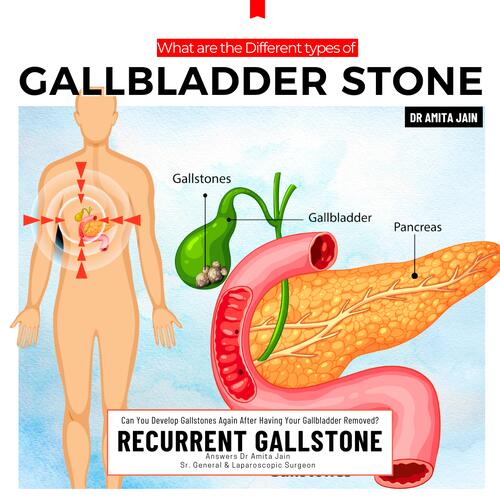
The gallbladder is a small, pear-shaped organ located beneath the liver. Its primary role is to store and release bile, a digestive fluid produced by the liver that helps break down fats.
Gallstones, or biliary calculi, develop when the chemical balance of bile is disturbed — typically when cholesterol, bile salts, or bilirubin solidify. These stones can vary in size from a grain of sand to a golf ball. If they block the bile duct, it can cause sudden, sharp pain in the abdomen known as a gallbladder attack, which requires immediate medical attention.
Several risk factors contribute to gallstone formation, including obesity, sedentary lifestyle, rapid weight loss, diabetes, high cholesterol, liver disease, and family history.
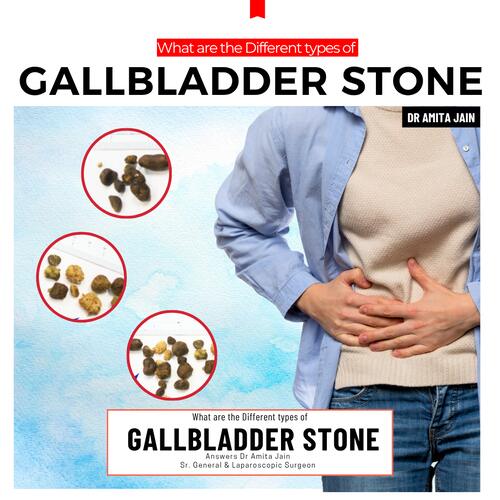
Different Types of Gallbladder Stones
Gallstones are generally classified based on their composition. Understanding their types helps in identifying their cause and guiding treatment.
Cholesterol Stones
The most common type, cholesterol stones, form when there’s an excess of cholesterol in bile that fails to dissolve properly.
Appearance: Yellowish to greenish, smooth or rough in texture
Composition: Mostly cholesterol with traces of calcium, sodium, and other minerals
Causes: High-fat diet, obesity, hormonal imbalance, or reduced gallbladder movement
These stones are soft and can vary in size. Maintaining a balanced diet and healthy weight can significantly lower the risk of cholesterol stones.
Pigment Stones
Pigment stones develop when there is an abnormal breakdown of red blood cells or infections in the bile ducts.
Appearance: Dark brown or black, brittle, and grainy
Composition: Mainly bilirubin and calcium salts
Common in: People with liver cirrhosis, chronic infections, or blood disorders like hemolytic anemia
Pigment stones are harder and smaller compared to cholesterol stones and often result from conditions that increase bilirubin levels.
Mixed Stones
As the name suggests, mixed stones contain both cholesterol and pigment components, often along with calcium salts.
Appearance: Brownish-green with a varied internal structure
Cause: Combination of multiple metabolic imbalances
Mixed stones are increasingly common and often occur in individuals with poor bile composition due to unhealthy diet or irregular eating patterns.
Other Rare Types of Gallstones
Though uncommon, some gallstones form from other compounds such as calcium carbonate, phosphates, stearates, or proteins. These are usually found in people with chronic gallbladder inflammation or infections. While rare, they still demand timely medical attention.
Dietary Tips for Gallbladder Health
Your diet plays a crucial role in both preventing and managing gallstones. Dr. Amita Jain emphasizes that healthy eating habits can significantly improve bile composition and gallbladder function.
Eat Balanced and Timely Meals
Avoid skipping meals or fasting for long hours, as this can disrupt bile flow and increase the likelihood of gallstone formation. Stick to a regular eating schedule with three balanced meals a day.
Add More Fiber
Include fiber-rich foods such as fruits, vegetables, peas, lentils, beans, and whole grains like oats and brown rice. Fiber helps regulate cholesterol levels and supports smooth digestion.
Choose Healthy Fats
Incorporate good fats from nuts, seeds, olive oil, and fish rich in omega-3 fatty acids. Healthy fats promote bile release and prevent stagnation within the gallbladder.
Limit Refined Carbohydrates and Sugar
Processed foods, baked desserts, and sugary drinks can raise cholesterol levels in bile. Reducing sugar and refined carbs helps maintain a healthier bile balance.
Stay Hydrated
Water is essential for proper bile consistency and liver function. Aim to drink at least 2 to 2.5 liters of water daily to help flush toxins and prevent bile thickening.
Your gallbladder might be small, but its role in digestion and overall well-being is significant. When you eat on time, choose nutritious foods, maintain a healthy weight, and stay active, you naturally reduce your risk of gallstones. Remember — health is not something to prioritize only when illness strikes. By adopting mindful eating and lifestyle habits today, you protect yourself from tomorrow’s health challenges.
A well-cared-for gallbladder is a key step toward a healthier, pain-free life.

Dr Amita Jain, one of the most experienced General and Laparoscopic Surgeons in Delhi, is widely recognised for her expertise in hernia, piles, gallbladder, fissure, and fistula surgeries. With an outstanding career spanning over 29 years, Dr Amita Jain has earned her place among the top General and Laparoscopic surgeons in Delhi and India, known for her precision, compassion, and consistent surgical excellence. She was the Professor of Surgery at the Army College of Medical Sciences and Base Hospital, Delhi Cantt. In 1994, she was commissioned as a surgeon under the United Nations Mission in Congo.
Dr Amita Jain currently serves as the Senior General and Laparoscopic Surgeon at Fortis C-DOC Hospital, B-16, Chirag Enclave, Opposite Devika Tower, Greater Kailash 1, New Delhi, Delhi 110048. She is also the Head of Department, Laparoscopic and Trauma Surgery at Artemis Lite Hospital (Delhi), Senior General and Laparoscopic Surgeon at Rosewalk – Luxury Maternity Hospital in Delhi and Rainbow Children Hospitals (at Malviya Nagar and Panchsheel Park, New Delhi)
Dr Amita Jain has successfully performed a wide range of complex general surgeries, including both open and minimally invasive procedures, with a strong focus on trauma care, onco-surgical techniques, and reconstructive surgeries. Her medical specialisation includes – Gallbladder surgeries, appendix removal surgeries, hernia repair surgeries, Pilonidal Sinus treatments, varicose vein and piles surgeries, fistula surgeries and fissure surgeries.
Dr Amita Jain has also authored some of the key medical journals and publications, like ResearchGate, IJSR
Note: the articles are written with Dr Amita Jain’s professional insights and referring to her medical publications.