Gallbladder removal surgery is common and generally safe, but digestion changes after the procedure. The gallbladder’s role was to store bile and release it in controlled amounts to digest fats. After surgery, bile flows directly from the liver to the intestine, which means diet plays a crucial role in recovery and long-term comfort—especially in an Indian food context where meals can be rich and spicy.
This step-by-step guide explains what to eat, what to avoid, and how to gradually return to a normal Indian diet, says Dr Amita Jain, a leading general and laparoscopic surgeon and one of Delhi’s best gallbladder removal surgeons.

How Does Digestion Change After Gallbladder Removal?
Dr Amita Jain, who is one of the most experienced gallbladder removal surgeons in Delhi shares some tips:
- Fat digestion becomes less efficient initially
- Heavy, oily, and spicy foods may cause:
- Bloating
- Loose stools
- Indigestion
- Most people adapt within 4–8 weeks with the right diet.
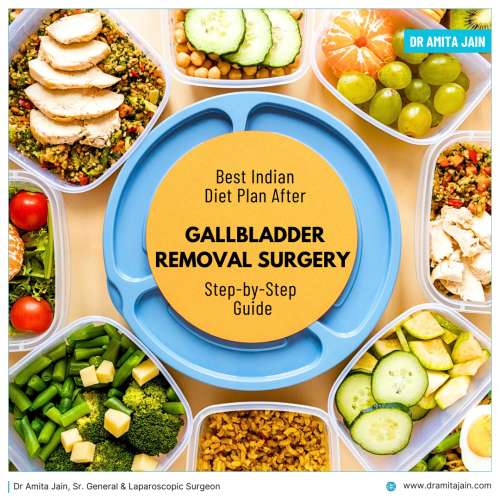
Step-by-Step Indian Diet Plan Post Gallbladder Removal Surgery
Stage 1: First 24–48 Hours (Immediate Recovery)
Goal: Rest the digestive system
Recommended foods – Warm water, Coconut water, Clear vegetable broth, Jeera (cumin) water, Rice kanji / thin rice gruel
Avoid – Solid foods, Tea, coffee, Sugar-loaded drinks
Stage 2: Days 3–7 (Soft & Light Foods)
Goal: Introduce easily digestible foods
Indian foods to eat
- Soft khichdi (moong dal + rice, minimal ghee)
- Plain curd or diluted buttermilk
- Steamed vegetables (lauki, carrot, pumpkin)
- Plain idli
- Soft chapati (no oil)
Tips
- Eat small portions
- Chew slowly
- No frying or tempering
Stage 3: Week 2–4 (Low-Fat Balanced Diet)
Goal: Improve digestion and nutrient intake
Breakfast options
- Vegetable oats
- Upma (very little oil)
- Poha (without peanuts initially)
Lunch & dinner
- Plain rice or phulka
- Dal (moong/masoor)
- Vegetable curry (boiled or lightly sautéed)
- Curd or buttermilk
Healthy additions
- Fruits: papaya, banana, apple (peeled)
- Nuts: soaked almonds (2–3 only)
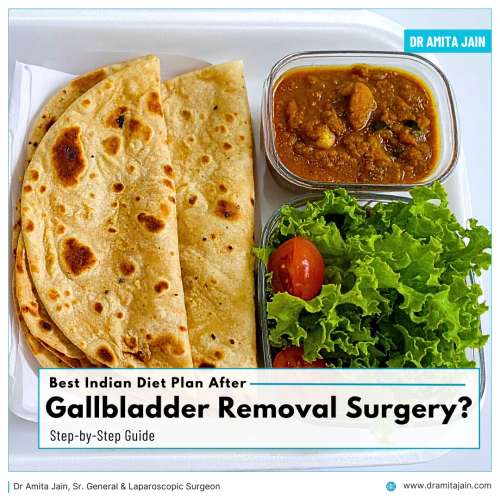
Stage 4: After 1 Month (Gradual Normalisation)
Goal: Return to a normal but mindful Indian diet
You can slowly add
- Small amounts of oil (prefer mustard or groundnut oil)
- Paneer (low-fat)
- Mild spices like coriander, turmeric, and cumin
- Fish (steamed or grilled)
Still limit
- Deep-fried foods
- Heavy gravies
- Excess ghee or butter
Foods to Avoid (Especially in the First 2 Months)
- Deep-fried snacks (samosa, pakora, puri)
- Spicy curries and street food
- Fast food and bakery items
- Cream, cheese, mayonnaise
- Red meat
- Carbonated drinks

Sample One-Day Indian Diet Plan
Morning – Warm water + soaked jeera, Banana or papaya
Breakfast – Vegetable oats/idlis with plain chutney
Mid-morning – Coconut water/ buttermilk
Lunch
- Rice or chappati
- Moong dal
- Boiled vegetable sabzi
- Curd
Evening – Roasted chana/fruit
Dinner
- Soft chapati
- Vegetable curry
- Clear soup
Lifestyle & Eating Tips
- Eat 5–6 small meals instead of 3 large ones
- Avoid lying down immediately after meals
- Stay hydrated
- Maintain a food diary to track triggers
- Exercise lightly (walking) after recovery
When to Consult a Doctor?
You need to consult your doctor if you see:
- Persistent diarrhoea or bloating
- Severe abdominal pain
- Sudden weight loss
- Inability to tolerate even low-fat foods
After gallbladder removal, a low-fat, simple Indian diet helps the body adapt smoothly. Most people can return to near-normal eating within a few months if they follow a gradual, disciplined approach. Listening to your body and avoiding excess oil and spice is the key to long-term digestive comfort.
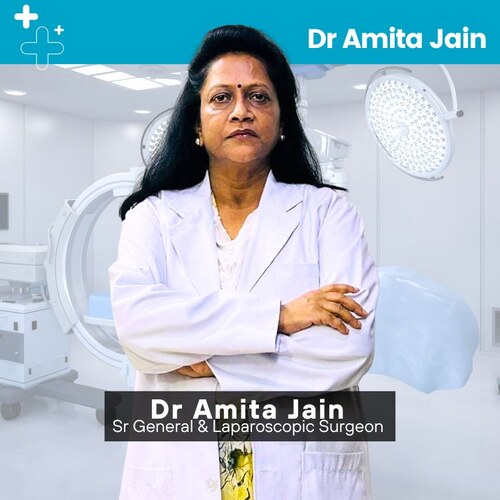
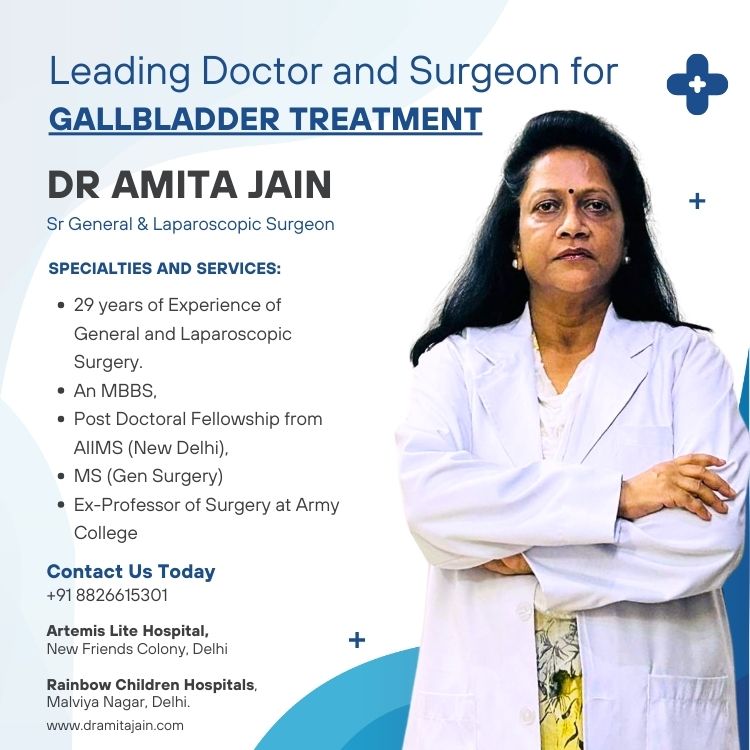
Dr Amita Jain is one of India’s most distinguished and experienced senior surgeons who has conducted more than 1,00,000 successful surgeries, and has covered a wide spectrum of general and minimally invasive procedures. Dr Amita Jain is refered as the pioneer surgeon in the fields of Gallbladder stone removal surgery, appendix removal surgery, hernia repair surgery, Pilonidal Sinus treatments, varicose vein and piles surgery, fistula surgery and fissure surgeries.
With an outstanding career spanning over 29 years, Dr Amita Jain has earned her place among the top General and Laparoscopic surgeons in Delhi and India, known for her precision, compassion, and consistent surgical excellence. She was the Professor of Surgery at the Army College of Medical Sciences and Base Hospital, Delhi Cantt. In 1994, she was commissioned as a surgeon under the United Nations Mission in Congo.
Dr Amita Jain currently serves as the Head of Department and Senior Consultant for General, Laparoscopic and Trauma Surgery at Artemis Lite Hospital, Rosewalk – Luxury Maternity Hospital in Delhi (Panchsheel Park, Delhi) and Rainbow Children Hospitals (Malviya Nagar, Delhi).