In today’s fast-paced lifestyle, health concerns are often pushed aside until they become impossible to ignore. Between deadlines, responsibilities, and constant digital engagement, subtle physical signals are easy to dismiss. Yet the body has its own quiet way of warning us long before a serious problem develops. One such warning is pain on the right side of the abdomen after eating, especially following oily or fatty meals.
Many people mistake this discomfort for acidity, gas, or indigestion and manage it with antacids or painkillers. However, when the pain becomes intense, persistent, or repeatedly sends someone to the emergency room, the real cause is often a gallbladder problem. Right-sided abdominal pain can be misleading because it overlaps with symptoms of conditions such as IBS, kidney stones, appendicitis, hernia, or even gynaecological issues. This makes understanding the source of pain crucial.
In this article, Dr Amita Jain, a senior general and laparoscopic surgeon and one of the best specialist surgeons for gallbladder stone removal in Delhi and India, explains how right-sided pain after meals may be your gallbladder’s way of asking for attention.
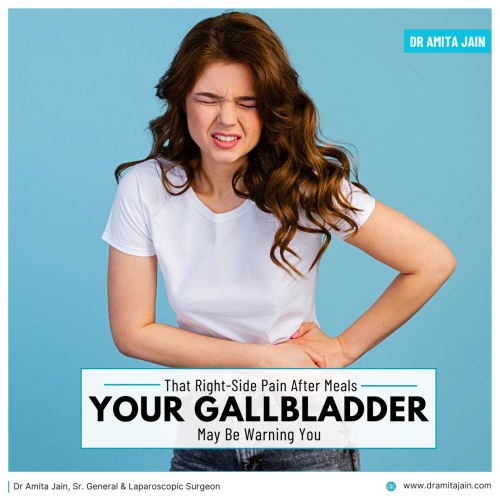
Understanding the Gallbladder and Gallstones
The gallbladder is a small, pear-shaped organ located just beneath the liver. Its main function is to store bile, a digestive fluid produced by the liver that helps break down fats. When you eat, bile is released into the small intestine through the bile ducts to aid digestion.
Gallstones are hardened deposits that form when bile contains too much cholesterol or salts. These stones can be as small as sand grains or as large as a golf ball. Trouble begins when a stone moves out of the gallbladder and blocks the bile duct, preventing bile from flowing normally. This blockage creates pressure and inflammation, resulting in what is commonly known as a gallbladder attack.

Why Fatty Meals Trigger Gallbladder Pain?
Gallbladder attacks are closely linked to food, particularly meals rich in fat. When fatty food enters the intestine, it signals the gallbladder to contract and release bile. If gallstones are present, this strong contraction can push a stone into the bile duct. Once blocked, bile builds up inside the gallbladder, leading to sudden, severe pain.
This pain is usually felt in the upper right abdomen or the centre of the stomach and may spread to the back or right shoulder blade. Nausea, vomiting, and sometimes fever may follow. Larger or heavier meals demand more bile, causing stronger contractions and increasing the likelihood of a painful attack.
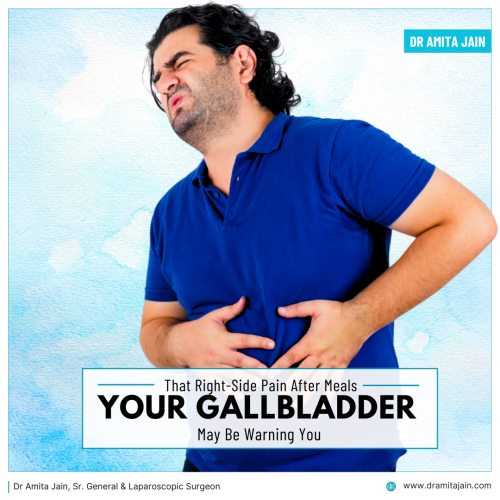
What are the Common Symptoms of a Gallbladder Attack?
According to Dr Amita Jain, who is one of India’s leading general and laparoscopic surgeons and also a specialist on gallstone treatments, gallbladder pain typically lasts for several hours and does not improve with passing gas or bowel movements. It often worsens after meals and may intensify with deep breathing.
Associated symptoms can include nausea, vomiting, bloating, sweating, fever, and chills. In more advanced cases, yellowing of the skin or eyes, dark urine, pale stools, or persistent digestive upset may appear, indicating bile flow obstruction.
Gallbladder Inflammation and Related Conditions
When a gallstone remains stuck and causes ongoing irritation, it can lead to cholecystitis, or gallbladder inflammation. This condition causes severe, continuous pain in the upper right abdomen, often accompanied by fever, nausea, vomiting, and loss of appetite. Acute cholecystitis is a medical emergency and requires prompt treatment.
Another serious condition is choledocholithiasis, where gallstones block the main bile duct. This can lead to jaundice, infection, and severe abdominal pain, along with changes in urine and stool colour.

Potential Risks and Complications
If left untreated, gallbladder problems can affect nearby organs. Blocked bile ducts may cause bile to back up into the liver, leading to liver damage and jaundice. Gallstones can also obstruct the pancreatic duct, triggering gallstone pancreatitis—a painful and potentially life-threatening condition that requires urgent care. Because these complications can escalate quickly, recurring or severe symptoms should never be ignored.
Diagnosis and Treatment Options
Diagnosing gallbladder disease involves imaging and laboratory tests to identify gallstones, inflammation, or bile duct obstruction. Ultrasound is usually the first and most effective test, often supported by blood tests or advanced imaging if needed.
Treatment depends on symptom severity. Mild, infrequent attacks may be managed with pain relief, anti-nausea medication, and dietary changes. In select cases, oral medicines may be used to dissolve small cholesterol stones, though this approach is slow and not always effective.
For recurrent attacks or larger stones, surgery is the most reliable solution. Laparoscopic cholecystectomy, a minimally invasive gallbladder removal surgery, is the standard treatment and offers quick recovery and long-term relief. Dietary changes, such as adopting a Mediterranean-style diet with lean proteins and healthy fats, can also help reduce future risk.
Right-sided pain after meals is not something to brush aside. What feels like indigestion may be an early sign of gallbladder disease. Gallstones can cause intense pain and serious complications if ignored. Early diagnosis, mindful eating, and timely medical intervention can prevent emergencies and protect long-term digestive health. Listening to your body today can spare you from a crisis tomorrow.

Dr Amita Jain is one of India’s most distinguished and experienced senior surgeons who has conducted more than 1,00,000 successful surgeries, and has covered a wide spectrum of general and minimally invasive procedures. Dr Amita Jain is refered as the pioneer surgeon in the fields of Gallbladder stone removal surgery, appendix removal surgery, hernia repair surgery, Pilonidal Sinus treatments, varicose vein and piles surgery, fistula surgery and fissure surgeries.
With an outstanding career spanning over 29 years, Dr Amita Jain has earned her place among the top General and Laparoscopic surgeons in Delhi and India, known for her precision, compassion, and consistent surgical excellence. She was the Professor of Surgery at the Army College of Medical Sciences and Base Hospital, Delhi Cantt. In 1994, she was commissioned as a surgeon under the United Nations Mission in Congo.
Dr Amita Jain currently serves as the Head of Department and Senior Consultant for General, Laparoscopic and Trauma Surgery at Artemis Lite Hospital, Rosewalk – Luxury Maternity Hospital in Delhi (Panchsheel Park, Delhi) and Rainbow Children Hospitals (Malviya Nagar, Delhi).