Piles, also known as haemorrhoids, are a common yet uncomfortable condition that affects people of all ages. Symptoms such as bleeding during bowel movements, itching, pain, and a constant feeling of discomfort can significantly reduce quality of life. While lifestyle changes and medications help in the early stages, advanced piles often require surgical intervention.
Traditionally, surgery was associated with pain, long recovery, and fear. Today, medical advancements have changed that reality. Painless piles surgery using Radiofrequency Ablation (RFA) offers a modern, safe, and minimally invasive solution that treats piles effectively with minimal discomfort and faster recovery, says Dr Amita Jain, a senior general and laparoscopic surgeon and one of the best piles surgeons in Delhi and India.
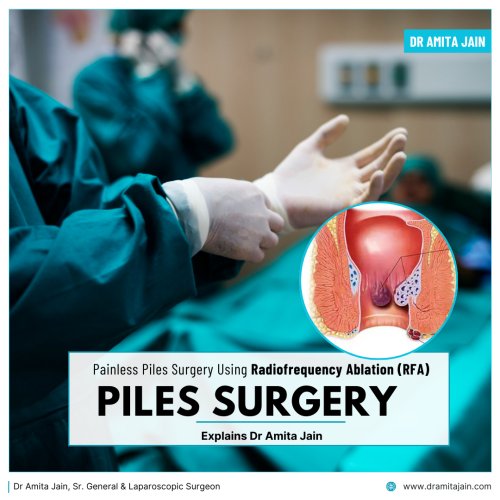
What Is Painless Piles Surgery?
Painless piles surgery refers to advanced minimally invasive procedures designed to treat haemorrhoids with little to no postoperative pain. Unlike conventional open surgery, which involves cutting and stitching sensitive tissue, modern techniques focus on shrinking or sealing the piles internally.
Radiofrequency Ablation (RFA) is one of the most effective painless piles treatments available today. It uses controlled radiofrequency energy to target and treat the affected hemorrhoidal tissue without damaging surrounding areas. The procedure is quick, precise, and significantly reduces pain compared to traditional surgical methods.
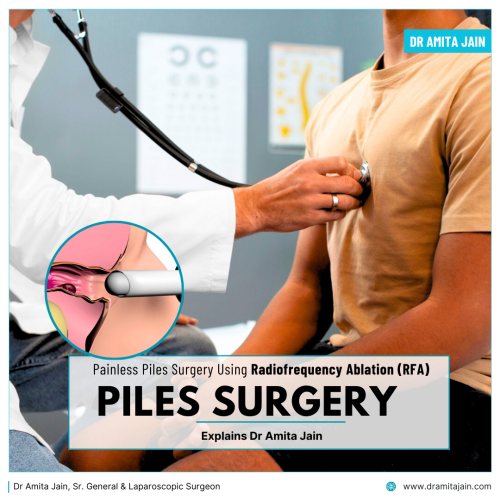
What Is Piles Surgery Using (Radiofrequency Ablation) RFA?
RFA (Radiofrequency Ablation) is a minimally invasive procedure that treats piles by delivering high-frequency radio waves directly into the hemorrhoidal tissue. These waves generate controlled heat, which causes the piles to shrink and gradually disappear.
The procedure is usually performed under local or mild anaesthesia and takes about 20–30 minutes. A specialised RFA probe is inserted into the pile mass, where it seals offthe blood supply to the haemorrhoid. Over time, the treated tissue dries up and is absorbed naturally by the body.
Since there are no large cuts, stitches, or open wounds, patients experience minimal pain, very little bleeding, and a faster return to daily activities.
Why Is RFA Preferred for Piles Treatment?
RFA has gained popularity among both patients and surgeons due to its high success rate and patient comfort. It addresses the biggest concerns associated with piles surgery—pain, recovery time, and complications.
This technique is suitable for Grade II, III, and selected Grade IV piles, especially in patients who want an effective solution without prolonged hospital stays or postoperative discomfort.
Benefits of Painless Piles Surgery Using RFA
One of the main reasons RFA is preferred is the minimal pain experienced during and after the procedure. Since nerve endings are not cut, discomfort is significantly reduced.
Other key benefits include:
- No major incisions or stitches, lowering the risk of infection
- Minimal bleeding during and after surgery
- Short hospital stay, often as a day-care procedure
- Quick recovery, with most patients resuming normal activities within 2–3 days
- Lower risk of recurrence when combined with lifestyle modifications
- Safe and precise, protecting the surrounding anal muscles and tissues
Patients also report better bowel comfort after RFA, with reduced fear of pain during bowel movements.
Who Is an Ideal Candidate for RFA?
RFA is ideal for patients suffering from symptomatic internal piles that do not respond to medication or lifestyle changes. It is especially beneficial for individuals who want a painless, scar-free, and quick solution. A detailed evaluation by a qualified surgeon is essential to determine suitability.
Painless piles surgery using RFA has revolutionised the treatment of haemorrhoids. By combining medical precision with patient comfort, it eliminates the fear traditionally associated with piles surgery. With minimal pain, faster recovery, and excellent long-term results, RFA stands out as a preferred choice for modern piles treatment. Early consultation and timely intervention can help patients regain comfort, confidence, and a better quality of life.

Dr Amita Jain is one of India’s most distinguished and experienced female surgeons and proctologists, known for her unmatched expertise in general, advanced laparoscopic, and laser proctology surgery. With over 30 years of surgical excellence, Dr Amita Jain has built a reputation for precision, compassionate care, and advanced surgical techniques.
Dr Jain has successfully performed a wide range of complex general surgeries, including both open and minimally invasive procedures, with a strong focus on trauma care, onco-surgical techniques, and reconstructive surgeries. Her medical specialisation includes: gallbladder surgeries, appendix removal surgeries, hernia repair surgeries, Pilonidal Sinus treatments, varicose vein and piles surgeries, fistula surgeries and fissure surgeries.
Dr Jain, currently serves as Senior Consultant and Head of Department (General, Laser, Proctology and Laparoscopic Surgeries) across premier medical networks in South Delhi:
Daffodils by Artemis Hospitals: Spring Meadows, East of Kailash, New Delhi. Book Appointment
Fortis C-DOC Hospital: B-16, Chirag Enclave, New Delhi. Book Appointment
Rosewalk Luxury Multi-Specialty & Maternity Hospital: Panchsheel Park, New Delhi. Book Appointment
Rainbow Children’s Hospital: Malviya Nagar, New Delhi. Book Appointment
Learn More about Dr Amita Jain.
Dr Amita Jain has also authored some of the key medical journals and publications, like ResearchGate, IJSR
Note: This article is written and reviewed by Dr Amita Jain, while referring to her medical journals and publications.