Key Summary
- Laser hemorrhoidoplasty effectively treats existing piles, but recurrence depends largely on lifestyle factors like diet, bowel habits, and physical activity.
- Piles may return if underlying causes such as constipation, straining, or prolonged sitting are not addressed consistently after treatment.
- Long-term relief is achievable with proper post-procedure care, regular follow-ups, and sustainable lifestyle changes.
One of the most common concerns for patients undergoing laser treatment is: Will piles come back after laser hemorrhoidoplasty? While laser surgery offers a high success rate and quicker recovery, certain factors like lifestyle, diet, and surgical technique play a role in long-term results. Explore the facts about hemorrhoid recurrence and how to maintain a piles-free life after your procedure.
Article Medically Reviewed by Dr Amita Jain, MBBS, MS (Gen Surgery), Fellowship (AIIMS), Military-Precision Gallbladder Polyp Surgeon: 29 Years of Surgical Excellence by Ex-Indian Army Surgeon
Laser hemorrhoidoplasty has emerged as a modern, minimally invasive solution for treating piles (haemorrhoids), offering quicker recovery, less pain, and minimal tissue damage compared to conventional surgery.
Many patients choose this procedure expecting a permanent fix. However, one common concern that often arises is whether piles can return even after undergoing this advanced treatment. Understanding the nature of haemorrhoids, the role of lifestyle, and the effectiveness of laser treatment helps set realistic expectations and ensures long-term relief, says Dr Amita Jain, an experienced senior general and laparoscopic surgeon and specialist in treating piles in Delhi.
Can Piles Come Back After Laser Hemorrhoidoplasty?
Yes, piles can come back after laser hemorrhoidoplasty—but not because the procedure fails. Recurrence usually depends on underlying causes and post-treatment habits rather than the technique itself.
“As Dr Amita Jain explains, laser hemorrhoidoplasty offers excellent relief from piles, but lasting results depend on how well patients manage their daily habits—because preventing recurrence is less about the procedure and more about sustained lifestyle discipline.”
How Laser Hemorrhoidoplasty Works?
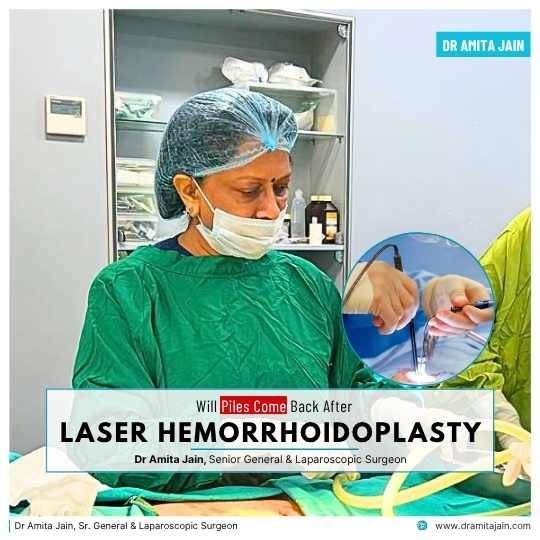
Laser hemorrhoidoplasty is designed to shrink the swollen hemorrhoidal tissues using laser energy. It reduces blood supply to the affected veins, causing them to collapse and gradually heal. Since the surrounding tissue is preserved, patients experience less pain and faster recovery.
However, it is important to note that this procedure treats existing haemorrhoids—it does not eliminate the factors that caused them in the first place.
Why Does Pile Recurrence Happen?
Piles are largely a lifestyle-related condition. Chronic constipation, prolonged sitting, low-fibre diet, obesity, and straining during bowel movements are some of the key contributors. If these factors persist after the procedure, new haemorrhoids may develop over time.
Recurrence does not necessarily mean the treated piles have come back; rather, new ones may form due to the same pressure and strain on rectal veins.
Is Recurrence Common After Laser Treatment?
Compared to traditional surgery, recurrence rates after laser hemorrhoidoplasty are generally lower when patients follow proper post-procedure care. The precision of laser treatment ensures effective shrinkage of hemorrhoidal tissue, reducing immediate relapse.
That said, no treatment can guarantee that piles will never return, especially if preventive measures are not maintained consistently.
How to Reduce the Risk of Piles Returning?
Long-term relief from piles depends significantly on lifestyle changes. A fibre-rich diet that includes fruits, vegetables, and whole grains helps maintain smooth bowel movements and prevents straining. Adequate water intake keeps stools soft and reduces pressure on the rectal veins.
Regular physical activity improves digestion and reduces the risk of constipation. Avoiding prolonged sitting, especially on the toilet, and responding promptly to the urge for bowel movements are also important preventive measures.
Role of Follow-Up Care
Post-procedure follow-up with your doctor ensures proper healing and helps detect any early signs of recurrence. Doctors may recommend dietary adjustments, medications, or lifestyle guidance tailored to your condition. Ignoring follow-up care can increase the chances of complications or recurrence.
When to Seek Medical Attention Again?
If symptoms like bleeding, pain, itching, or swelling reappear, it is essential to consult a doctor promptly. Early-stage haemorrhoids can often be managed without surgery if detected in time.
The Key Aspects of Recurrence After Laser Hemorrhoidoplasty
| Aspect | Details |
|---|---|
| Effectiveness of Laser Treatment | Precisely shrinks hemorrhoids with minimal pain and faster recovery |
| Chance of Recurrence | Possible, but usually linked to lifestyle factors—not treatment failure |
| Main Causes of Recurrence | Constipation, low-fiber diet, straining, prolonged sitting, obesity |
| Nature of Recurrence | Often new hemorrhoids form, not the previously treated ones |
| Prevention Strategies | High-fiber diet, hydration, regular exercise, healthy bowel habits |
| Role of Follow-Up | Helps monitor healing and detect early signs of recurrence |
| When to See a Doctor | If symptoms like bleeding, pain, or swelling reappear |
| Long-Term Outlook | Good outcomes with proper lifestyle management and medical guidance |
Laser hemorrhoidoplasty is an effective and advanced treatment for piles, offering excellent results with minimal discomfort. However, it is not a one-time guarantee against recurrence. The key to preventing piles from coming back lies in addressing the root causes—primarily lifestyle and bowel habits. With the right care, awareness, and preventive approach, most patients can enjoy long-term relief and significantly reduce the chances of recurrence.

Dr Amita Jain, one of the most experienced General and Laparoscopic Surgeons in Delhi, is widely recognised for her expertise in hernia, piles, gallbladder, fissure, and fistula surgeries. With an outstanding career spanning over 29 years, Dr Amita Jain has earned her place among the top General and Laparoscopic surgeons in Delhi and India, known for her precision, compassion, and consistent surgical excellence. She was the Professor of Surgery at the Army College of Medical Sciences and Base Hospital, Delhi Cantt. In 1994, she was commissioned as a surgeon under the United Nations Mission in Congo.
Dr Amita Jain currently serves as the Head of Department, Laparoscopic and Trauma Surgery at Artemis Lite Hospital (Delhi), Senior General and Laparoscopic Surgeon at Rosewalk – Luxury Maternity Hospital in Delhi and Rainbow Children Hospitals (at Malviya Nagar and Panchsheel Park, New Delhi)
Dr Amita Jain has successfully performed a wide range of complex general surgeries, including both open and minimally invasive procedures, with a strong focus on trauma care, onco-surgical techniques, and reconstructive surgeries. Her medical specialisation includes – Gallbladder surgeries, appendix removal surgeries, hernia repair surgeries, Pilonidal Sinus treatments, varicose vein and piles surgeries, fistula surgeries and fissure surgeries.
Dr Amita Jain has also authored some of the key medical journals and publications, like ResearchGate, IJSR
Note: the articles are written with Dr Amita Jain’s professional insights and referring to her medical publications.