Summary
- Gallbladder sludge consists of microscopic particles that collect in the gallbladder.
- It may resolve on its own but can sometimes contribute to gallstones or biliary complications.
- Symptoms and associated complications determine whether monitoring or treatment is needed.
Gallbladder sludge is a thick mixture of microscopic particles that can collect inside the gallbladder. It may contain cholesterol crystals, calcium salts and other substances found in bile. It is often detected during an ultrasound performed for another reason and may not cause any noticeable symptoms.
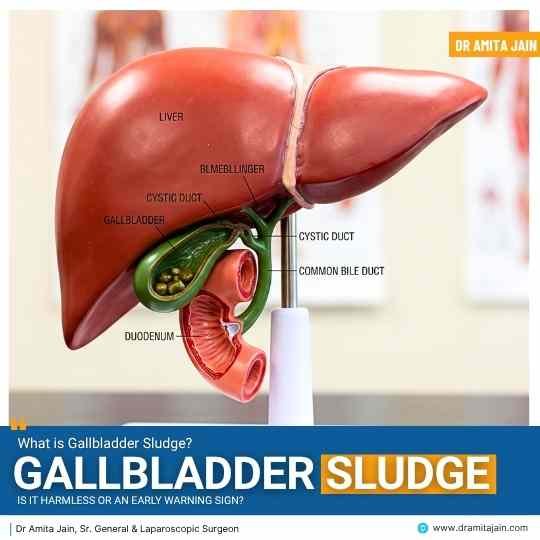
While gallbladder sludge can sometimes disappear on its own, it may also be associated with gallstone formation and other biliary complications. Understanding why sludge develops and when it needs medical attention can help prevent potential problems. shares Dr Amita Jain Sr General and Laparoscopic Surgeon, and Gallbladder treatment specialist in Delhi.
Is Gallbladder Sludge Harmless or an Early Warning Sign?
Gallbladder sludge is not always a cause for concern. In some people, it develops temporarily and disappears when the underlying condition improves. However, sludge can also become a precursor to gallstones or contribute to blockage of the bile ducts.
The significance of sludge depends on whether a person has symptoms, how persistent the finding is and whether complications have developed. An incidental finding without symptoms may simply require observation, while symptomatic sludge may need further evaluation and treatment.
“Gallbladder sludge may be temporary, but persistent symptoms should never be ignored.” Says gallbladder specialist surgeon in Delhi Dr Amita Jain.
The Formation of Gallbladder Sludge
Bile is stored and concentrated in the gallbladder before being released into the digestive system. When bile remains in the gallbladder for an extended period or becomes concentrated, microscopic particles can settle and form sludge.
Gallbladder sludge may occur during pregnancy, prolonged fasting, rapid weight loss and certain illnesses. Some medications and medical conditions may also affect normal gallbladder function.
Symptoms Associated With Gallbladder Sludge
Many people with gallbladder sludge do not experience symptoms. When symptoms occur, they can resemble those caused by gallstones or other gallbladder conditions.
Common symptoms may include upper abdominal pain, particularly on the right side, discomfort after meals, nausea and vomiting. Pain may sometimes extend toward the back or right shoulder.
Recurring symptoms should be discussed with a doctor rather than being assumed to be simple indigestion.
Possible Complications
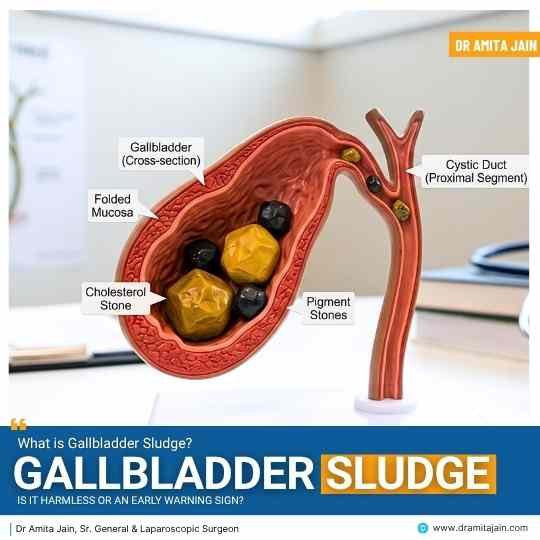
Gallbladder sludge can sometimes progress to gallstones. Small particles may also move into the bile ducts and interfere with normal bile flow.
In certain cases, biliary sludge can be associated with inflammation of the gallbladder or acute pancreatitis. A blockage involving the bile or pancreatic ducts can cause significant symptoms and may require urgent medical treatment.
Severe abdominal pain, persistent vomiting, fever, chills or yellowing of the skin and eyes should receive prompt medical attention.
Ultrasound Diagnosis
Abdominal ultrasound is commonly used to identify gallbladder sludge. On an ultrasound, sludge can appear as material that settles inside the gallbladder and generally does not produce the acoustic shadow typically associated with gallstones.
If symptoms continue or the diagnosis is uncertain, additional imaging may sometimes be recommended. Depending on the clinical situation, investigations such as MRCP or endoscopic ultrasound may help identify small stones or abnormalities affecting the bile ducts.
Treatment and Follow-Up
Gallbladder sludge does not automatically mean that surgery is necessary. When it is found incidentally in a person without symptoms or complications, doctors may recommend observation and management of any underlying cause.
If sludge causes repeated biliary pain or contributes to complications, treatment may be required. In selected symptomatic cases, laparoscopic cholecystectomy, which involves removal of the gallbladder, may be considered.
Treatment decisions should be based on the person’s symptoms, examination findings, imaging results and overall health.
The Importance of Timely Medical Evaluation
A gallbladder sludge finding should be considered in the context of the person’s symptoms rather than viewed in isolation. Some cases resolve naturally, while persistent or symptomatic sludge may indicate an underlying biliary problem.
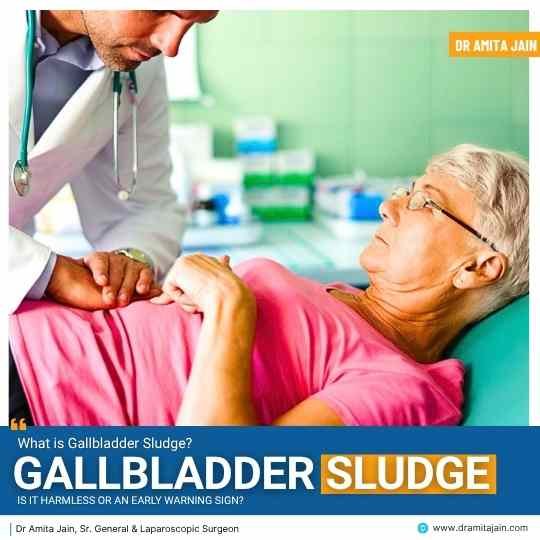
Anyone experiencing recurring upper abdominal pain, especially with vomiting, fever or jaundice, should seek medical evaluation. Early assessment can help identify gallstones, bile duct obstruction, gallbladder inflammation or pancreatitis when present.

Dr Amita Jain is one of India’s most distinguished and experienced female surgeons and proctologists, known for her unmatched expertise in general, advanced laparoscopic, and laser proctology surgery. With over 30 years of surgical excellence, Dr Amita Jain has built a reputation for precision, compassionate care, and advanced surgical techniques.
Dr Jain has successfully performed a wide range of complex general surgeries, including both open and minimally invasive procedures, with a strong focus on trauma care, onco-surgical techniques, and reconstructive surgeries. Her medical specialisation includes: gallbladder surgeries, appendix removal surgeries, hernia repair surgeries, Pilonidal Sinus treatments, varicose vein and piles surgeries, fistula surgeries and fissure surgeries.
Dr Jain, currently serves as Senior Consultant and Head of Department (General, Laser, Proctology and Laparoscopic Surgeries) across premier medical networks in South Delhi:
Daffodils by Artemis Hospitals: Spring Meadows, East of Kailash, New Delhi. Book Appointment
Fortis C-DOC Hospital: B-16, Chirag Enclave, New Delhi. Book Appointment
Rosewalk Luxury Multi-Specialty & Maternity Hospital: Panchsheel Park, New Delhi. Book Appointment
Rainbow Children’s Hospital: Malviya Nagar, New Delhi. Book Appointment
Learn More about Dr Amita Jain.
Dr Amita Jain has also authored some of the key medical journals and publications, like ResearchGate, IJSR
Note: This article is written and reviewed by Dr Amita Jain, while referring to her medical journals and publications.