Quick Clinical Summary
After gallbladder removal surgery (cholecystectomy), your liver continues to produce bile, but it drips constantly into the duodenum in a dilute stream rather than being stored and concentrated. To prevent nausea, indigestion, and bile acid diarrhea, an Indian diet must transition through four progressive phases: starting with clear fluids (moong dal water, tender coconut water) for Days 1–3; ultra-soft low-fat solids (oil-free moong khichdi, steamed idlis, boiled lauki, and diluted buttermilk) capping fat under 3 grams per meal for Days 4–14; and gradually reintroducing dry phulkas, egg whites, and light sabzis from Weeks 3–6. Deep-fried savories, ghee, rajma, and full-fat dairy must be avoided for at least 4 to 6 weeks.
Article Medically Reviewed by Dr Amita Jain, MBBS, MS (Gen Surgery), Fellowship (AIIMS), Military-Precision Gallbladder Treatment Specialist, Surgeon, Senior General Surgeon: 29 Years of Surgical Excellence by Ex-Indian Army Surgeon
Gallbladder removal surgery is common and generally safe, but digestion changes after the procedure. The gallbladder’s role was to store bile and release it in controlled amounts to digest fats. After surgery, bile flows directly from the liver to the intestine, which means diet plays a crucial role in recovery and long-term comfort—especially in an Indian food context where meals can be rich and spicy.
This step-by-step guide explains what to eat, what to avoid, and how to gradually return to a normal Indian diet, says Dr Amita Jain, a leading general and laparoscopic surgeon and one of Delhi’s best gallbladder removal surgeons.

How Does Digestion Change After Gallbladder Removal?
Dr Amita Jain, who is one of the most experienced gallbladder removal surgeons in Delhi shares some tips:
- Fat digestion becomes less efficient initially
- Heavy, oily, and spicy foods may cause:
- Bloating
- Loose stools
- Indigestion
- Most people adapt within 4–8 weeks with the right diet.
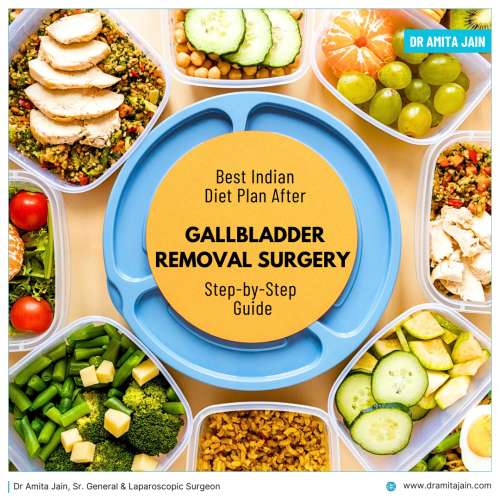
Step-by-Step Indian Diet Plan Post Gallbladder Removal Surgery
Stage 1: First 24–48 Hours (Immediate Recovery)
Goal: Rest the digestive system
Recommended foods – Warm water, Coconut water, Clear vegetable broth, Jeera (cumin) water, Rice kanji / thin rice gruel
Avoid – Solid foods, Tea, coffee, Sugar-loaded drinks
Stage 2: Days 3–7 (Soft & Light Foods)
Goal: Introduce easily digestible foods
Indian foods to eat
- Soft khichdi (moong dal + rice, minimal ghee)
- Plain curd or diluted buttermilk
- Steamed vegetables (lauki, carrot, pumpkin)
- Plain idli
- Soft chapati (no oil)
Tips
- Eat small portions
- Chew slowly
- No frying or tempering
Stage 3: Week 2–4 (Low-Fat Balanced Diet)
Goal: Improve digestion and nutrient intake
Breakfast options
- Vegetable oats
- Upma (very little oil)
- Poha (without peanuts initially)
Lunch & dinner
- Plain rice or phulka
- Dal (moong/masoor)
- Vegetable curry (boiled or lightly sautéed)
- Curd or buttermilk
Healthy additions
- Fruits: papaya, banana, apple (peeled)
- Nuts: soaked almonds (2–3 only)
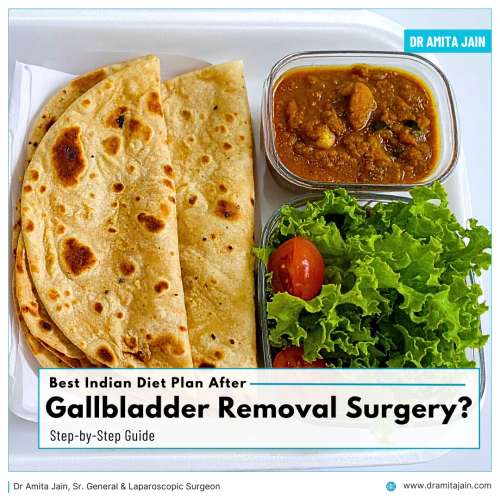
Stage 4: After 1 Month (Gradual Normalisation)
Goal: Return to a normal but mindful Indian diet
You can slowly add
- Small amounts of oil (prefer mustard or groundnut oil)
- Paneer (low-fat)
- Mild spices like coriander, turmeric, and cumin
- Fish (steamed or grilled)
Still limit
- Deep-fried foods
- Heavy gravies
- Excess ghee or butter
Foods to Avoid (Especially in the First 2 Months)
- Deep-fried snacks (samosa, pakora, puri)
- Spicy curries and street food
- Fast food and bakery items
- Cream, cheese, mayonnaise
- Red meat
- Carbonated drinks

Sample One-Day Indian Diet Plan
Morning – Warm water + soaked jeera, Banana or papaya
Breakfast – Vegetable oats/idlis with plain chutney
Mid-morning – Coconut water/ buttermilk
Lunch
- Rice or chappati
- Moong dal
- Boiled vegetable sabzi
- Curd
Evening – Roasted chana/fruit
Dinner
- Soft chapati
- Vegetable curry
- Clear soup
Lifestyle & Eating Tips
- Eat 5–6 small meals instead of 3 large ones
- Avoid lying down immediately after meals
- Stay hydrated
- Maintain a food diary to track triggers
- Exercise lightly (walking) after recovery
When to Consult a Doctor?
You need to consult your doctor if you see:
- Persistent diarrhoea or bloating
- Severe abdominal pain
- Sudden weight loss
- Inability to tolerate even low-fat foods
After gallbladder removal, a low-fat, simple Indian diet helps the body adapt smoothly. Most people can return to near-normal eating within a few months if they follow a gradual, disciplined approach. Listening to your body and avoiding excess oil and spice is the key to long-term digestive comfort.
Definitive Indian Food Tolerance Matrix (What to Eat vs Avoid)
| Food Category | Safe Indian Choices | Strictly Avoid | Clinical Mechanism | Surgeon’s Kitchen Rule |
|---|---|---|---|---|
| Cooking Mediums & Fats | Max 0.5–1 tsp pure A2 Cow Ghee or Cold-Pressed Mustard Oil per day | Dalda, Vanaspati, Palm oil, Butter, Deep frying oils | Liver lacks bile concentration tank; excess fat remains unemulsified, causing osmotic bile acid diarrhea and steatorrhea. | Cook sabzis by water steaming first, adding half-teaspoon tadka oil at the very end. |
| Grains & Rotis | Soft Phulka without ghee, Moong Khichdi, Idli, Dalia, Plain Poha | Parathas, Bhature, Poori, Naan with butter, Fried Rice | Simple complex carbohydrates with soluble fiber soak bile acids without stressing digestive transit. | Avoid roasting rotis with oil; consume phulkas freshly puffed on dry tawa. |
| Lentils & Dals | Yellow Moong Dal, Pink Masoor Dal (well-boiled, thin consistency) | Rajma (kidney beans), Chole (chickpeas), Urad dal, Dal Makhani | Complex oligosaccharides in heavy legumes produce severe bloating and colic when bile chemistry is dilute. | Cook moong dal with a pinch of hing (asafoetida) and haldi to aid digestion. |
| Dairy Products | Chhachh (thin salted buttermilk), Skimmed milk, Low-fat cow paneer | Full-fat buffalo milk, Malai, Cream, Gouda/Cheddar cheese, Rabri | Dairy fat (saturated fatty acids) triggers rapid intestinal motility and explosive watery bowel movements. | Always churn homemade dahi with 3 parts water and discard any floating fat layer. |
| Vegetables & Sabzis | Lauki (bottle gourd), Torai, Tinda, Kaddu (pumpkin), Carrots, Boiled potatoes | Raw salads, Cabbage, Cauliflower, Shimla mirch (bell pepper), Fried bhindi | Insoluble fiber and sulphur compounds create excessive flatulence and abdominal distension. | Peel all vegetable skins thoroughly; cook until fork-tender. |
| Spices & Condiments | Jeera (cumin), Haldi (turmeric), Hing (asafoetida), Fresh coriander, Saunf | Lal mirch (red chilli powder), Garam masala, Amchur, Commercial spicy achaar | Capsaicin and strong acidic condiments irritate sensitive gastric mucosa and accelerate bile dumping. | Use a mild pinch of roasted cumin powder in buttermilk for anti-spasmodic relief. |
Dr Amita Jain is one of India’s most distinguished and experienced female surgeons and proctologists, known for her unmatched expertise in general, advanced laparoscopic, and laser proctology surgery. With over 30 years of surgical excellence, Dr Amita Jain has built a reputation for precision, compassionate care, and advanced surgical techniques.
Dr Jain has successfully performed a wide range of complex general surgeries, including both open and minimally invasive procedures, with a strong focus on trauma care, onco-surgical techniques, and reconstructive surgeries. Her medical specialisation includes: gallbladder surgeries, appendix removal surgeries, hernia repair surgeries, Pilonidal Sinus treatments, varicose vein and piles surgeries, fistula surgeries and fissure surgeries.
Dr Jain, currently serves as Senior Consultant and Head of Department (General, Laser, Proctology and Laparoscopic Surgeries) across premier medical networks in South Delhi:
Daffodils by Artemis Hospitals: Spring Meadows, East of Kailash, New Delhi. Book Appointment
Fortis C-DOC Hospital: B-16, Chirag Enclave, New Delhi. Book Appointment
Rosewalk Luxury Multi-Specialty & Maternity Hospital: Panchsheel Park, New Delhi. Book Appointment
Rainbow Children’s Hospital: Malviya Nagar, New Delhi. Book Appointment
Learn More about Dr Amita Jain.
Dr Amita Jain has also authored some of the key medical journals and publications, like ResearchGate, IJSR
Note: This article is written and reviewed by Dr Amita Jain, while referring to her medical journals and publications.