Direct Answer Summary
- Over 95% of gallstones cannot be safely dissolved with oral medication or dietary flushes; symptomatic stones require surgical removal.
- Laparoscopic Cholecystectomy (minimally invasive keyhole surgery) is the global gold standard, requiring only 3-4 micro-incisions and 24-hour hospital stay.
- Ignoring recurring gallbladder pain dramatically increases the risk of severe complications: acute cholecystitis, obstructive jaundice, and life-threatening gallstone pancreatitis.
- In Delhi NCR, laparoscopic gallbladder surgery is covered 100% under cashless medical insurance (Mediclaim/TPA/CGHS), with typical private room packages from ₹60,000 to ₹1,35,000.
- Normal light work can be resumed within 3 to 5 days post-laparoscopy with no major dietary lifestyle restrictions after initial healing.
Article Medically Reviewed by Dr Amita Jain, MBBS, MS (Gen Surgery), Fellowship (AIIMS), Military-Precision Gallbladder Surgeon, Senior General Surgeon: 30 Years of Surgical Excellence by Ex-Indian Army Surgeon
Gallstones are hardened deposits that form inside the gallbladder, often from cholesterol or bilirubin in bile. Some remain harmless and cause no symptoms for years. However, when a gallstone moves and blocks a duct, it can interrupt the normal flow of bile and trigger painful or potentially serious complications.
The outcome depends on where the stone becomes lodged, how long the blockage lasts, and whether inflammation or infection develops. Recognising the warning signs can help people seek medical care before the condition becomes more serious, shares Dr Amita Jain, Senior General and Laparoscopic Surgeon and Gallbladder Specialist in Delhi.
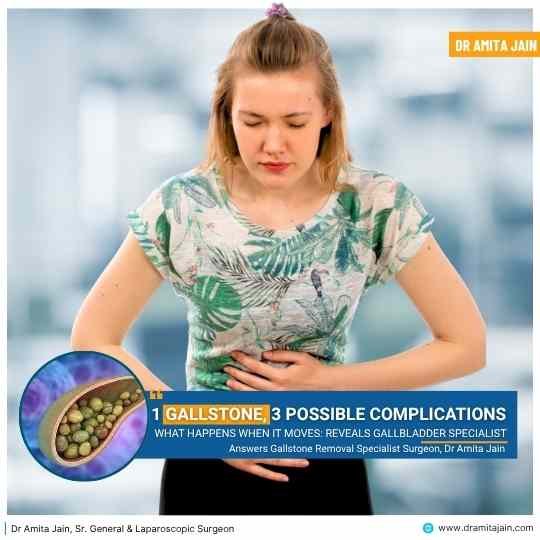
What Are Gallbladder Stones (Cholelithiasis)?
Gallbladder stones (medically termed cholelithiasis) are hardened crystalline deposits that form inside the gallbladder—a small, pear-shaped digestive organ situated beneath the liver on your right side. The gallbladder stores bile, a fluid synthesized by the liver to digest dietary fats.
In India, gallstones are predominantly composed of excess cholesterol (accounting for ~80% of urban cases) or pigment stones formed from excessive bilirubin breakdown and chronic biliary stasis. While some patients have asymptomatic or “silent” stones, once symptoms begin, conservative observation carries serious medical risks.
Dangerous Complications of Untreated Gallstones
The gallbladder stores bile produced by the liver and releases it into the small intestine to help digest fats. Gallstones can obstruct the narrow passages that carry bile from the gallbladder and liver. Depending on the location of the blockage, three important complications may develop: acute cholecystitis, bile duct obstruction with possible cholangitis, and acute pancreatitis.
“Persistent or severe symptoms should never be ignored, because early assessment can help identify gallstone complications and guide timely treatment.” Says specialised surgeon in Delhi for Gallbladder treatment Dr Amita Jain.
1. Acute Cholecystitis: When the Gallbladder Becomes Inflamed
A gallstone can become lodged in the cystic duct, which carries bile out of the gallbladder. When bile cannot drain properly, pressure builds up, and inflammation may develop. This condition is known as acute cholecystitis.
Common symptoms include persistent pain in the upper-right abdomen, tenderness, nausea, vomiting, and sometimes fever. The pain may spread towards the right shoulder or back and often lasts longer than a typical brief episode of biliary colic.
Without appropriate treatment, severe inflammation can lead to complications such as tissue damage or perforation. Treatment may include hospital observation, pain relief, antibiotics when indicated, and laparoscopic gallbladder removal. The approach depends on the patient’s condition and the severity of the inflammation.

2. Bile Duct Blockage and Cholangitis: When Bile Flow Is Interrupted
Sometimes, a gallstone travels from the gallbladder into the common bile duct. This condition, called choledocholithiasis, can prevent bile from reaching the intestine and cause jaundice.
Warning signs may include yellowing of the skin or eyes, dark urine, pale stools, itching, and upper abdominal pain. If bacteria infect the obstructed bile duct, acute cholangitis can develop. Fever, chills, abdominal pain, and jaundice are important warning signs of this potentially life-threatening condition.
Treatment may require antibiotics and urgent drainage of the blocked bile duct. An endoscopic procedure called endoscopic retrograde cholangiopancreatography (ERCP) is often used to remove the stone. Gallbladder removal may subsequently be recommended to reduce the risk of further complications.
3. Acute Pancreatitis: When a Gallstone Triggers Pancreatic Inflammation
The bile duct and pancreatic duct open into the small intestine near one another. A gallstone lodged near this shared outlet can interfere with pancreatic drainage and trigger acute pancreatitis, an inflammation of the pancreas.
Symptoms commonly include severe, persistent upper abdominal pain that may spread to the back, nausea, and repeated vomiting. Some patients also develop fever and abdominal tenderness.
Gallstone-related pancreatitis can range from mild illness to a severe condition affecting other organs. Hospital treatment may include intravenous fluids, pain management, monitoring, and treatment of any persistent obstruction. If a retained stone is causing cholangitis or ongoing bile duct obstruction, urgent endoscopic treatment may be necessary. Gallbladder removal is often recommended after recovery to prevent another episode, with timing based on the severity of the illness.
Recognising the Warning Signs
Symptoms alone cannot establish the location of a gallstone or confirm a complication. Doctors may recommend an abdominal ultrasound, blood tests, and additional imaging, such as magnetic resonance cholangiopancreatography (MRCP), when a bile duct stone is suspected.
Seek urgent medical care if abdominal pain is severe or persistent, or if it occurs with fever, chills, jaundice, or repeated vomiting. Confusion, fainting, or signs of severe illness require emergency attention.
Can a Gallstone Move Without Causing Any Symptoms?
Yes. Gallstones may remain in the gallbladder or move without producing noticeable symptoms. However, a stone that obstructs a duct can cause pain, inflammation, or other complications. Even when symptoms settle, recurring episodes should be discussed with a doctor to determine whether further investigation or treatment is needed.
Not every gallstone requires surgery. Decisions depend on symptoms, the stone’s location, the patient’s health, and whether complications have occurred.
When Does a Gallstone Require Surgery?
Gallstones that cause repeated pain or complications often require treatment. Laparoscopic cholecystectomy, or surgical removal of the gallbladder, is a common treatment for symptomatic gallbladder stones.
When a stone enters the common bile duct, ERCP may be required to remove it. Gallbladder removal may also be advised to prevent further stones from causing blockages. The treatment plan depends on the patient’s condition, the location of the stone, and the presence of infection or pancreatitis.
A gallstone can cause more than temporary abdominal discomfort when it blocks a duct. It may inflame the gallbladder, obstruct the common bile duct and cause infection, or trigger acute pancreatitis. Prompt medical assessment helps identify the complication and determine the appropriate treatment.
Suffering from Gallbladder Pain or Suspected Stones?
Get an expert evaluation at Fortis C-DOC Hospital (Chirag Enclave) or Rainbow Hospital (Malviya Nagar / Panchsheel Park). Minimally invasive 4K laparoscopic surgery with 100% cashless insurance support.
Frequently Asked Questions
In over 95% of patients with symptomatic gallstones, oral medications cannot dissolve the stones. Oral dissolution therapy (UDCA) works in less than 5% of tiny cholesterol stones and has a high recurrence rate (>50%). Laparoscopic Cholecystectomy (keyhole surgery) is the only definitive, permanent cure.
No. The gallbladder itself has a biochemical defect causing stone formation. Keeping the organ leads to rapid stone recurrence within months. Removing the diseased gallbladder permanently prevents recurrent attacks, complications, and gallbladder cancer.
Yes. The liver continues to produce bile, which flows directly into the intestine to digest fats. Over 98% of patients live a completely normal life with zero long-term digestive restrictions after a brief 2-3 week adjustment.

Dr Amita Jain is one of India’s most distinguished and experienced female surgeons and proctologists, known for her unmatched expertise in general, advanced laparoscopic, and laser proctology surgery. With over 30 years of surgical excellence, Dr Amita Jain has built a reputation for precision, compassionate care, and advanced surgical techniques.
Dr Jain has successfully performed a wide range of complex general surgeries, including both open and minimally invasive procedures, with a strong focus on trauma care, onco-surgical techniques, and reconstructive surgeries. Her medical specialisation includes: gallbladder surgeries, appendix removal surgeries, hernia repair surgeries, Pilonidal Sinus treatments, varicose vein and piles surgeries, fistula surgeries and fissure surgeries.
Dr Jain, currently serves as Senior Consultant and Head of Department (General, Laser, Proctology and Laparoscopic Surgeries) across premier medical networks in South Delhi:
Daffodils by Artemis Hospitals: Spring Meadows, East of Kailash, New Delhi. Book Appointment
Fortis C-DOC Hospital: B-16, Chirag Enclave, New Delhi. Book Appointment
Rosewalk Luxury Multi-Specialty & Maternity Hospital: Panchsheel Park, New Delhi. Book Appointment
Rainbow Children’s Hospital: Malviya Nagar, New Delhi. Book Appointment
Learn More about Dr Amita Jain.
Dr Amita Jain has also authored some of the key medical journals and publications, like ResearchGate, IJSR
Note: This article is written and reviewed by Dr Amita Jain, while referring to her medical journals and publications.