Summary
- Gallstones can cause referred pain that radiates from the upper abdomen to the back and shoulder area.
- Gallstone-related back pain is often accompanied by symptoms such as nausea, bloating, indigestion, or abdominal discomfort.
- Early diagnosis and treatment can help prevent complications and provide lasting relief from symptoms.
Gallstones are hardened deposits that form within the gallbladder, a small organ located beneath the liver. While many people with gallstones may not experience symptoms, others can develop significant discomfort when the stones block the normal flow of bile.
Gallstone-related symptoms are often associated with abdominal pain, particularly in the upper right side of the abdomen.
However, many patients are surprised to learn that gallstones can also cause pain in areas beyond the abdomen, including the back and shoulders.
Understanding this connection can help individuals recognize symptoms early and seek appropriate medical care shares Dr Amita Jain who is an experienced Sr general and laparoscopic surgeon and gallstones specialist in Delhi.
Can Gallstones Cause Back Pain?
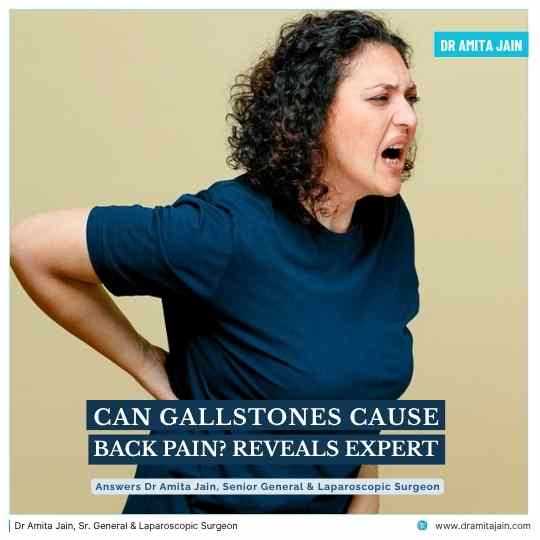
Yes, gallstones can cause back pain, particularly when they trigger inflammation or obstruct the bile ducts. The pain often begins in the upper right abdomen and may radiate to the upper back, between the shoulder blades, or even to the right shoulder.
This phenomenon, known as referred pain, occurs because the nerves that supply the gallbladder share pathways with nerves that transmit pain signals from other parts of the body.
As a result, discomfort originating from the gallbladder may be felt in the back rather than solely in the abdomen.
Gallstones, surgeon in South Delhi, Dr Amita Jain says that “Gallstones may form silently, but when symptoms appear, the pain can extend far beyond the abdomen. Recognizing the connection between gallstones and back pain is the first step toward timely diagnosis and effective treatment.”
Understanding the Link Between Gallstones and Back Pain
The gallbladder plays an important role in storing and releasing bile to aid digestion. When gallstones block the gallbladder outlet or bile ducts, pressure can build up within the organ, leading to inflammation and painful spasms.
These pain signals can travel along shared nerve pathways, causing discomfort that extends beyond the gallbladder itself. This is why some individuals may initially mistake gallstone-related pain for a muscle strain or spinal problem.

Characteristics of Gallstone-Related Back Pain
Back pain associated with gallstones is typically different from pain caused by musculoskeletal conditions. It often occurs suddenly and may be accompanied by upper abdominal pain, nausea, vomiting, bloating, or indigestion.
The discomfort frequently develops after eating fatty meals, as the gallbladder contracts to release bile. Episodes can last from a few minutes to several hours and may recur if the underlying condition is not addressed.
Additional Symptoms That May Accompany Gallstones
Gallstones can produce a variety of symptoms depending on their size and location. In addition to abdominal and back pain, individuals may experience nausea, vomiting, digestive discomfort, and a feeling of fullness after meals.
In more severe cases, blockage of the bile ducts can lead to jaundice, fever, chills, and serious infections that require prompt medical attention.
When Back Pain Signals a More Serious Problem?
Persistent or severe back pain accompanied by abdominal symptoms should not be ignored. Complications such as acute cholecystitis, bile duct obstruction, or pancreatitis can develop when gallstones are left untreated. These conditions may cause intense pain, fever, and worsening digestive symptoms, requiring urgent medical evaluation and treatment.
Diagnosing Gallstones as the Cause of Back Pain
Because back pain has many possible causes, an accurate diagnosis is essential. Healthcare providers typically review symptoms, perform a physical examination, and use imaging studies such as ultrasound to evaluate the gallbladder.
Additional tests may be recommended to assess inflammation, infection, or bile duct obstruction. Identifying gallstones early can help prevent complications and guide appropriate treatment.
Treatment Options for Gallstones
Treatment depends on the severity of symptoms and the presence of complications. Some asymptomatic gallstones may not require immediate intervention. However, symptomatic gallstones often necessitate medical management or surgical removal of the gallbladder.
Modern minimally invasive techniques, including laparoscopic gallbladder surgery, allow many patients to recover quickly and return to normal activities within a short period.
The Importance of Seeking Timely Medical Care
Ignoring recurrent abdominal or back pain can allow gallstone-related problems to progress. Early evaluation helps determine whether symptoms are linked to gallstones and enables timely treatment before complications arise.
Prompt medical attention can improve outcomes and reduce the risk of serious health issues.
Although gallstones are commonly associated with abdominal discomfort, they can also cause pain that radiates to the back and shoulder region.
This referred pain occurs due to shared nerve pathways and may be accompanied by digestive symptoms such as nausea and bloating.
Recognizing the connection between gallstones and back pain can help individuals seek appropriate medical care, obtain an accurate diagnosis, and receive timely treatment to prevent complications.

Dr Amita Jain is one of India’s most distinguished and experienced female surgeons and proctologists, known for her unmatched expertise in general, advanced laparoscopic, and laser proctology surgery. With over 30 years of surgical excellence, Dr Amita Jain has built a reputation for precision, compassionate care, and advanced surgical techniques.
Dr Jain has successfully performed a wide range of complex general surgeries, including both open and minimally invasive procedures, with a strong focus on trauma care, onco-surgical techniques, and reconstructive surgeries. Her medical specialisation includes: gallbladder surgeries, appendix removal surgeries, hernia repair surgeries, Pilonidal Sinus treatments, varicose vein and piles surgeries, fistula surgeries and fissure surgeries.
Dr Jain, currently serves as Senior Consultant and Head of Department (General, Laser, Proctology and Laparoscopic Surgeries) across premier medical networks in South Delhi:
Daffodils by Artemis Hospitals: Spring Meadows, East of Kailash, New Delhi. Book Appointment
Fortis C-DOC Hospital: B-16, Chirag Enclave, New Delhi. Book Appointment
Rosewalk Luxury Multi-Specialty & Maternity Hospital: Panchsheel Park, New Delhi. Book Appointment
Rainbow Children’s Hospital: Malviya Nagar, New Delhi. Book Appointment
Learn More about Dr Amita Jain.
Dr Amita Jain has also authored some of the key medical journals and publications, like ResearchGate, IJSR
Note: This article is written and reviewed by Dr Amita Jain, while referring to her medical journals and publications.