In recent years, Laparoscopy has been hugely used as a surgical process of choice to address a range of ailments and conditions. This surgery has become quite popular with doctors and patients alike considering the big number of benefits it provides and the faster time to recovery.
Let us look at what exactly this procedure involves and where it can be deployed as explained by top laparoscopic surgeon Dr Amita Jain.
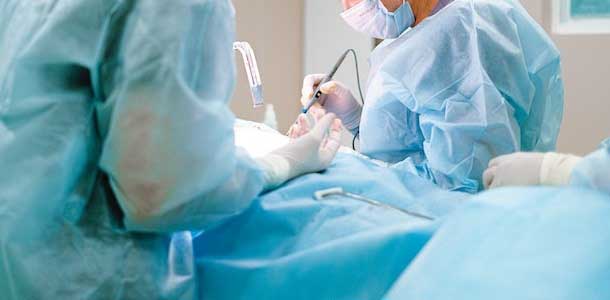
Laparoscopy as a surgery has become quite popular in recent years. It takes a revolutionary approach to perform the procedure wherein several smaller cuts are made in place of the traditional approach of making one large incision to access the part to be operated.
The procedure uses a device known as the laparoscope, a narrow tube having a tiny video camera and a bright light at the tip. The doctor inserts this tube through a small cut of the width of around 1 cm to take a clear look at the internal organs.
A few more incisions are made in other parts in and around the site through which a few other tools are inserted to perform the surgery. Laparoscopy is also known as ‘minimally invasive’ surgery. This sort of surgery was initially used for gallbladder surgery and a few gynaecological operations but it is used now to operate several other organs like intestines, liver, abdomen, and other organs.
India’s leading laparoscopic surgeon Dr Amita Jain talks about the benefits of laparoscopic surgery in this blog.

Benefits of laparoscopic surgeries
- The patient can get discharged from the hospital faster
- There will be fewer scars post-surgery
- The patient experiences less discomfort as the scars heal, and they heal faster
- The patient can start normal activities quicker
To elucidate the pros of laparoscopic surgery, let us take an example of a typical intestinal procedure. If a patient stays in the hospital for nearly a week having a traditional surgery and takes about 4 to 8 weeks to recover, under a laparoscopic surgery, the patient might have to stay for 2 nights in the hospital and the recovery could be as little as 2 to 3 weeks. A shorter hospital stay translates to fewer expenses and the patient can also resume his activities within a shorter time.
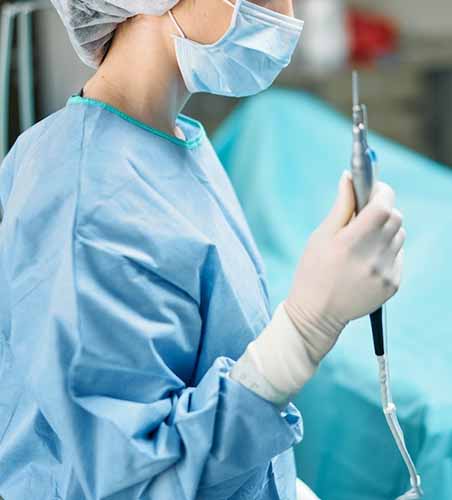
The following surgeries that can be done through the laparoscopic procedure are hernia surgery, inguinal hernia, hiatal hernia surgery, umbilical hernia, femoral hernia, appendectomy, gallbladder removal, colon surgery, bariatric surgery, and anti-reflux surgery.

Dr Amita Jain is one of India’s most distinguished and experienced female surgeons and proctologists, known for her unmatched expertise in general, advanced laparoscopic, and laser proctology surgery. With over 30 years of surgical excellence, Dr Amita Jain has built a reputation for precision, compassionate care, and advanced surgical techniques.
Dr Jain has successfully performed a wide range of complex general surgeries, including both open and minimally invasive procedures, with a strong focus on trauma care, onco-surgical techniques, and reconstructive surgeries. Her medical specialisation includes: gallbladder surgeries, appendix removal surgeries, hernia repair surgeries, Pilonidal Sinus treatments, varicose vein and piles surgeries, fistula surgeries and fissure surgeries.
Dr Jain, currently serves as Senior Consultant and Head of Department (General, Laser, Proctology and Laparoscopic Surgeries) across premier medical networks in South Delhi:
Daffodils by Artemis Hospitals: Spring Meadows, East of Kailash, New Delhi. Book Appointment
Fortis C-DOC Hospital: B-16, Chirag Enclave, New Delhi. Book Appointment
Rosewalk Luxury Multi-Specialty & Maternity Hospital: Panchsheel Park, New Delhi. Book Appointment
Rainbow Children’s Hospital: Malviya Nagar, New Delhi. Book Appointment
Learn More about Dr Amita Jain.
Dr Amita Jain has also authored some of the key medical journals and publications, like ResearchGate, IJSR
Note: This article is written and reviewed by Dr Amita Jain, while referring to her medical journals and publications.