Key Summary
- Gallbladder rupture usually needs urgent surgery and infection control.
- Treatment may involve laparoscopic or open gallbladder removal surgery.
- Early diagnosis greatly improves recovery and reduces complications.
A gallbladder rupture is a serious medical emergency that requires immediate attention. The gallbladder, a small organ located beneath the liver, stores bile that helps digest fats. When it becomes severely inflamed, infected, or injured, the wall of the gallbladder can tear or perforate, allowing bile and infection to spread into the abdominal cavity.
This condition can quickly become life-threatening if not treated in time. Understanding the treatment options and recovery process can help patients and families make informed decisions during a critical moment, shares Dr Amita Jain, a Senior General and Laparoscopic Surgeon and a gallbladder treatment specialist surgeon in Delhi.
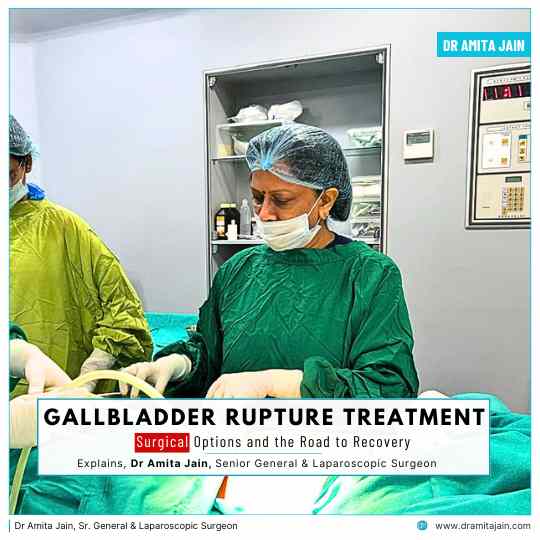
Could Severe Gallbladder Pain Be a Sign of Rupture?
Not every gallbladder pain signals a rupture, but intense abdominal pain combined with fever, nausea, vomiting, abdominal swelling, or sudden weakness should never be ignored. A ruptured gallbladder often develops as a complication of untreated gallstones, severe infection, or advanced inflammation known as Acute Cholecystitis. In some cases, trauma or reduced blood supply to the gallbladder may also cause the organ to perforate. Doctors usually confirm the diagnosis through blood tests, ultrasound imaging, or a CT scan.
“A gallbladder rupture is not just a surgical emergency—it is a race against time. Early diagnosis, timely surgical intervention, and careful postoperative care can make the difference between a life-threatening complication and a successful recovery. When abdominal pain becomes severe and persistent, listening to the body and seeking expert medical attention without delay can save lives.” Dr Amita Jain, a Senior General and Laparoscopic Surgeon and a specialist Cholecystostomy (Gallbladder Drainage) Surgeon in Delhi and India
Why is Immediate Surgery Often Necessary?
Once a gallbladder rupture is diagnosed, surgery is usually the most effective treatment. The main goal is to stop the spread of infection, remove the damaged gallbladder, and clean the abdominal cavity if bile leakage has occurred. Delaying treatment can increase the risk of widespread infection, organ failure, or a life-threatening condition called Sepsis.
The patient is often stabilized first with intravenous fluids, antibiotics, and pain management before moving to surgery, depending on their condition.
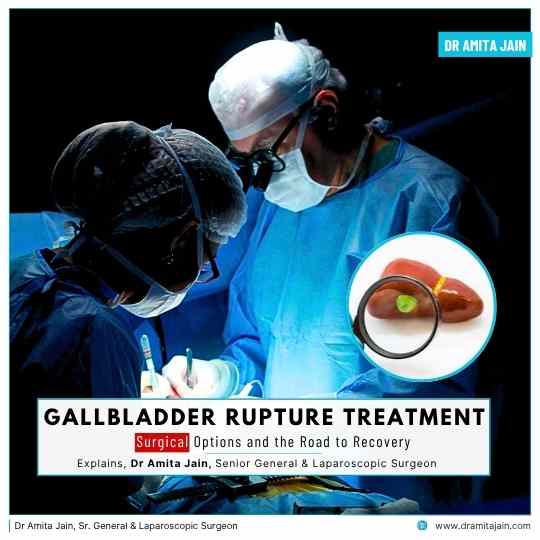
Laparoscopic Surgery for Gallbladder Rupture
In some patients, surgeons may perform a minimally invasive procedure called Laparoscopic Cholecystectomy. This technique uses small incisions and a camera to remove the gallbladder.
If the rupture is detected early and the infection is controlled, laparoscopic surgery can offer faster recovery, less postoperative pain, and smaller scars. However, not every patient is a candidate for this method, especially if there is widespread infection or severe tissue damage.
When Open Surgery Becomes the Safer Choice?
In more complicated cases, surgeons may recommend an open cholecystectomy. This involves a larger incision in the abdomen, allowing better access to infected tissues and leaked bile.
Open surgery is often chosen when inflammation is severe, anatomy is unclear, or the patient reaches the hospital in a critical condition. Although recovery may take longer, this approach can be life-saving in emergency situations.
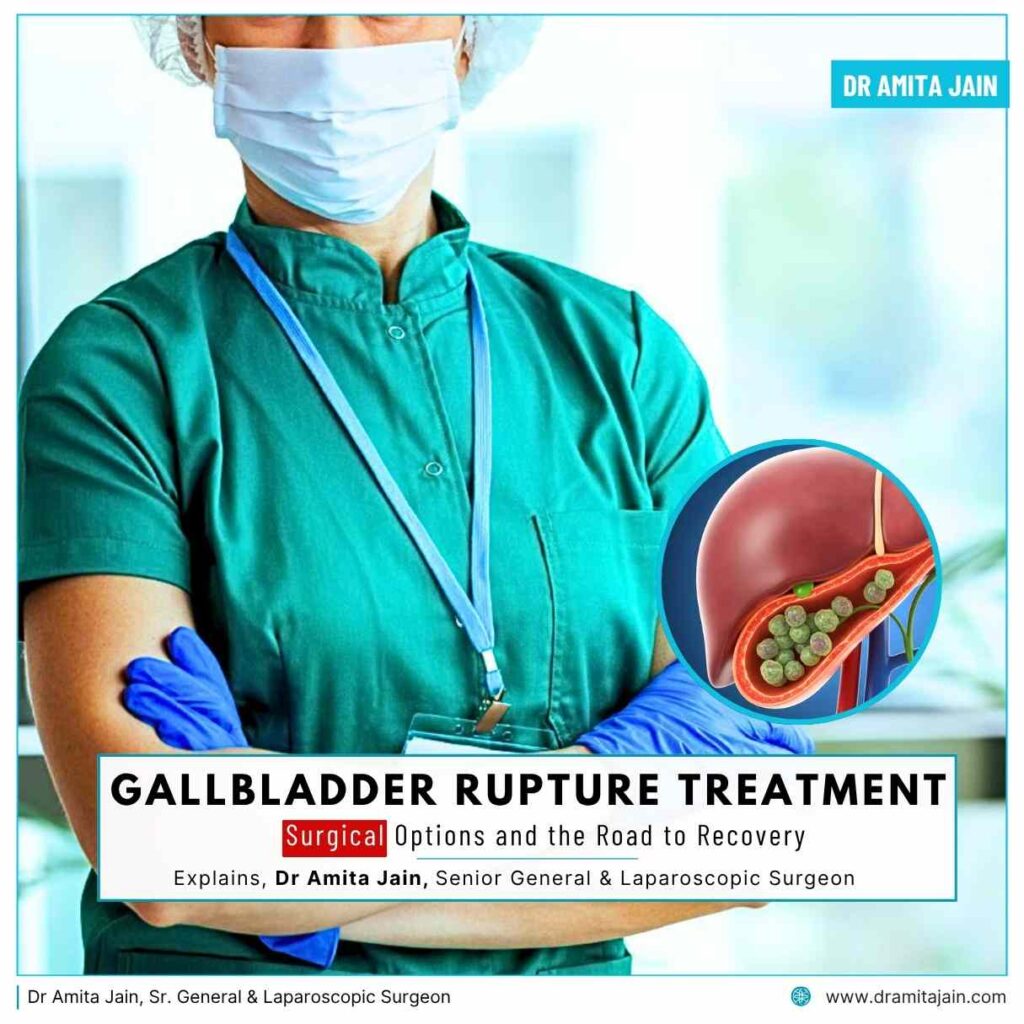
Managing Infection and Post-Surgical Care
After surgery, treatment does not end in the operating room. Patients usually continue receiving antibiotics, fluids, and close monitoring in the hospital. Doctors watch for signs of infection, internal bleeding, or complications involving nearby organs such as the liver or intestines.
Nutrition is reintroduced gradually, starting with fluids and light meals as digestion improves. Pain control and wound care are also important parts of recovery.
What Does Recovery Look Like After Gallbladder Surgery?
Recovery varies depending on how early the rupture was treated and the patient’s overall health. Patients undergoing laparoscopic surgery may return to normal activities within a few weeks, while those who require open surgery may need a longer healing period.
Most people eventually adapt well to life without a gallbladder. The liver continues producing bile, although some patients may temporarily notice changes in digestion, especially after fatty meals.
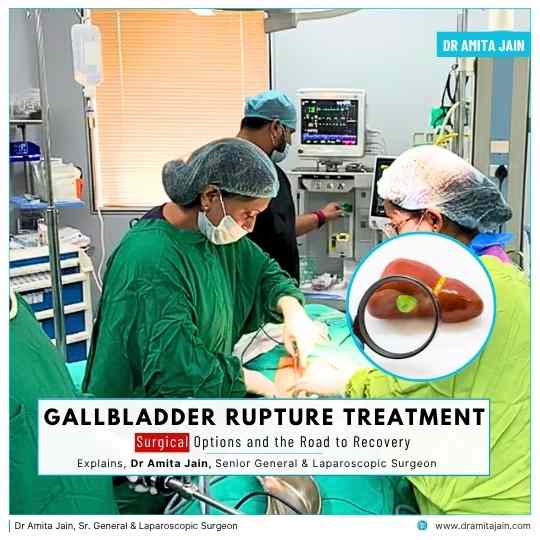
The Importance of Early Diagnosis
Gallbladder rupture is rare, but when it happens, quick diagnosis and expert surgical care make a major difference. Ignoring recurring gallbladder symptoms or delaying treatment for gallstones can increase the risk of severe complications. Seeking medical attention at the right time can significantly improve outcomes and support a smoother recovery journey.

Dr Amita Jain is one of India’s most distinguished and experienced female surgeons and proctologists, known for her unmatched expertise in general, advanced laparoscopic, and laser proctology surgery. With over 30 years of surgical excellence, Dr Amita Jain has built a reputation for precision, compassionate care, and advanced surgical techniques.
Dr Jain has successfully performed a wide range of complex general surgeries, including both open and minimally invasive procedures, with a strong focus on trauma care, onco-surgical techniques, and reconstructive surgeries. Her medical specialisation includes: gallbladder surgeries, appendix removal surgeries, hernia repair surgeries, Pilonidal Sinus treatments, varicose vein and piles surgeries, fistula surgeries and fissure surgeries.
Dr Jain, currently serves as Senior Consultant and Head of Department (General, Laser, Proctology and Laparoscopic Surgeries) across premier medical networks in South Delhi:
Daffodils by Artemis Hospitals: Spring Meadows, East of Kailash, New Delhi. Book Appointment
Fortis C-DOC Hospital: B-16, Chirag Enclave, New Delhi. Book Appointment
Rosewalk Luxury Multi-Specialty & Maternity Hospital: Panchsheel Park, New Delhi. Book Appointment
Rainbow Children’s Hospital: Malviya Nagar, New Delhi. Book Appointment
Learn More about Dr Amita Jain.
Dr Amita Jain has also authored some of the key medical journals and publications, like ResearchGate, IJSR
Note: This article is written and reviewed by Dr Amita Jain, while referring to her medical journals and publications.