Key Summary
- Open gallbladder surgery is a traditional procedure used when laparoscopic methods are not suitable due to complications or severity.
- It provides better visibility and control for surgeons, making it safer in complex or high-risk cases.
- Recovery takes longer, but most patients return to normal life with minor dietary adjustments over time
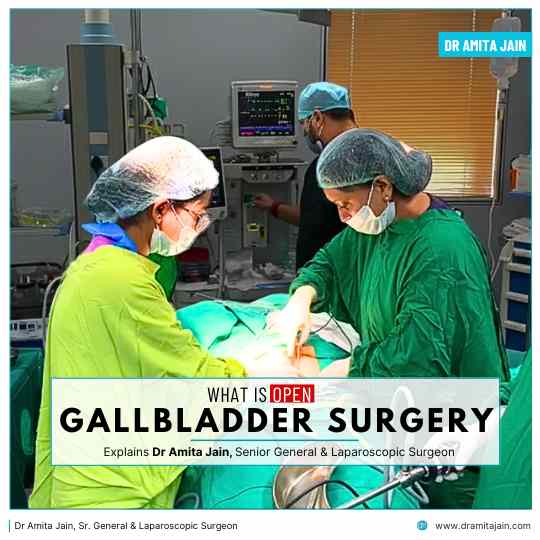
Gallbladder problems can become more than just occasional discomfort—they can interfere with digestion, cause severe pain, and even lead to complications if left untreated. When non-surgical treatments fail or conditions become serious, surgery is often the most effective solution.
While minimally invasive techniques are common today, open gallbladder surgery remains an important and sometimes necessary procedure in specific cases, explains Dr Amita Jain, a senior general and laparoscopic surgeon and an experienced specialist in gallbladder surgery in Delhi.
When is Open Gallbladder Surgery Required Instead of Laparoscopic Surgery?
Open gallbladder surgery is usually recommended when laparoscopic (keyhole) surgery is not safe or feasible. This may happen if there is severe inflammation, infection, scarring from previous surgeries, or complications such as a ruptured gallbladder. In some cases, a surgery that begins laparoscopically may need to be converted into an open procedure to ensure patient safety and better visibility for the surgeon.
“Open gallbladder surgery, though less commonly performed in the era of minimally invasive techniques, remains a cornerstone in surgical care for complex cases where precision, visibility, and patient safety take precedence. It stands as a reminder that while medical advancements evolve, traditional approaches continue to play a vital role in ensuring successful outcomes, especially when conditions demand a more direct and controlled surgical intervention.” – Dr Amita Jain says, Senior General & Laparoscopic Surgeon
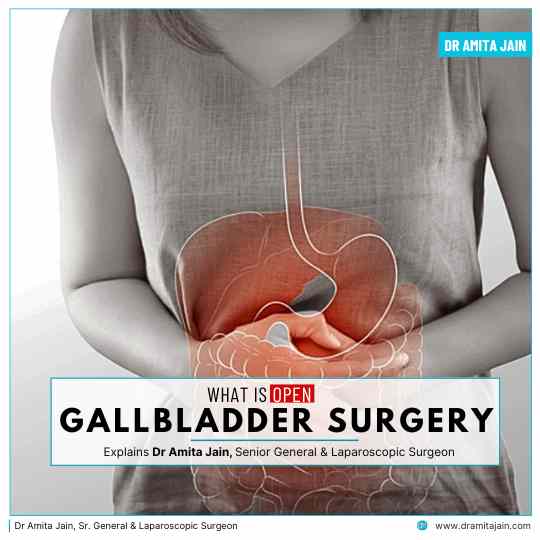
Understanding Open Gallbladder Surgery
Open gallbladder surgery, also known as open cholecystectomy, is a traditional surgical procedure in which the gallbladder is removed through a larger incision in the abdomen. This approach allows the surgeon direct access to the gallbladder and surrounding organs, making it easier to manage complex or high-risk situations. Although it involves a longer recovery time compared to laparoscopic surgery, it remains a highly reliable and effective method.
Why Open Surgery May Be the Safer Choice
In certain medical situations, visibility and control are crucial. Open surgery provides surgeons with a clearer view of the internal structures, which is particularly important when there is excessive swelling, bleeding, or abnormal anatomy. Patients with a history of multiple abdominal surgeries or those with advanced gallbladder disease may benefit more from this approach, as it reduces the risk of complications during the procedure.

The Procedure and What to Expect
During open gallbladder surgery, the patient is placed under general anaesthesia. A single incision is made on the right side of the abdomen to access and remove the gallbladder. The surgeon carefully separates the gallbladder from the liver and bile ducts before removing it. The incision is then closed with sutures or staples. The procedure typically takes longer than laparoscopic surgery, and patients may need to stay in the hospital for a few days afterwards for monitoring and recovery.
Recovery and Healing Process
Recovery from open gallbladder surgery is more gradual. Patients may experience discomfort at the incision site and are usually advised to avoid heavy activities for several weeks. Full recovery can take four to six weeks, depending on overall health and how well the body heals. Doctors often recommend a light diet initially and gradually reintroduce normal foods as digestion adjusts without the gallbladder.

Life After Gallbladder Removal
Living without a gallbladder is generally not a problem for most people. The liver continues to produce bile, but instead of being stored, it flows directly into the small intestine. Some individuals may notice mild digestive changes, especially with fatty foods, but these symptoms often improve over time. Maintaining a balanced diet and a healthy lifestyle helps ensure a smooth adjustment.
Open gallbladder surgery continues to play a vital role in modern medicine, especially in complex or emergency cases. While newer techniques have reduced the need for it, this procedure remains a trusted and effective option when safety and surgical precision are the top priorities.

Dr Amita Jain, one of the most experienced General and Laparoscopic Surgeons in Delhi, is widely recognised for her expertise in hernia, piles, gallbladder, fissure, and fistula surgeries. With an outstanding career spanning over 29 years, Dr Amita Jain has earned her place among the top General and Laparoscopic surgeons in Delhi and India, known for her precision, compassion, and consistent surgical excellence. She was the Professor of Surgery at the Army College of Medical Sciences and Base Hospital, Delhi Cantt. In 1994, she was commissioned as a surgeon under the United Nations Mission in Congo.
Dr Amita Jain currently serves as the Senior General and Laparoscopic Surgeon at Fortis C-DOC Hospital, B-16, Chirag Enclave, Opposite Devika Tower, Greater Kailash 1, New Delhi, Delhi 110048. She is also the Senior General and Laparoscopic Surgeon at Rosewalk – Luxury Multi-Speciality Hospital in Delhi and Rainbow Multi-Speciality Hospitals (at Malviya Nagar and Panchsheel Park, New Delhi)
Dr Amita Jain has successfully performed a wide range of complex general surgeries, including both open and minimally invasive procedures, with a strong focus on trauma care, onco-surgical techniques, and reconstructive surgeries. Her medical specialisation includes – Gallbladder surgeries, appendix removal surgeries, hernia repair surgeries, Pilonidal Sinus treatments, varicose vein and piles surgeries, fistula surgeries and fissure surgeries. Learn More about Dr Amita Jain.
Dr Amita Jain has also authored some of the key medical journals and publications, like ResearchGate, IJSR
Note: the articles are written with Dr Amita Jain’s professional insights and referring to her medical publications.