Summary
- Skin discoloration is often a warning sign of chronic varicose vein disease, not merely a cosmetic issue.
- Early treatment can prevent permanent skin damage, venous ulcers, and long-term complications.
- Modern minimally invasive procedures effectively treat varicose veins with faster recovery and excellent outcomes.
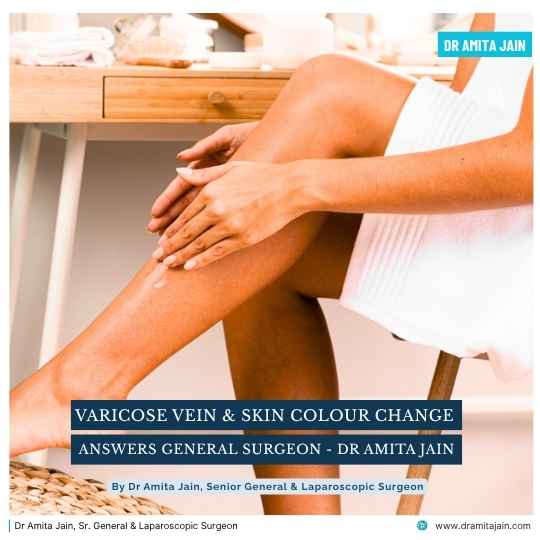
Most people associate varicose veins with enlarged, twisted veins that are visible beneath the skin. However, the condition often affects much more than appearance. As vein disease progresses, it can begin to alter the colour and texture of the skin, particularly around the ankles and lower legs.
These changes indicate that blood circulation has been compromised for a prolonged period and should never be ignored. Recognising the connection between varicose veins and skin discolouration can help patients seek timely treatment before serious complications, such as venous ulcers, develop, reveals Dr Amita Jain, a Sr. General Surgeon, Laparoscopic Surgeon, and specialist for Varicose Veins in Delhi.
Why Does Skin Change Colour in Varicose Veins?
Healthy veins contain one-way valves that help blood travel back to the heart. When these valves become weak or damaged, blood starts collecting in the veins instead of flowing upward efficiently. This increases pressure inside the veins, causing blood cells and fluid to leak into the surrounding tissues.
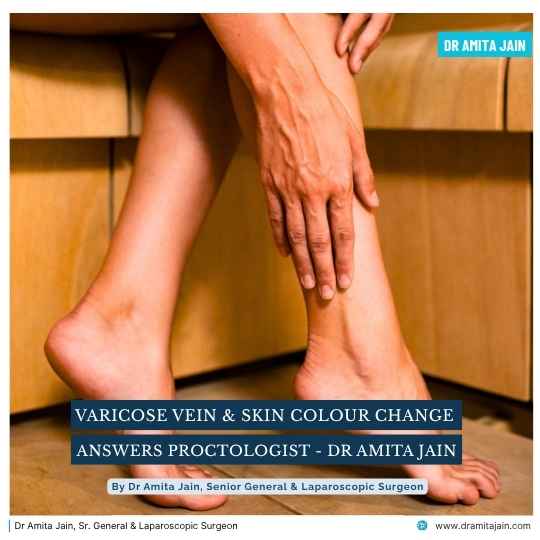
As red blood cells break down beneath the skin, they release iron-rich pigments that gradually stain the skin. Initially, the affected area may appear reddish or purple, but over time, it often becomes brown or dark around the ankles and lower legs. This discolouration is a sign of chronic venous insufficiency rather than a simple cosmetic concern.
“Your skin often reveals what your veins are trying to tell you—listen early, treat early, and protect your legs for life.”
Early Signs You Should Never Ignore
Skin discolouration rarely appears suddenly. Most patients first experience symptoms such as aching legs, heaviness, swelling after standing for long periods, itching, or visible bulging veins. The skin may become dry and irritated before noticeable pigmentation develops.
Because these symptoms often progress slowly, many people delay seeking treatment. Unfortunately, untreated venous disease continues to damage the skin and underlying tissues even when discomfort is minimal.
How Skin Damage Progresses?
Persistent venous hypertension gradually weakens the skin’s natural barrier. As circulation worsens, the skin becomes thicker, harder, and less flexible. Some patients develop venous eczema, which causes redness, itching, and inflammation.
If the underlying vein problem remains untreated, even a small scratch or injury may fail to heal properly. This can eventually lead to painful venous leg ulcers that require prolonged medical care and significantly affect quality of life.
Areas Most Commonly Affected
Skin color changes caused by varicose veins most frequently occur around the ankles because this is where blood pressure inside the veins is greatest. Gravity makes it harder for blood to travel upward from the lower legs, placing additional strain on already weakened veins.
As the disease advances, discolouration may spread upward into the calves. Swelling, burning sensations, and persistent leg fatigue often accompany these skin changes.
Can Skin Discolouration Be Reversed?
The possibility of reversing skin discolouration depends on how early treatment is started. When varicose veins are treated in their early stages, improved blood circulation reduces inflammation and prevents further pigment deposition. Some skin discolouration may gradually fade over time.
However, long-standing pigmentation may not disappear completely because permanent skin changes may already have occurred. This is why early diagnosis offers the best chance of preserving both healthy veins and healthy skin.
Modern Treatment for Varicose Veins
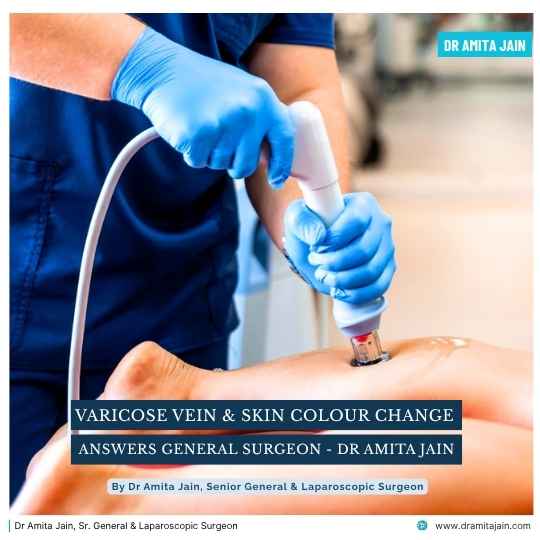
Treatment today is far more advanced than traditional vein surgery. After evaluating the veins with a Duplex Doppler Ultrasound, specialists can recommend minimally invasive procedures such as endovenous laser treatment, radiofrequency ablation, or foam sclerotherapy. These treatments close the diseased veins while allowing blood to flow through healthier veins.
Patients usually experience less pain, minimal scarring, quicker recovery, and a significant reduction in symptoms. Early intervention also helps prevent further skin discolouration and reduces the risk of chronic ulcers.
Prevention and Long-Term Vein Health
Although not every case of varicose veins can be prevented, certain lifestyle measures can slow disease progression. Maintaining a healthy weight, staying physically active, avoiding prolonged standing or sitting, elevating the legs during rest, and wearing compression stockings when advised by a specialist can all improve venous circulation.
Most importantly, any persistent skin discolouration around the ankles or lower legs should be evaluated by a vascular specialist rather than being dismissed as a normal sign of ageing.

Dr Amita Jain is one of India’s most distinguished and experienced female surgeons and proctologists, known for her unmatched expertise in general, advanced laparoscopic, and laser proctology surgery. With over 30 years of surgical excellence, Dr Amita Jain has built a reputation for precision, compassionate care, and advanced surgical techniques.
Dr Jain has successfully performed a wide range of complex general surgeries, including both open and minimally invasive procedures, with a strong focus on trauma care, onco-surgical techniques, and reconstructive surgeries. Her medical specialisation includes: gallbladder surgeries, appendix removal surgeries, hernia repair surgeries, Pilonidal Sinus treatments, varicose vein and piles surgeries, fistula surgeries and fissure surgeries.
Dr Jain, currently serves as Senior Consultant and Head of Department (General, Laser, Proctology and Laparoscopic Surgeries) across premier medical networks in South Delhi:
Daffodils by Artemis Hospitals: Spring Meadows, East of Kailash, New Delhi. Book Appointment
Fortis C-DOC Hospital: B-16, Chirag Enclave, New Delhi. Book Appointment
Rosewalk Luxury Multi-Specialty & Maternity Hospital: Panchsheel Park, New Delhi. Book Appointment
Rainbow Children’s Hospital: Malviya Nagar, New Delhi. Book Appointment
Learn More about Dr Amita Jain.
Dr Amita Jain has also authored some of the key medical journals and publications, like ResearchGate, IJSR
Note: This article is written and reviewed by Dr Amita Jain, while referring to her medical journals and publications.