Surgeon’s Direct Answer Summary
- Smaller incisions do not necessarily mean a simpler operation.
- Minimally invasive procedures can still involve significant risks and technical challenges.
- The safest surgical approach depends on the patient’s condition and the procedure required.
Article Medically Reviewed by Dr Amita Jain, MBBS, MS (Gen Surgery), Fellowship (AIIMS), Military-Precision Senior General and Laparoscopy Surgeon: 30 Years of Surgical Excellence by Ex-Indian Army Surgeon
Minimally invasive surgery is often associated with smaller incisions, less tissue damage, and faster recovery. Procedures performed using laparoscopy, endoscopy, or specialized instruments can reduce the physical impact of surgery compared with certain traditional open techniques. However, a smaller incision does not necessarily mean a simpler operation, fewer risks, or an easier recovery.
The complexity of surgery depends on the condition being treated, the structures involved, the patient’s overall health, and the technical demands of the procedure. Understanding this distinction helps patients make informed decisions instead of judging surgery by the size of its incision alone shares Dr Amita Jain an experienced Sr General and Laparoscopy Surgeon in Delhi.
What Is the Difference Between Minimally Invasive and Minor Surgery?
Minimally invasive surgery describes how a surgeon accesses and treats an affected area, whereas minor surgery generally refers to procedures that are relatively limited in scope and complexity. The two terms are not interchangeable.
| Comparison | Minimally Invasive Surgery | Minor Surgery |
| Meaning | Uses techniques designed to limit tissue disruption and surgical access | Usually involves a limited procedure with relatively low complexity |
| Incisions | Often uses small incisions or natural openings | May involve a small incision or another simple approach |
| Technical complexity | Can range from straightforward to highly complex | Generally involves a more limited scope of treatment |
| Anaesthesia | May require general or regional anaesthesia, depending on the procedure | May be performed under local anaesthesia, depending on the procedure |
| Recovery | Depends on the operation, the patient’s health, and complications | Often involves a shorter recovery, although this varies |
| Examples | Laparoscopic gallbladder removal, laparoscopic hernia repair | Removal of a small superficial skin lesion, drainage of a small uncomplicated abscess |
Note: These are general comparisons. The actual complexity, anaesthesia requirements, risks, and recovery vary by procedure and patient.
Why Doesn’t a Smaller Incision Mean Minor Surgery?
The size of an incision describes how the surgeon accesses the affected area, not the complexity of the operation itself.
A procedure performed through small incisions may still involve removing a diseased organ, repairing a significant defect, controlling bleeding, or working near important blood vessels and delicate structures. These tasks require precision, technical expertise, and careful decision-making.
For example, laparoscopic gallbladder removal uses small incisions, but the surgeon must still identify and safely manage the structures connected to the gallbladder. Severe inflammation, scarring, or altered anatomy can make the operation more challenging.
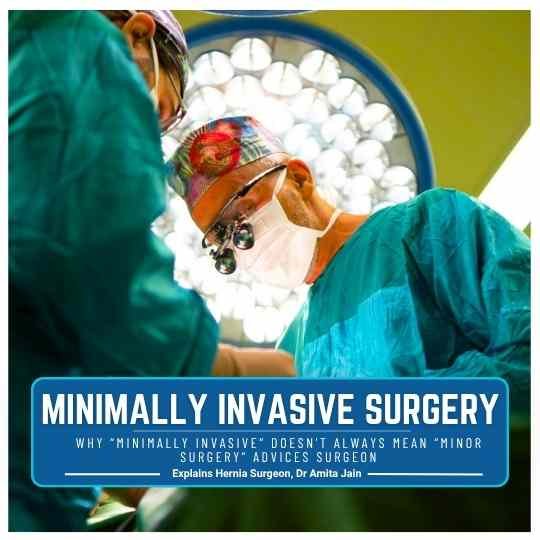
Therefore, minimally invasive surgery can be technically demanding even when the external wounds are small.
“Minimally invasive surgery is about reducing the impact of surgical access, not necessarily reducing the complexity of the operation. The priority is always safe and effective treatment.” Says specialized laparoscopy surgeon in South Delhi Dr Amita Jain.
Can Minimally Invasive Surgery Still Carry Significant Risks?
Yes. Minimally invasive techniques may reduce certain risks, but they do not eliminate the risks associated with surgery.
Potential complications include bleeding, infection, injury to nearby organs or blood vessels, anaesthesia-related complications, and blood clots. The likelihood of these complications depends on the procedure and the patient’s health.
In some cases, the surgeon may need to switch from a minimally invasive approach to open surgery to manage an unexpected complication or improve safety. This is a recognized surgical decision and does not necessarily mean the procedure has failed.
Patients should discuss the potential benefits, limitations, and risks of their proposed operation with their surgeon.
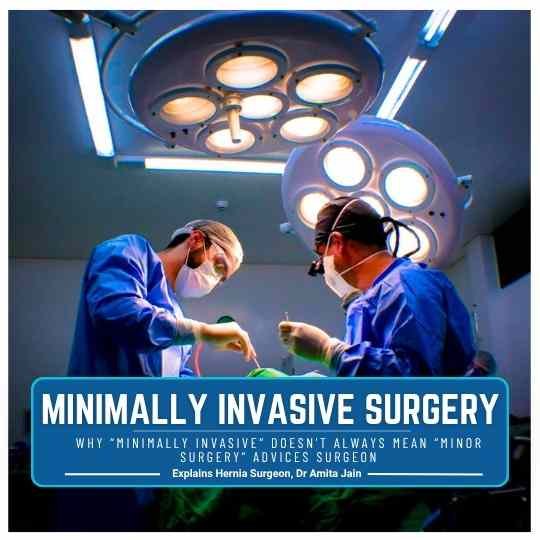
Does Minimally Invasive Surgery Always Mean Faster Recovery?
Not always. Many patients recover more quickly after suitable minimally invasive procedures, but recovery depends on more than incision size.
The extent of internal tissue treatment, severity of the condition, existing medical problems, and any postoperative complications can affect healing. A patient undergoing a complex laparoscopic operation may need more recovery time than someone having a straightforward open procedure.
Pain levels, activity restrictions, wound care, and the time required to return to work also vary. Following the surgeon’s instructions and attending scheduled follow-up appointments remain important regardless of the technique used.
How Does a Surgeon Decide Which Approach Is Appropriate?
The choice depends on which approach is safest and most effective for the individual patient.
The surgeon considers the diagnosis, location and extent of the problem, previous operations, scar tissue, medical history, and technical requirements. Minimally invasive surgery may be suitable in many cases, while open surgery may provide better access or control in others.
Patient safety and successful treatment take priority over using the smallest possible incision. Patients should ask why a particular approach is recommended and whether alternatives are appropriate for their situation.
What Should You Ask Your Surgeon Before Surgery?
Before agreeing to an operation, patients should understand what it involves and what to expect afterwards. Useful questions include:
- Why is this surgical approach suitable for my condition?
- What are the potential benefits and risks?
- Could the operation require conversion to open surgery?
- How long might recovery take, and what activities should I avoid?
- Which symptoms after surgery require urgent medical attention?
These questions help patients develop realistic expectations and prepare for recovery.
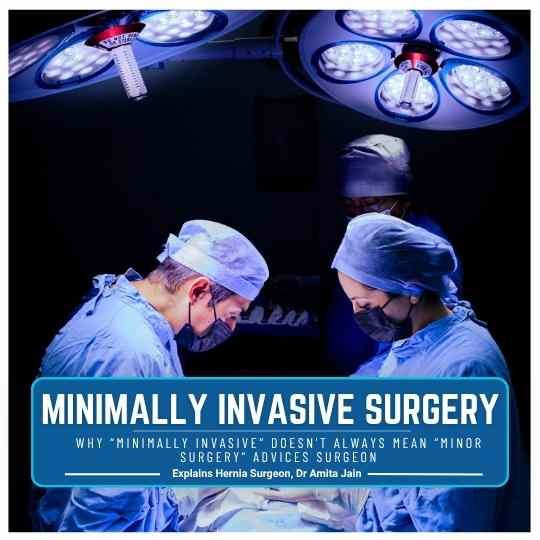
Minimally invasive surgery can offer important advantages, including smaller incisions and potentially faster recovery. However, the term describes the surgical approach rather than the overall complexity of the procedure. An operation performed through small incisions may still involve significant internal work, technical challenges, and important risks.
The best surgical approach depends on the patient’s condition, the procedure required, and the surgeon’s clinical judgment. Understanding these factors helps patients focus on safety and effective treatment rather than incision size alone.
FAQs on Minimally Invasive Surgery
Clinical Takeaway: A major, life-saving organ resection can be performed via a minimally invasive approach; that does not make it a minor surgery.
Clinical Takeaway: Minimally invasive operations reduce patient abdominal wall trauma, but they transfer greater technical and cognitive demands to the operating surgeon.
Clinical Takeaway: Small skin wounds do not shield against internal surgical complications. Preoperative health assessment is just as rigorous.
Clinical Takeaway: Conversion to open surgery is a sign of seasoned clinical judgment and prioritized patient safety, not an operative mistake.
Clinical Takeaway: External wounds heal in 7–10 days, but internal visceral tissue recovery requires 4 to 6 weeks of careful pacing.

Dr Amita Jain is one of India’s most distinguished and experienced female surgeons and proctologists, known for her unmatched expertise in general, advanced laparoscopic, and laser proctology surgery. With over 30 years of surgical excellence, Dr Amita Jain has built a reputation for precision, compassionate care, and advanced surgical techniques.
Dr Jain has successfully performed a wide range of complex general surgeries, including both open and minimally invasive procedures, with a strong focus on trauma care, onco-surgical techniques, and reconstructive surgeries. Her medical specialisation includes: gallbladder surgeries, appendix removal surgeries, hernia repair surgeries, Pilonidal Sinus treatments, varicose vein and piles surgeries, fistula surgeries and fissure surgeries.
Dr Jain, currently serves as Senior Consultant and Head of Department (General, Laser, Proctology and Laparoscopic Surgeries) across premier medical networks in South Delhi:
Daffodils by Artemis Hospitals: Spring Meadows, East of Kailash, New Delhi. Book Appointment
Fortis C-DOC Hospital: B-16, Chirag Enclave, New Delhi. Book Appointment
Rosewalk Luxury Multi-Specialty & Maternity Hospital: Panchsheel Park, New Delhi. Book Appointment
Rainbow Children’s Hospital: Malviya Nagar, New Delhi. Book Appointment
Learn More about Dr Amita Jain.
Dr Amita Jain has also authored some of the key medical journals and publications, like ResearchGate, IJSR
Note: This article is written and reviewed by Dr Amita Jain, while referring to her medical journals and publications.