Surgeon’s Direct Answer Summary
- Keep stools soft and formed: Include soluble fiber such as oats, dalia, and isabgol, along with plenty of water and high-water-content vegetables.
- Avoid foods that may worsen irritation: Limit red chilies, garam masala, deep-fried foods, and maida-based foods if they trigger discomfort.
- Diet cannot close the fistula tract: Dietary changes may help manage symptoms and bowel movements, but definitive closure generally requires appropriate surgical or laser treatment.

Article Medically Reviewed by Dr Amita Jain, MBBS, MS (Gen Surgery), Fellowship (AIIMS), Military-Precision Abdominal Surgeon, Senior General Surgeon: 29 Years of Surgical Excellence by Ex-Indian Army Surgeon
When people hear the term general surgery, they often think about procedures involving the stomach, intestines, gallbladder, or appendix. However, general surgery covers a much broader range of conditions. General surgeons diagnose and treat problems affecting different parts of the body, using both conventional and minimally invasive surgical techniques.
From hernias and breast conditions to thyroid disorders, skin and soft-tissue problems, and certain emergency conditions, general surgery can play an important role in restoring health and function shares Dr Amita Jain, an experienced Sr General, Laparoscopic Surgeon, and specialist for Abdominal treatment in Delhi.
Does General Surgery Only Deal With Abdominal Problems?
No. Abdominal surgery is an important part of general surgery, but the specialty also covers conditions involving the thyroid, breast, skin, soft tissues, colorectal region, and other areas.
General surgeons assess each patient’s symptoms, diagnosis, medical history, and investigations to determine whether the condition requires observation, medication, a minimally invasive procedure, or surgery.
“General surgery is not limited to one part of the body; it brings specialized surgical care to a wide range of conditions.” Says Sr General Surgeon for Abdominal Surgeries in Delhi, Dr Amita Jain.
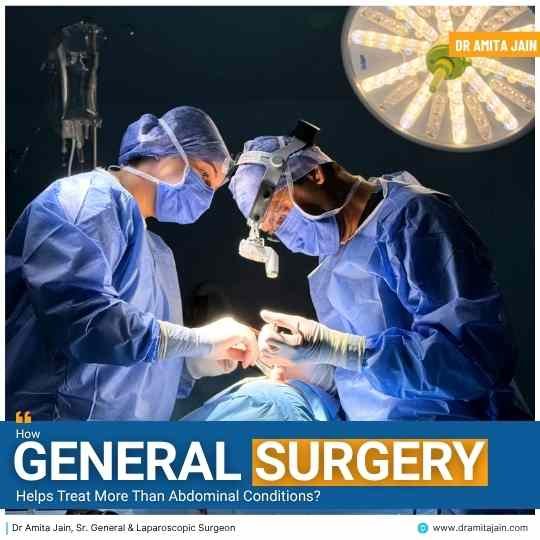
How Are Hernias and Abdominal Wall Conditions Treated?
Hernias develop when tissue or an organ pushes through a weakened area of muscle or connective tissue. Common types include inguinal, umbilical, femoral, incisional, and ventral hernias.
Treatment depends on the type and severity of the hernia. Surgical options may include open repair or minimally invasive techniques such as laparoscopic surgery. The aim is to repair the weakened area and restore the strength of the abdominal wall.
When Is Thyroid Surgery Considered?
General surgeons may perform thyroid surgery for conditions such as suspicious thyroid nodules, thyroid cancer, or an enlarged thyroid causing symptoms.
The extent of surgery depends on the underlying condition and findings from clinical examination, imaging, and other diagnostic investigations.
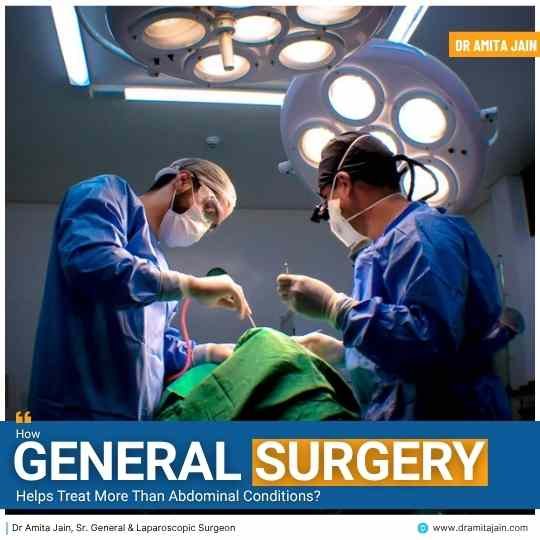
What Breast Conditions Can General Surgeons Treat?
General surgeons can evaluate and surgically manage a range of breast conditions, including breast lumps, benign breast diseases, abscesses, and breast cancer.
Depending on the diagnosis, treatment may involve drainage, removal of a benign lump, breast-conserving surgery, or other procedures appropriate to the condition.
Which Skin and Soft-Tissue Conditions May Need Surgery?
Various skin and soft-tissue conditions can require surgical treatment, including lipomas, cysts, abscesses, and certain growths.
Surgical removal or drainage may be recommended to relieve symptoms, manage infection, prevent recurrence, or obtain tissue for diagnosis when necessary.
How Are Gallbladder and Appendix Conditions Managed?
Gallstones can cause recurrent abdominal pain and may lead to complications such as inflammation of the gallbladder or pancreatitis. When surgery is indicated, laparoscopic gallbladder removal is a commonly used approach.
Appendicitis may also require removal of the appendix. Depending on the patient’s condition, minimally invasive laparoscopic surgery may be used.
What Colorectal and Lower Digestive Conditions Can Be Treated?
General surgeons may manage several conditions affecting the colon, rectum, and surrounding region. These can include hemorrhoid, fissures, fistulas, colorectal disease, and certain tumors.
Some conditions may respond to conservative treatment, while others may require a surgical procedure depending on their severity, symptoms, and underlying cause.
When Can Minimally Invasive Surgery Be Used?
Minimally invasive techniques, including laparoscopic surgery, use small incisions and a camera to allow the surgeon to perform procedures inside the body.
For appropriately selected patients, these techniques may provide smaller incisions and potentially faster recovery compared with some open procedures. However, suitability depends on the condition, its complexity, and the patient’s overall health.
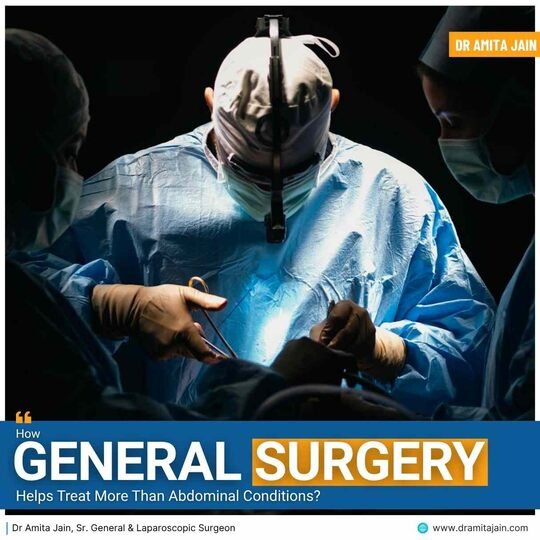
How Is the Appropriate Surgical Approach Selected?
Not every surgical condition requires an operation, and the same surgical technique is not appropriate for every patient. A general surgeon considers the diagnosis, symptoms, medical history, investigation results, overall health, and complexity of the condition before recommending treatment.
The objective is to address the underlying problem safely while supporting recovery and long-term health.
General Surgery Covers a Wide Range of Conditions
General surgery extends well beyond abdominal operations. Its scope includes hernias, gallbladder and appendix disorders, thyroid and breast conditions, skin and soft-tissue problems, colorectal conditions, and many other surgical disorders.
Early evaluation can help identify the underlying condition and determine whether surgical treatment is appropriate.
FAQs
1. What conditions can a general surgeon treat?
General surgeons treat a wide range of conditions, including hernias, gallstones, appendicitis, thyroid and breast conditions, colorectal problems, skin and soft-tissue conditions, and other surgical disorders.
2. Does general surgery include abdominal conditions?
Yes. Abdominal surgery is an important part of general surgery and includes procedures for conditions affecting the gallbladder, appendix, intestines, abdominal wall, hernias, and other abdominal organs.
3. Can abdominal conditions be treated with minimally invasive surgery?
Many abdominal conditions can be treated using laparoscopic or other minimally invasive techniques. However, the appropriate approach depends on the condition, its severity, the patient’s health, and the complexity of the surgery.

Dr Amita Jain is one of India’s most distinguished and experienced female surgeons and proctologists, known for her unmatched expertise in general, advanced laparoscopic, and laser proctology surgery. With over 30 years of surgical excellence, Dr Amita Jain has built a reputation for precision, compassionate care, and advanced surgical techniques.
Dr Jain has successfully performed a wide range of complex general surgeries, including both open and minimally invasive procedures, with a strong focus on trauma care, onco-surgical techniques, and reconstructive surgeries. Her medical specialisation includes: gallbladder surgeries, appendix removal surgeries, hernia repair surgeries, Pilonidal Sinus treatments, varicose vein and piles surgeries, fistula surgeries and fissure surgeries.
Dr Jain, currently serves as Senior Consultant and Head of Department (General, Laser, Proctology and Laparoscopic Surgeries) across premier medical networks in South Delhi:
Daffodils by Artemis Hospitals: Spring Meadows, East of Kailash, New Delhi. Book Appointment
Fortis C-DOC Hospital: B-16, Chirag Enclave, New Delhi. Book Appointment
Rosewalk Luxury Multi-Specialty & Maternity Hospital: Panchsheel Park, New Delhi. Book Appointment
Rainbow Children’s Hospital: Malviya Nagar, New Delhi. Book Appointment
Learn More about Dr Amita Jain.
Dr Amita Jain has also authored some of the key medical journals and publications, like ResearchGate, IJSR
Note: This article is written and reviewed by Dr Amita Jain, while referring to her medical journals and publications.