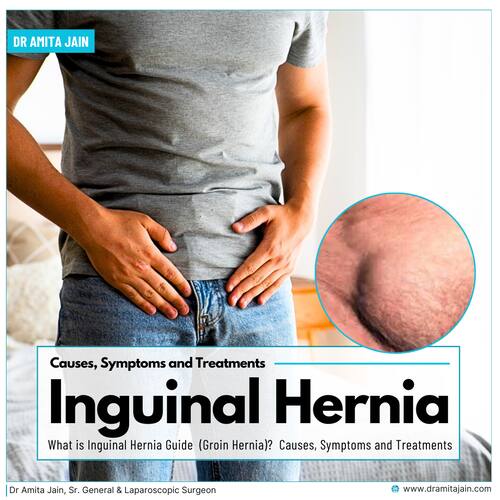
An inguinal hernia, often called a groin hernia, occurs when a portion of the intestine or abdominal fat pushes through a weakened section of the lower abdominal wall. This condition is particularly common in men and can affect one or both sides of the groin. Although many hernias start small and painless, they tend to grow over time and can lead to complications if not treated properly, says Dr Amita Jain a leading general and laparoscopic surgeon in Delhi and Inguinal hernia specialist.
What Is an Inguinal Hernia?
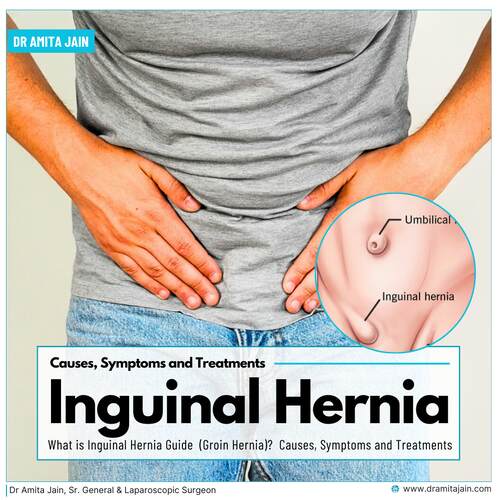
The inguinal region houses a natural passage known as the inguinal canal. When the abdominal muscles in this area weaken, tissue may protrude through the opening and form a hernia.
There are two major forms of inguinal hernia, says Dr Amita Jain who is a top inguinal hernia surgeon in Delhi.
Indirect inguinal hernia, usually present from birth due to incomplete closure of the canal, and direct inguinal hernia, which develops later in life as the muscles lose strength or undergo strain.
Some of the Causes and Risk Factors of inguinal hernia are:
Weak Abdominal Wall
An inguinal hernia often begins with a weak spot in the abdominal wall. This weakness can be inherited, present from birth, or acquired through aging, surgery, or muscle injuries.
Increased Internal Pressure
Activities and conditions that raise pressure inside the abdomen may push tissue through the weakened area. Examples include incorrect heavy lifting, chronic cough (often from smoking or respiratory issues), long-term constipation causing strain, and obesity. Pregnant individuals and those with an enlarged prostate may also experience repeated abdominal pressure, contributing to hernia formation.
Biological and Lifestyle Influences
Men are significantly more prone to inguinal hernias because their inguinal canal anatomy is naturally more vulnerable. A family history of hernias, long hours of strenuous work, and previous abdominal surgeries can also increase the likelihood of developing one.
Some of the symptoms of an inguinal hernia are:
Visible Changes
One of the classic signs is a noticeable bulge in the groin area. This bulge usually becomes more prominent when standing upright, lifting objects, or coughing. In men, swelling may also extend into the scrotum.
Discomfort and Pain
People often report a dragging, heavy, or aching sensation in the groin. Physical activity can worsen this discomfort. Although some hernias are painless initially, they may become painful as they enlarge.
Warning Signs of Complications
If the hernia becomes trapped (incarcerated) or its blood supply is cut off (strangulated), symptoms escalate quickly. Sudden intense pain, nausea, vomiting, or discoloration of the bulge area should be treated as medical emergencies.
How Doctors Diagnose It?
Most inguinal hernias are identified during a physical examination, where the doctor may ask the patient to cough or strain to make the bulge more visible. In cases where the diagnosis is uncertain—especially in women or when the bulge is small—ultrasound or CT scans help confirm the condition.
Treatment Options
Observation for Mild Cases
Very small, painless hernias may not require immediate surgery. Doctors may recommend monitoring the condition, though it’s important to understand that hernias do not heal on their own and often enlarge over time.
Supportive Measures
Certain lifestyle adjustments can ease discomfort. Avoiding heavy lifting, managing body weight, and treating constipation can reduce strain on the abdomen. Hernia belts or trusses may provide temporary support but cannot replace proper treatment.
Surgical Repair
Surgery remains the only definitive solution.
In open hernia repair, a single incision is made in the groin to reposition the herniated tissue, followed by reinforcement of the abdominal wall with mesh.
In laparoscopic repair, surgeons use small incisions and a camera to perform the procedure, offering faster recovery and less postoperative pain. The choice between these methods depends on factors like hernia size, patient health, and surgical expertise.
Recovery and Prevention
Post-Surgery Care
Recovery usually involves avoiding heavy lifting for several weeks, staying active through gentle movements, following wound-care instructions, and maintaining a diet that prevents constipation.
Reducing Future Risk
Although not every hernia can be prevented, maintaining a healthy weight, building core strength gradually, avoiding sudden heavy lifts, and addressing chronic cough or constipation can lower the chances of recurrence.
An inguinal hernia develops when abdominal tissue pushes into the groin through a weakened muscle area. While early symptoms may be mild, a hernia typically worsens without treatment and can lead to serious complications. Surgical repair remains the most effective long-term solution. Early evaluation, proper diagnosis, and timely intervention are key to preventing avoidable risks.

Dr Amita Jain, one of the most experienced General and Laparoscopic Surgeons in Delhi, is widely recognised for her expertise in hernia, piles, gallbladder, fissure, and fistula surgeries. With an outstanding career spanning over 29 years, Dr Amita Jain has earned her place among the top General and Laparoscopic surgeons in Delhi and India, known for her precision, compassion, and consistent surgical excellence. She was the Professor of Surgery at the Army College of Medical Sciences and Base Hospital, Delhi Cantt. In 1994, she was commissioned as a surgeon under the United Nations Mission in Congo.
Dr Amita Jain currently serves as the Senior General and Laparoscopic Surgeon at Fortis C-DOC Hospital, B-16, Chirag Enclave, Opposite Devika Tower, Greater Kailash 1, New Delhi, Delhi 110048. She is also the Senior General and Laparoscopic Surgeon at Rosewalk – Luxury Multi-Speciality Hospital in Delhi and Rainbow Multi-Speciality Hospitals (at Malviya Nagar and Panchsheel Park, New Delhi)
Dr Amita Jain has successfully performed a wide range of complex general surgeries, including both open and minimally invasive procedures, with a strong focus on trauma care, onco-surgical techniques, and reconstructive surgeries. Her medical specialisation includes – Gallbladder surgeries, appendix removal surgeries, hernia repair surgeries, Pilonidal Sinus treatments, varicose vein and piles surgeries, fistula surgeries and fissure surgeries. Learn More about Dr Amita Jain.
Dr Amita Jain has also authored some of the key medical journals and publications, like ResearchGate, IJSR
Note: the articles are written with Dr Amita Jain’s professional insights and referring to her medical publications.