Lipoma Surgery and Treatment in Delhi
Quick Summary:
Lipoma surgery in Delhi by Dr Amita Jain offers a permanent, minimally invasive solution for fatty lumps. Utilizing a "Functional Precision" approach from 29 years of Army surgical experience, most procedures are completed in 20–40 minutes under local anesthesia, with same-day recovery and a primary focus on invisible scarring.
Is it a Lipoma or Cancer?
"This is the most common question I hear. While nearly all lipomas are benign, if a lump feels very firm, grows rapidly (over 1cm in a month), or is fixed to the underlying muscle, we perform an immediate ultrasound to rule out a rare variant called liposarcoma." — Dr Amita Jain, Sr General and Laparoscopic Surgeon
Common features include:
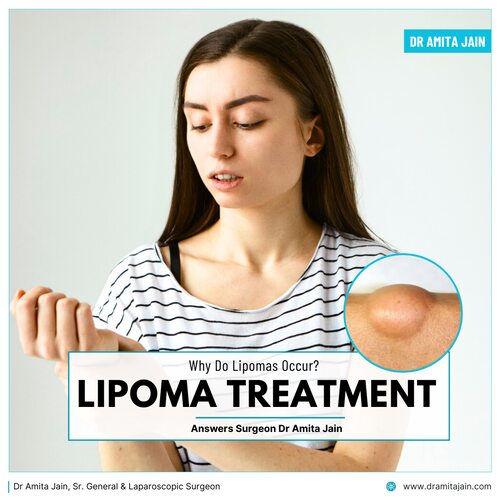
- Soft, movable swelling under the skin
- Gradual increase in size over time
- Usually painless, but may cause discomfort if pressing on nerves
- Visible bulge affecting appearance or clothing comfort
- Occasionally multiple swellings in different areas
While lipomas are harmless in most cases, they can interfere with daily comfort or raise cosmetic concerns.

When Should You Consider Removal?
Medical evaluation is recommended when:
- The lump is increasing in size
- There is discomfort or pain
- It restricts movement depending on location
- There is uncertainty about diagnosis
- Cosmetic appearance is affecting confidence
- Multiple or recurrent lipomas are present
Early assessment helps confirm diagnosis and allows for simpler removal before the lipoma grows larger or deeper.
Treatment Approach Based on Presentation
Management is tailored based on size, depth, and patient preference.
1. Observation (Selected Cases) : For small, asymptomatic lipomas:
- Regular monitoring
- No immediate intervention required
- Advice on when to seek re-evaluation
This is suitable when the swelling is stable and not causing discomfort.
2. Minimally Invasive Removal : For small to medium-sized lipomas:
- Performed under local anesthesia
- Small incision with careful extraction
- Focus on minimal scarring and quick recovery
Patients typically return to routine activity within 24–48 hours.

3. Definitive Surgical Excision: For larger, deeper, or multiple lipomas:
Lipoma Surgery Techniques
Lipoma Surgery Techniques – Comparison
| Technique |
Ideal Situation |
Patient Comfort |
Recovery Time |
| Targeted Excision |
Single, well-defined lipoma |
Mild soreness, immediate relief |
2–3 Days |
| Layered Removal |
Deep or large lipoma |
Controlled discomfort |
3–5 Days |
| Multiple Lipoma Surgery |
Multiple swellings |
Structured recovery |
5–7 Days |
Clinical Standards for Large Lipomas:
"Our surgical protocols for soft tissue excision are aligned with the latest Clinical Practice Guidelines for Lipoma Management, ensuring that even large-diameter (over 5cm) removals minimize the risk of 'dead space' and fluid accumulation (seroma)." — Dr Amita Jain
Surgical Approach & Precision
Dr Amita Jain follows a disciplined surgical protocol shaped by Indian Army experience, focusing on:
- Precise identification and complete removal of the lipoma
- Preservation of surrounding healthy tissue
- Minimizing incision size for better cosmetic outcome
- Effective control of bleeding
- Reducing chances of recurrence
During my service, we prioritized techniques that allowed soldiers to return to duty with zero restricted movement. I apply this same 'Functional Precision' today; for instance, using a side-entry incision for back lipomas so that the scar does not sit directly under a bra strap or backpack pressure point." — Dr Amita Jain
Pre-Surgical Preparation
Optimizing the patient before surgery improves outcomes:
- Confirming diagnosis through clinical evaluation
- Assessing size and depth of the lipoma
- Managing any underlying medical conditions
- Planning incision placement for minimal scarring
A well-planned procedure reduces complications and enhances recovery.

Structured Recovery (First 48 Hours)
"The surgery is straightforward, but disciplined aftercare ensures a smooth recovery and best cosmetic result." — Dr Amita Jain
Post-procedure care includes:
- Wound Care: Keep the area clean and dry; avoid unnecessary pressure
- Movement Guidance: Gentle movement is encouraged, avoiding strain on the operated area
- Clothing Choice: Wear loose clothing to prevent friction over the site
Most patients experience minimal discomfort and can resume normal routine quickly.
Long-Term Outcomes & Prevention
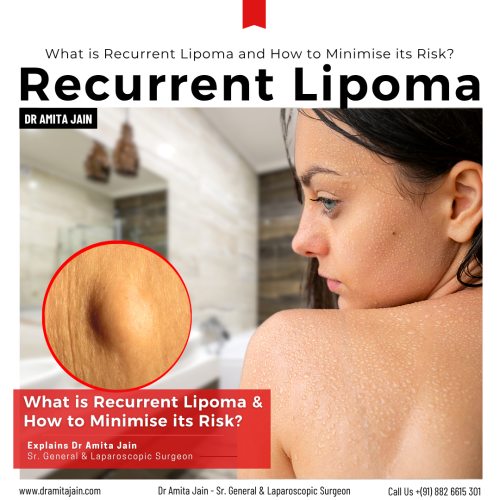
Lipomas do not usually recur at the same site if completely removed, but new ones can develop in some individuals. Helpful measures include:
- Regular self-examination for new swellings
- Maintaining a healthy body weight
- Timely consultation for any new or growing lump

Why Patients Trust Dr Amita Jain?
- Extensive Surgical Experience: Over 29 years in general and soft tissue surgery
- Military Surgical Discipline: Precision techniques developed during service in the Indian Army
- Focus on Cosmetic Outcomes: Minimal scarring and clean surgical results
- High Volume Expertise: Successful management of simple to complex cases
- Patient-Centric Approach: Emphasis on comfort, clarity, and quick recovery

Consultation in Delhi - Available at:
- Fortis C-DOC Hospital, B-16, Chirag Enclave, Greater Kailash, New Delhi, Delhi 110048
- Rosewalk Rainbow Children's Hospitals , OPD, N-88, Block N, Panchsheel Park, New Delhi, 110017
- Madhukar Rainbow Children’s Hospital, OPD, FC-29 5, Geetanjali Marg, Block A, Shivalik Colony, Malviya Nagar, New Delhi, 110017
Lipoma is a common and treatable condition. With the right timing, precise surgical technique, and structured recovery, removal is simple, safe, and provides lasting relief—both physically and cosmetically.
Note : Medically Reviewed by Dr. Amita Jain | Senior Surgeon & HOD | Updated Feb 2026
FAQ for Lipoma Treatments and Surgeries
What Are the Common Symptoms of Lipoma?
As explained by Dr Amita Jain, lipomas are usually slow-growing and often painless, but certain signs may become noticeable over time:
- Soft Lump Under Skin: Easily movable and doughy in feel.
- Gradual Growth: Size may increase slowly over months or years.
- Painless Nature: Typically not painful unless pressing on nerves.
- Visible Swelling: Noticeable bulge under the skin surface.
- Discomfort in Some Cases: Large lipomas may cause pressure or irritation.
Lipomas generally present as soft, movable lumps beneath the skin. While they are usually painless, larger or strategically located lipomas can cause discomfort or cosmetic concerns.
Is Surgery Necessary for Lipoma Removal?
According to Dr Amita Jain, not all lipomas require surgery, but certain situations may make removal advisable:
- Cosmetic Concerns: Visible lumps affecting appearance.
- Increase in Size: Rapid or continuous growth.
- Pain or Discomfort: When pressing on nearby structures.
- Diagnostic Confirmation: To rule out other conditions.
- Functional Issues: Interference with movement or daily activity.
Surgical removal is typically recommended when the lipoma causes discomfort, grows in size, or creates cosmetic concerns. It is a definitive treatment that eliminates the lump completely.
How Long Does Recovery Take After Lipoma Surgery?
Dr Jain explains that recovery from lipoma removal is usually quick and straightforward:
- Same-Day Discharge: Most procedures are outpatient.
- Initial Healing: Mild discomfort subsides within a few days.
- Wound Recovery: Healing completes within 1–2 weeks.
- Minimal Restrictions: Normal activities resume soon.
- Follow-Up Care: Ensures proper healing and scar management.
Recovery after lipoma surgery is generally fast, with most patients returning to routine activities within a short period. Proper wound care helps in smooth healing and reduces complications.
When Should Someone Consult a Doctor for a Lipoma?
As per Dr Amita Jain, medical evaluation is important under certain conditions:
- Rapid Growth: Sudden increase in size.
- Pain Development: New or worsening discomfort.
- Change in Texture: Hardening or irregular feel.
- Multiple Lumps: Appearance of several growths.
- Uncertain Diagnosis: Need for confirmation.
A doctor should be consulted if the lipoma changes in size, becomes painful, or shows unusual features. Early evaluation ensures accurate diagnosis and timely treatment.
Can Lipomas Lead to Complications If Left Untreated?
Dr Jain highlights that while lipomas are benign, neglecting them can sometimes lead to issues:
- Increased Size: Larger lumps may cause discomfort.
- Pressure Effects: Impact on nearby tissues or nerves.
- Cosmetic Concerns: Visible swelling affecting confidence.
- Rare Misdiagnosis Risk: Need to rule out other conditions.
- Movement Restriction: If located near joints or muscles.
Lipomas are generally harmless, but in some cases, they can grow large enough to cause discomfort or functional issues. Timely evaluation helps avoid unnecessary complications.