Gallbladder Surgeon’s Direct Answer Summary
- Repeated gallbladder attacks can lead to inflammation, tissue death, gallbladder perforation, bile duct infections, and pancreatitis.
- Pain that disappears temporarily does not mean gallstones have gone away or the underlying problem has resolved.
- Severe abdominal pain lasting more than four hours, fever, jaundice, or persistent vomiting requires urgent medical assessment.
Article Medically Reviewed by Dr Amita Jain, MBBS, MS (Gen Surgery), Fellowship (AIIMS), Military-Precision Gallbladder Surgeon, Senior General Surgeon: 30 Years of Surgical Excellence by Ex-Indian Army Surgeon
Repeated gallbladder attacks can lead to inflammation, tissue death, gallbladder perforation, severe infections, pancreatitis and emergency surgery. Biliary colic (gallbladder pain) occurs when a gallstone temporarily blocks the flow of bile. Although the pain may disappear, recurring attacks indicate an underlying problem that requires medical evaluation and may need surgical treatment shares Dr Amita Jain, an experienced Sr General, Laparoscopic Surgeon, and Gallbladder Surgery Specialist in Delhi.
Why Do Gallbladder Attacks Keep Happening?
Gallstones form when substances in bile, including cholesterol and bilirubin, become concentrated and crystallize inside the gallbladder. When a stone blocks the cystic duct, bile cannot flow normally, increasing pressure and triggering pain.
Attacks often occur after fatty meals because the gallbladder contracts to release bile for digestion. If a stone obstructs the duct, this contraction can cause intense pain in the upper-right abdomen, sometimes spreading to the back or right shoulder.
Because the pain eventually settles when the stone moves, patients may assume the problem has resolved. However, the stones usually remain, and another obstruction can cause more serious complications.
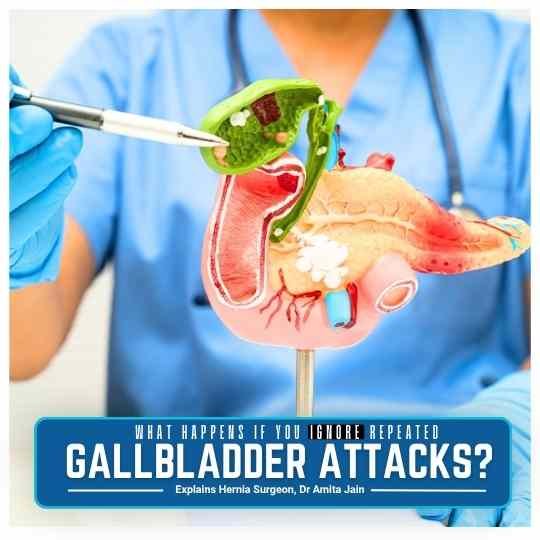
“Repeated gallbladder attacks are more than temporary pain; they are a warning that underlying gallstones may lead to serious complications. Timely diagnosis and appropriate treatment can help prevent emergencies and protect your health.” Opines Dr Amita Jain who is an experienced gallbladder surgeon in South Delhi.
What Are the Risks of Ignoring Repeated Gallbladder Attacks?
1. Acute and Chronic Cholecystitis
Repeated obstruction can cause acute cholecystitis, an inflammation of the gallbladder that may involve infection. Symptoms include persistent abdominal pain, fever, nausea and tenderness.
Repeated episodes may also cause chronic inflammation, leaving the gallbladder wall thickened and scarred. Untreated acute inflammation can progress to more serious tissue damage.
2. Gangrene and Gallbladder Perforation
Severe inflammation can restrict blood supply to the gallbladder, causing tissue death, known as gangrene. In advanced cases, the gallbladder may perforate or rupture, allowing infected bile to enter the abdominal cavity.
This can cause peritonitis and sepsis, potentially life-threatening complications requiring urgent treatment and surgery.
3. Common Bile Duct Obstruction
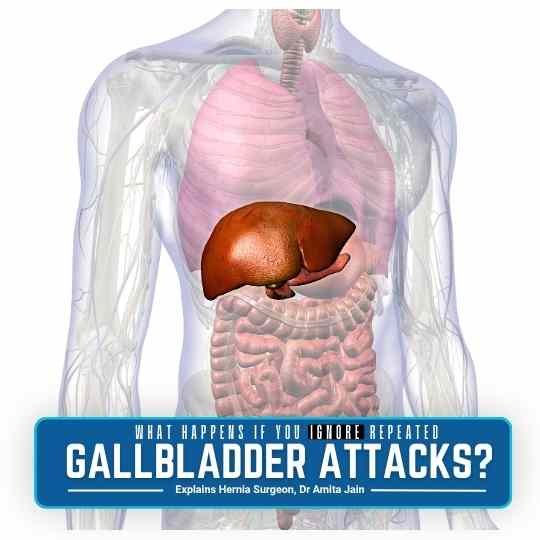
A stone can move into the common bile duct, a condition called choledocholithiasis. Obstruction prevents bile from draining normally and may cause jaundice, dark urine, pale stools and itching.
4. Acute Cholangitis
When bile duct obstruction leads to infection, acute cholangitis can develop. Charcot’s triad consists of fever, right upper abdominal pain and jaundice. This is a medical emergency that may require antibiotics and urgent bile duct drainage.
5. Gallstone Pancreatitis
A gallstone can obstruct the shared drainage area of the bile duct and pancreatic duct, triggering inflammation of the pancreas. Gallstone pancreatitis can cause severe upper abdominal pain, vomiting and complications affecting other organs.
6. Gallstone Ileus and Long-Term Risks
Rarely, a large gallstone enters the intestine through an abnormal connection and causes an intestinal blockage, known as gallstone ileus. This generally requires hospital treatment and often surgery.
Long-standing gallbladder inflammation can occasionally lead to porcelain gallbladder, a condition involving calcification of its wall. Its association with gallbladder cancer is more complex than once believed, and cancer risk varies with the pattern of calcification and other factors.
Planned Surgery vs Emergency Surgery
When recurrent symptomatic gallstones are confirmed, doctors commonly recommend laparoscopic cholecystectomy, which removes the gallbladder through small incisions.
| Factor | Planned laparoscopic surgery | Emergency surgery |
| Approach | Usually keyhole surgery | Keyhole surgery may still be possible; open surgery may be necessary |
| Incisions | Several small incisions | Small incisions or a larger open incision |
| Recovery | Often days to a few weeks | May take longer with severe inflammation or complications |
| Risks | Generally lower in suitable patients | May be higher because of infection, tissue damage or medical instability |
Emergency surgery is not always open surgery. The approach depends on the severity of inflammation, the patient’s condition and the surgeon’s assessment.

Warning Signs That Need Emergency Care
Seek immediate emergency medical assessment if you experience:
- Fever or chills with gallbladder pain.
- Jaundice, including yellowing of the eyes or skin.
- Severe pain lasting more than four hours, particularly if it persists or worsens.
- Repeated or uncontrollable vomiting, especially with severe pain.
- Severe abdominal pain with confusion, fainting or marked weakness.
Do not wait for symptoms to settle if these warning signs appear.
Diagnosis and Treatment
Doctors usually assess suspected gallbladder complications through an abdominal ultrasound and blood tests, including liver function tests (LFTs). Depending on the findings, additional investigations may include MRCP, CT or specialism endoscopic procedures.
For recurrent symptomatic gallstones, laparoscopic cholecystectomy is the definitive treatment because it removes the gallbladder and prevents future gallbladder attacks. If a stone blocks the common bile duct, an additional procedure such as ERCP may be needed.
Can Diet or a Gallbladder Flush Dissolve Gallstones?
No reliable evidence shows that olive oil, lemon juice or so-called natural gallbladder flushes remove gallstones. These methods may cause digestive symptoms and delay necessary treatment. Dietary changes, including reducing high-fat meals if they trigger pain, may help manage symptoms but do not eliminate existing stones.

What Happens After Gallbladder Removal?
Most people can live normally without a gallbladder. The liver continues producing bile, which flows directly into the intestine. Some people experience temporary loose stools or digestive changes, which often improve with time. Smaller meals and gradually adjusting dietary fat intake may help during recovery.
Repeated gallbladder attacks should not be ignored simply because the pain disappears. Recurring obstruction can progress to inflammation, tissue damage, bile duct infection or pancreatitis. Early assessment helps identify complications and determine whether planned surgery is appropriate before an emergency develops.
Medical disclaimer: This article is for educational purposes only and does not replace individual medical advice. Seek emergency care for severe or persistent abdominal pain, fever, jaundice or repeated vomiting.
Frequently Asked Questions
1. How long can you safely wait between gallbladder attacks before seeking medical help?
You should not wait. Even if an attack lasts only an hour and resolves completely, the presence of recurring pain means you are at ongoing risk for sudden, severe complications such as acute infection, bile duct blockage, or pancreatitis. Schedule a medical evaluation as soon as your first or second attack occurs.
2. Can diet changes or “gallbladder flushes” eliminate existing gallstones?
No. There is no clinical evidence that home remedies, olive oil, lemon juice, or “flushes” dissolve or pass gallstones safely. While eating a low-fat diet can reduce gallbladder contractions and temporarily decrease attack frequency, it does not dissolve existing stones or prevent future disease progression.
3. How do I tell the difference between bad heartburn and a gallbladder attack?
Heartburn typically causes a burning sensation behind the breastbone that often worsens when lying down and improves with antacids. A gallbladder attack causes steady, severe aching or cramping in the upper-right abdomen or under the ribs that often radiates to the back or right shoulder, lasts 30 minutes to several hours, and does not respond to antacids.
4. If a gallstone passes on its own, is the problem solved?
No. If a small stone passes into the intestine, that specific episode of pain ends, but the gallbladder remains “lithogenic” (prone to making stones). Furthermore, passing stones increases the risk of them getting trapped along the way in the common bile duct or pancreatic duct, potentially causing jaundice, cholangitis, or acute pancreatitis.
5. Can you live a normal life without a gallbladder?
Yes. Your gallbladder stores bile, but your liver produces it. After surgical removal, bile flows continuously from the liver directly into the small intestine to digest food. Most patients return to a normal diet and their usual daily routine within one to two weeks, with minimal or no long-term digestive changes.
An individual attack may settle when a stone moves, but the underlying gallstones usually remain and symptoms can recur.
Certain medicines may dissolve selected cholesterol stones in specific circumstances, but treatment takes time, is not suitable for everyone and stones may return. Surgery is generally preferred for recurrent symptomatic gallstones.
Pain relief does not mean the gallstones have disappeared. Arrange a medical assessment after repeated attacks, even if you feel better between episodes.
Dietary adjustments may reduce symptom triggers but cannot reliably remove gallstones. Discuss the benefits and risks of surgery with a qualified surgeon.
Most patients recover within a few days to a few weeks after laparoscopic gallbladder removal, depending on their overall health and whether complications occur. Recovery after open surgery generally takes longer.

Dr Amita Jain is one of India’s most distinguished and experienced female surgeons and proctologists, known for her unmatched expertise in general, advanced laparoscopic, and laser proctology surgery. With over 30 years of surgical excellence, Dr Amita Jain has built a reputation for precision, compassionate care, and advanced surgical techniques.
Dr Jain has successfully performed a wide range of complex general surgeries, including both open and minimally invasive procedures, with a strong focus on trauma care, onco-surgical techniques, and reconstructive surgeries. Her medical specialisation includes: gallbladder surgeries, appendix removal surgeries, hernia repair surgeries, Pilonidal Sinus treatments, varicose vein and piles surgeries, fistula surgeries and fissure surgeries.
Dr Jain, currently serves as Senior Consultant and Head of Department (General, Laser, Proctology and Laparoscopic Surgeries) across premier medical networks in South Delhi:
Daffodils by Artemis Hospitals: Spring Meadows, East of Kailash, New Delhi. Book Appointment
Fortis C-DOC Hospital: B-16, Chirag Enclave, New Delhi. Book Appointment
Rosewalk Luxury Multi-Specialty & Maternity Hospital: Panchsheel Park, New Delhi. Book Appointment
Rainbow Children’s Hospital: Malviya Nagar, New Delhi. Book Appointment
Learn More about Dr Amita Jain.
Dr Amita Jain has also authored some of the key medical journals and publications, like ResearchGate, IJSR
Note: This article is written and reviewed by Dr Amita Jain, while referring to her medical journals and publications.