Pregnancy brings several physical changes to a woman’s body, and some may continue long after childbirth. While changes in abdominal shape, stretched muscles and loose skin are common after delivery, a persistent or noticeable bulge around the abdomen or belly button should not always be dismissed as a normal part of postpartum recovery..... Read more
Frequently Asked Questions (FAQs)
Comprehensive, Medically Verified Patient Answers by Senior General & Laparoscopic Surgeon, and Proctologist Dr Amita Jain
Quick Summary for Patients
MS (General Surgery, Gold Medalist), AIIMS Post-Doctoral Fellow (30+ Years Surgical Experience).
Minimally Invasive 4K Keyhole Laparoscopy & Sphincter-Preserving Laser Proctology, Evidence-Based Wound & Reconstructive Protocols, Multimodal Post-Operative Pain Control, Typical 24–36 Hour Discharge for Uncomplicated Cases, Minimal Blood Loss, and Rapid 3–7 Day Return to Desk Work.
General Surgery, 4K Laparoscopy, Proctology (Piles, Fistula & Fissure Surgery), Hernia Surgery, Appendix Surgery, Gallbladder Surgery, Abdominal Surgeries, Pilonidal Sinus, Bed Sore Treatment, Lipoma Removal, Varicose Vein Treatment, Thyroid Surgery, Breast Surgery, Surface Malignancy, Trauma Surgery, Skin Grafting, Flap Cover Surgery, and Amputation.

Rosewalk Luxury Maternity Hospital (Panchsheel Park) | Madhukar Rainbow Children's Hospital (Malviya Nagar) | Fortis C-DOC Hospital (Nehru Place / Chirag Enclave) | Daffodils by Artemis Hospitals (East of Kailash)
Direct Helpline: +91 882 6615 301 | WhatsApp: +91 882 6615 301
Evidence-Based Care, 4K Laparoscopic & Laser Procedures, and Trusted Surgical Guidance Across 21 Specialties by a Leading Senior General & Laparoscopic Surgeon, Proctologist in South Delhi.
About Dr Amita Jain & Comprehensive Surgical Services
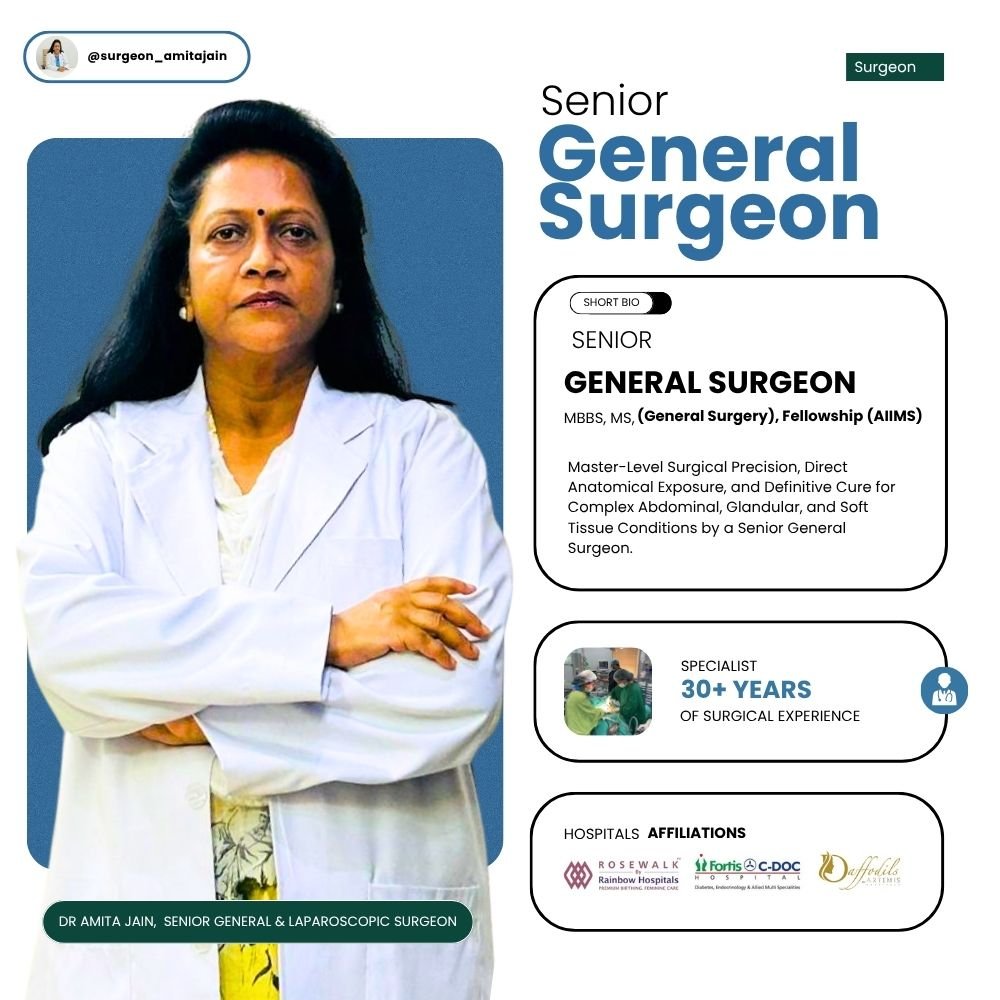
Dr Amita Jain is a Senior Consultant General, Laparoscopic, and Laser Proctology Surgeon in South Delhi with 30+ years of surgical experience. An MBBS, MS (General Surgery — Gold Medalist), AIIMS Post-Doctoral Fellow, and Ex-Indian Army Surgeon, she brings disciplined anatomical precision and calm, transparent clinical advice to both elective minimally invasive procedures and complex emergency or reconstructive surgeries. She also serves as Professor of Surgery at Rama Medical College Hospital and Research Centre (Hapur Campus, Delhi-NCR) and holds Medical Registration No: 10883 | ASI Fellow Member: FL 9945 | AMASI Member: 10314.
Across her four accredited South Delhi hospitals, Dr Amita Jain provides comprehensive evaluation and tailored treatment across all 21 surgical areas:
Comprehensive surgical care spans advanced minimally invasive techniques, laser proctology, endocrine procedures, and complex reconstructive management:
- Minimally Invasive & Abdominal Care: General Surgery, 4K Laparoscopy, Gallbladder Surgery, Hernia Surgery, Appendix Surgery, and Complex Abdominal Surgeries.
- Laser Proctology & Anorectal Care: Proctology, Piles Surgery, Fistula Surgery, Fissure Surgery, and Pilonidal Sinus Treatment.
- Soft-Tissue, Endocrine & Vascular Care: Lipoma Excision, Varicose Vein Treatment, Thyroid Surgery, Breast Surgery, and Surface Malignancy Excision.
- Trauma, Chronic Wound & Reconstructive Care: Trauma Surgery, Bed Sore (Pressure Ulcer) Treatment, Skin Grafting, Flap Cover Surgery, and Limb-Saving / Definitive Amputation Care.
Appointments, Female Surgeon Advantage and Hospital Care FAQs
Where does Dr Amita Jain consult and operate in South Delhi, and how do I book an appointment?
Dr Amita Jain consults and performs surgeries at four premier South Delhi hospitals: Rosewalk Luxury Maternity Hospital (Panchsheel Park), Madhukar Rainbow Children's Hospital (Malviya Nagar), Fortis C-DOC Hospital (Nehru Place / Chirag Enclave), and Daffodils by Artemis Hospitals (East of Kailash). You can book a scheduled OPD slot or urgent evaluation by calling or messaging on WhatsApp at +91 8826615301.
Why do many women patients prefer consulting Dr Amita Jain?
Conditions involving piles, anal fissures, fistulas, breast lumps, thyroid nodules, femoral or post-C-section hernias, and pregnancy-related gallstones require sensitive examinations. Consulting a senior female general and laparoscopic surgeon enables comfortable, unhurried communication without hesitation or delay in care.
Is cashless health insurance (Mediclaim / TPA) accepted for surgeries?
Yes. Cashless health insurance and TPA pre-authorization are facilitated across all four affiliated South Delhi hospitals, subject to individual policy terms and waiting periods.
Treatment-Wise Frequently Asked Questions (All 21 Specialties)
1. General Surgery
What conditions are treated under General Surgery by Dr Amita Jain?
General Surgery covers comprehensive surgical evaluation and management of abdominal organs (gallbladder, appendix, intestines, abdominal wall hernias), anorectal disorders, soft-tissue swellings (lipomas, cysts, abscesses), thyroid and breast lumps, chronic wounds, and surgical emergencies—always starting with conservative care whenever surgery is not clinically required.
What should I bring to my first General Surgery consultation in South Delhi?
Bring any recent ultrasound, CT, MRI, or biopsy reports, blood tests (CBC, LFT, sugar, thyroid profile), and a list of current blood thinners or daily medications so Dr Amita Jain can give you a clear, evidence-based treatment plan at your first visit.
2. Laparoscopy
How does 4K Laparoscopic (Keyhole) Surgery differ from traditional open surgery?
4K Laparoscopy uses a high-definition magnified camera and slender instruments inserted through tiny 5–10 mm micro-incisions rather than cutting across large abdominal muscles. This results in significantly less postoperative pain, minimal blood loss, smaller cosmetic scars, lower wound infection risk, and faster discharge (typically 24–36 hours).
Are all abdominal surgeries suitable for laparoscopy?
Most gallbladder, hernia, appendix, and diagnostic abdominal procedures are completed safely via laparoscopy. In rare cases of severe dense scarring, unstable emergency trauma, or complex anatomy, Dr Amita Jain prioritizes patient safety and advises a planned open or hybrid approach.
3. Proctology
What conditions does a Proctologist treat?
A Proctologist specializes in diagnosing and treating disorders of the anus, rectum, and perianal region—including piles (hemorrhoids), anal fissures, anal fistulas, perianal abscesses, rectal prolapse, and pilonidal sinus—using gentle, sphincter-preserving medical and laser methods.
Is a proctology examination painful?
No. Dr Amita Jain performs a gentle, dignified clinical examination using topical numbing jelly when needed. Many early anorectal problems are diagnosed accurately in minutes and resolved with diet, fiber, and medication without needing surgery.
4. Piles Surgery
Do all grades of piles (hemorrhoids) require surgery?
No. Grade 1 and early Grade 2 internal piles frequently respond to high-fiber nutrition, hydration, warm sitz baths, and targeted medical care. Laser Hemorrhoidoplasty (LHP) or minimally invasive surgery is recommended for persistent bleeding, prolapsed Grade 3–4 piles, or painful thrombosed external piles.
How fast is recovery after laser piles surgery?
Laser piles surgery seals swollen hemorrhoidal vessels gently without large open cuts or stitches. Most patients walk within hours, go home within 24 hours, experience minimal discomfort during bowel movements, and return to desk work in 3–5 days.
5. Fistula Surgery
Can an anal fistula heal permanently with antibiotics or home remedies alone?
No. While antibiotics temporarily calm swelling or pus discharge, an anal fistula is an abnormal tunnel lined with chronic tissue that rarely closes permanently without definitive surgical treatment. Accurate pre-operative MRI Fistulogram mapping is essential before planning surgery.
How does Dr Amita Jain protect bowel control (sphincter safety) during fistula surgery?
Preserving the anal sphincter muscles is the primary priority in every fistula case. Depending on whether the tract is intersphincteric, transsphincteric, or complex/recurrent, Dr Amita Jain selects sphincter-sparing Laser FiLaC, LIFT, VAAFT, or staged seton techniques to cure the tract while protecting continence.
6. Fissure Surgery
When is surgery needed for an anal fissure?
Acute anal fissures (less than 6 weeks old) heal in most patients with stool softeners, high-fiber diet, sitz baths, and muscle-relaxing topical ointments. Surgery—such as Laser Fissurectomy or Lateral Internal Sphincterotomy (LIS)—is advised only for chronic fissures with tight muscle spasm, sentinel skin tags, or repeated painful bleeding that fail conservative therapy.
How soon does pain improve after chronic fissure surgery?
By gently relieving the painful internal sphincter spasm that blocks blood flow to the tear, most patients notice significant relief from sharp post-stool pain within a few days, with discharge inside 24 hours and complete mucosal healing over 2–4 weeks.
7. Hernia Surgery
Can an inguinal, umbilical, femoral, ventral, or incisional hernia heal without surgery or with a hernia belt?
No. A hernia is a structural tear in the abdominal wall fascia that cannot close with exercises, oils, or hernia belts. Timely 4K laparoscopic tension-free mesh repair (TEP, TAPP, eTEP-RS, or IPOM-Plus) or selective open mesh repair is the only permanent cure and prevents sudden bowel strangulation.
Is surgical hernia mesh safe, and when can I resume work and exercise?
Modern lightweight macroporous and barrier-coated composite meshes are medically proven, bio-compatible implants that dramatically reduce recurrence. Most laparoscopic hernia patients go home in 24 hours, resume desk work in 4–7 days, and restart heavy lifting (> 5–10 kg) after 4–6 weeks once cleared at follow-up.
8. Appendix Surgery
Can acute appendicitis be cured permanently with antibiotics without surgery?
Although select early uncomplicated cases without a fecalith may settle temporarily with IV antibiotics, 30–40% recur within 1 to 5 years. Prompt 4K laparoscopic appendectomy remains the definitive one-time cure for acute, suppurative, gangrenous, and perforated appendicitis.
How is a delayed appendiceal abscess treated safely?
When appendicitis presents late (> 5–7 days) with a walled-off pus collection (appendiceal abscess), immediate surgery can risk injuring matted bowel loops. Dr Amita Jain follows international guidelines—stabilizing with IV antibiotics and ultrasound/CT-guided percutaneous drainage first, followed by planned interval evaluation or keyhole surgery.
9. Gallbladder Surgery
Can gallstones be removed without removing the gallbladder?
No. Standard international surgical guidelines recommend removing the diseased gallbladder along with the stones via 4K laparoscopic cholecystectomy, because leaving the gallbladder behind causes stone recurrence in over 50% of patients. Stones migrated into the main bile duct are cleared separately via ERCP.
Does gallbladder removal affect long-term digestion, and what about gallbladder polyps or pregnancy gallstones?
Your liver continues producing bile normally, flowing steadily into the intestine so most patients eat normal balanced meals within 2–3 weeks. Small cholesterol polyps (< 6 mm) are monitored safely while polyps ≥ 10 mm undergo intact laparoscopic removal; refractory pregnancy gallstones are safely managed via second-trimester low-pressure laparoscopy with obstetric monitoring.
10. Abdominal Surgeries
What types of Abdominal Surgeries does Dr Amita Jain perform?
Beyond gallbladder, appendix, and hernia procedures, Dr Amita Jain performs diagnostic laparoscopy for chronic unexplained abdominal pain, adhesiolysis for intestinal obstruction, perforated ulcer repair, Meckel’s diverticulum excision, bowel resections, and emergency acute-abdomen surgeries.
When is diagnostic laparoscopy recommended for abdominal pain?
When persistent lower or upper abdominal pain remains unclear despite ultrasound, blood work, and CT imaging, diagnostic laparoscopy offers direct high-definition internal visualization to pinpoint hidden adhesions, pelvic pathology, or bowel disease and treat it in the same sitting.
11. Pilonidal Sinus
What causes a pilonidal sinus near the tailbone, and why does it keep recurring?
A pilonidal sinus develops when loose hairs and debris penetrate the skin in the upper buttock cleft, forming an infected tunnel that drains pus or blood. Simple draining of an abscess relieves temporary pain, but the underlying hair-filled sinus tract requires definitive removal to prevent repeated flare-ups.
What is the advantage of Laser Pilonidal Sinus Surgery (SiLaC) or flap repair?
Minimally invasive Laser Sinus Closure (SiLaC) cleans and seals simple tracts from within through tiny openings—avoiding large painful open wounds and daily packing. For complex, wide, or recurrent sinuses, off-midline flap procedures (such as Karydakis or Limberg flap) flatten the cleft to lower recurrence sharply.
12. Bed Sore Treatment
Which grades of bed sores (pressure ulcers) require surgical care?
Stage 1 and Stage 2 superficial bed sores generally heal with pressure-relieving mattresses, regular 2-hourly turning, moisture-balanced dressings, and high-protein nutrition. Deep Stage 3 and Stage 4 pressure ulcers with dead tissue (slough/eschar), tunneling, infection, or exposed bone require expert surgical debridement, Vacuum-Assisted Closure (VAC / NPWT), and reconstructive flap cover.
How does Dr Amita Jain help elderly or bedridden patients recover safely from bed sores?
Care combines thorough painless wound debridement, targeted infection control, advanced negative-pressure wound therapy, nutritional optimization (protein, albumin, glycemic control), and structured caregiver training so healed skin does not break down again.
13. Lipoma
Is a lipoma cancerous, and when should it be removed?
A lipoma is a benign (non-cancerous), slow-growing soft fatty lump beneath the skin. Removal is advised if the lipoma enlarges noticeably, presses on a nerve causing pain, restricts clothing or movement, feels firm/deep (to rule out atypical fatty tumors via biopsy), or causes cosmetic concern.
How is lipoma surgery performed, and can it come back?
Lipoma excision is typically a quick daycare procedure performed under local anesthesia (or short sedation for large/deep lipomas) through a neat cosmetic incision. Removing the entire fatty capsule cleanly minimizes the chance of recurrence, with patients going home the same day.
14. Varicose Vein
When do varicose veins need treatment rather than compression stockings alone?
Medical-grade compression stockings and leg elevation help relieve mild aching, but swollen, twisted leg veins accompanied by persistent heaviness, ankle swelling, skin darkening (pigmentation), eczema, bleeding, or non-healing venous ulcers require definitive vein closure after a Venous Color Doppler Ultrasound.
What minimally invasive treatments are available for varicose veins?
Modern Endovenous Laser Ablation (EVLA) or Radiofrequency Ablation (RFA) closes faulty, refluxing leg veins from the inside via a tiny pinhole under ultrasound guidance—avoiding large groin cuts, allowing same-day walking, and delivering rapid relief from leg pain and swelling.
15. Thyroid Surgery
Do all thyroid nodules or goiters require thyroid surgery?
No. Most small, benign thyroid nodules are monitored safely with high-resolution ultrasound and thyroid blood tests. Surgery (hemithyroidectomy or total thyroidectomy) is advised for large goiters causing swallowing or breathing pressure, suspicious or malignant FNAC biopsy findings, or overactive toxic nodules unresponsive to medical therapy.
Will thyroid surgery affect my voice or leave a large neck scar?
Dr Amita Jain places incisions discreetly along a natural horizontal neck crease for minimal scarring and meticulously identifies and preserves the recurrent laryngeal nerves (controlling vocal cords) and parathyroid glands (regulating calcium) during every thyroid operation.
16. Breast Surgery
Are most breast lumps cancerous, and how are they evaluated?
Over 80% of breast lumps—especially in younger women—are benign conditions such as fibroadenomas, simple cysts, or fibrocystic changes. Every lump is evaluated systematically through Triple Assessment (gentle clinical breast exam by a female surgeon, ultrasound/mammography, and targeted FNAC/core needle biopsy when needed).
What breast surgeries does Dr Amita Jain perform?
Dr Amita Jain treats benign breast lumps (cosmetic fibroadenoma excision, breast abscess drainage, duct excision for nipple discharge) as well as coordinated surgical management of breast malignancies (breast-conserving surgery or mastectomy with axillary assessment) with compassionate, privacy-first guidance.
17. Surface Malignancy
What are surface malignancies, and what warning signs should prompt evaluation?
Surface malignancies include skin and superficial soft-tissue cancers such as basal cell carcinoma, squamous cell carcinoma, melanoma, and soft-tissue sarcomas. Any non-healing skin ulcer lasting over 3–4 weeks, rapidly changing mole, bleeding skin nodule, or firm enlarging subcutaneous mass should be assessed promptly.
How are surface malignancies treated surgically?
Following accurate biopsy and staging, surgical management focuses on complete wide local excision with clear microscopic safety margins, followed by primary closure, skin grafting, or local flap reconstruction to restore both function and appearance.
18. Trauma Surgery
What emergencies are handled under Trauma Surgery?
Drawing on her training as an AIIMS Trauma & Critical Care Fellow and Ex-Indian Army Surgeon, Dr Amita Jain manages blunt and penetrating abdominal trauma, internal organ bleeding, acute lacerations, crush soft-tissue injuries, and emergency surgical stabilization.
Why does rapid senior surgical assessment matter in abdominal or soft-tissue trauma?
Internal injuries to the spleen, liver, bowel, or blood vessels may initially show subtle external signs. Prompt bedside ultrasound (FAST), CT triage, resuscitation, and decisive emergency laparoscopy or laparotomy save lives and preserve organ function.
19. Skin Grafting
When is Skin Grafting recommended?
Skin grafting (split-thickness or full-thickness skin graft) is used to cover clean, healthy wounds that are too large to stitch closed—such as deep burn scars, post-trauma raw areas, diabetic foot ulcers, venous leg ulcers, or post-tumor excision defects—accelerating healing and preventing chronic infection.
How long does a skin graft take to heal?
Once the wound bed is prepared cleanly, the thin graft transferred from a concealed donor site (such as the thigh) begins taking hold within 5–7 days under protective dressings, with full skin maturation and donor-site healing progressing smoothly over 2–4 weeks.
20. Flap Cover Surgery
How is Flap Cover Surgery different from simple Skin Grafting?
Unlike a skin graft (which relies entirely on the wound bed for blood supply), a surgical flap transfers living skin, fat, and sometimes muscle along with its own intact blood vessels. Flap cover is essential for deep wounds exposing bone, tendons, joints, hardware, complex bed sores, or recurrent pilonidal sinuses.
What is the recovery process after Flap Cover Surgery?
Patients receive careful inpatient monitoring during the first few days to verify healthy flap circulation, followed by strict offloading (avoiding direct pressure on the flap), infection prevention, and high-protein nutrition for durable, long-term soft-tissue coverage.
21. Amputation
When is Amputation medically necessary, and is limb salvage explored first?
Dr Amita Jain always evaluates limb-preservation options first—including vascular evaluation, debridement, infection control, and wound reconstruction. Amputation (such as toe, forefoot, or below-knee amputation) is advised strictly when irreversible gangrene, severe non-salvageable diabetic foot sepsis, or crushed dead tissue threatens the patient’s life.
How does surgical technique support future mobility and prosthetic fitting?
Preserving maximum viable limb length, creating a well-padded, tension-free residual stump, managing phantom/nerve comfort proactively, and coordinating early physiotherapy enable safe wound healing and smoother prosthetic rehabilitation.
Medically Authored & Reviewed by: Dr Amita Jain, MBBS, MS (General Surgery — Gold Medalist), AIIMS Post-Doctoral Fellow
Designation: Senior Consultant General & Colorectal Surgeon | Head of Department
Credentials: Medical Registration No: 10883 | ASI Fellow Member: FL 9945 | AMASI Member: 10314
Academic Background: Ex-Professor of Surgery | Ex-Indian Army Surgeon | 30+ Years Surgical Practice
Editorial Status: Medically Verified for Clinical Accuracy | Current Edition
Medical Disclaimer: The educational information on this page is intended to help patients understand general surgical conditions and should not replace an in-person surgical evaluation. Persistent abdominal pain, visible bulges, glandular swellings, or non-healing wounds should always be evaluated promptly by a qualified general surgeon.
Consultation Centers Across South Delhi
- Fortis C-Doc Hospital : OPD, B-16, Nehru Place Flyover, opp. Devika Tower, Chirag Enclave, Greater Kailash, New Delhi, Delhi 110048
- Rosewalk Luxury Maternity Hospital : OPD, N-88, Block N, Panchsheel Park North, Panchsheel Park, New Delhi, Delhi 110017.
- Madhukar Rainbow Children's Hospital : OPD, FC-29 5, Geetanjali Marg, near Malviya Nagar, Block A, Shivalik Colony, Malviya Nagar, New Delhi, Delhi 110017
- Daffodils By Artemis Hospitals: F-44, Block F, East of Kailash, New Delhi, Delhi 110065
- Call to Book Now: +91 8826615301
- WhatsApp for Quick Scheduling: Chat on WhatsApp
Blog, Articles and News on General Surgeries, Proctology, Appendix Surgery and More
Check out the latest updates on Appendicitis by
Dr Amita Jain
For many people, a visit to the toilet is no longer just a bathroom break. It has become an opportunity to check messages, scroll through social media, watch short videos or catch up on the news. What begins as a quick visit can easily turn into 10 or 15 minutes of sitting with a smartphone..... Read more
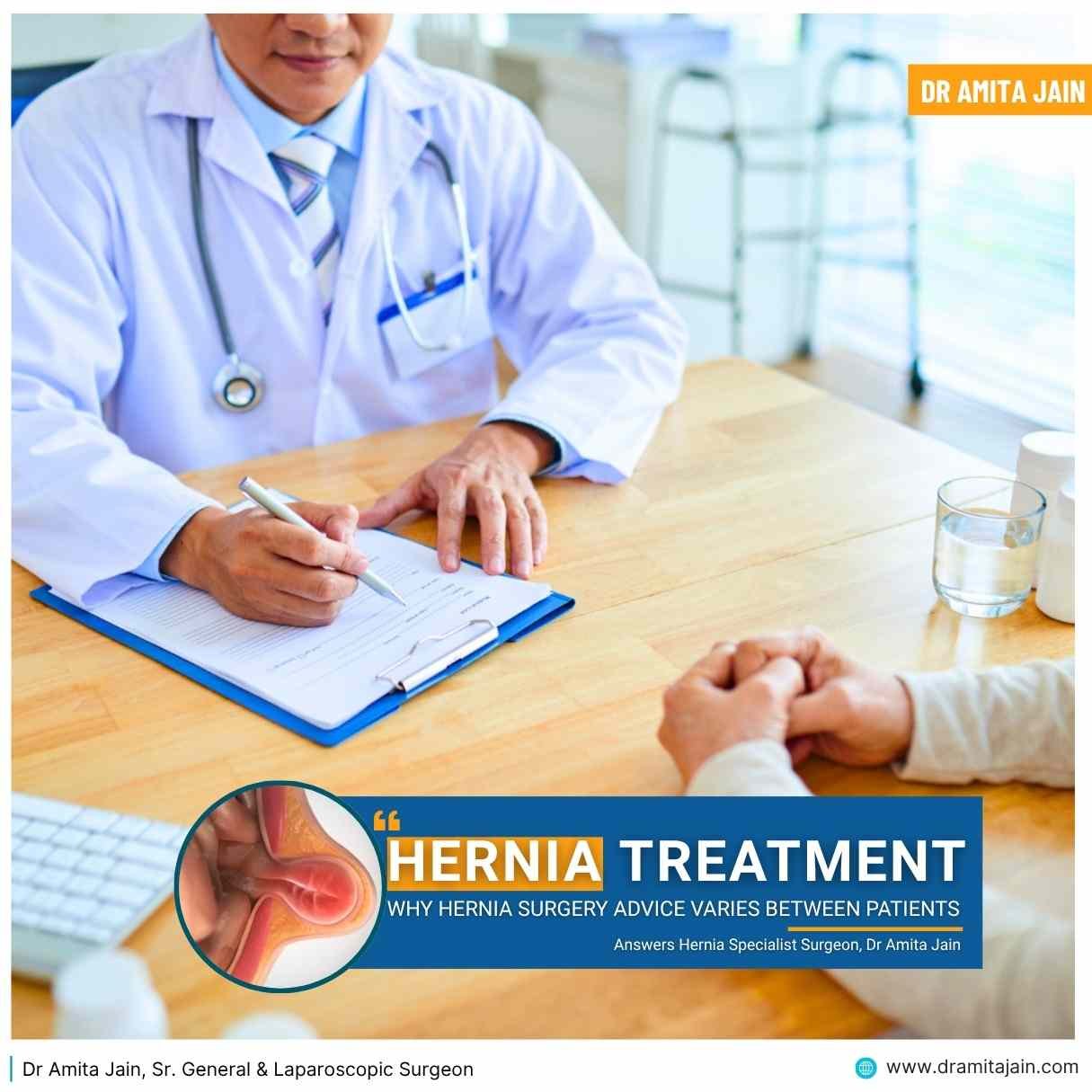
Being diagnosed with a hernia does not mean every patient needs the same treatment or immediate surgery. Some people are advised to undergo surgical repair, while others are told that regular monitoring may be appropriate. This difference can create confusion, particularly when two patients have similar diagnoses..... Read more
Appendicitis has long been considered a straightforward surgical emergency—diagnose it, remove the appendix, and prevent complications. Doctors and researchers are now exploring whether some cases of appendicitis can be safely managed without surgery, sparking an ongoing debate in modern medicine, shares Dr Amita Jain........ Read more