What is laser treatment for piles? Is it better than conventional surgery? Answers Dr Amita Jain, top surgeon for painless… Read more

Grade 1 Piles Treatment in Delhi
Meet Dr Amita Jain – MBBS, MS (Gen Surgery), Fellowship (AIIMS) | Former Indian Army Surgeon | 29+ Years Piles Surgical Experience | Precision-Led Care
Dr Amita Jain is a senior General and Laparoscopic Surgeon in Delhi who specializes in early-stage hemorrhoid care with a strong emphasis on prevention, bowel correction, and long-term control. Grade 1 piles represent the mildest form of the condition, and in most cases, they can be reversed without surgical intervention when managed correctly at the right time.
Her approach is centered on identifying the exact triggers behind the condition and applying a structured correction plan rather than relying on temporary relief measures.
What Defines Grade 1 Piles?
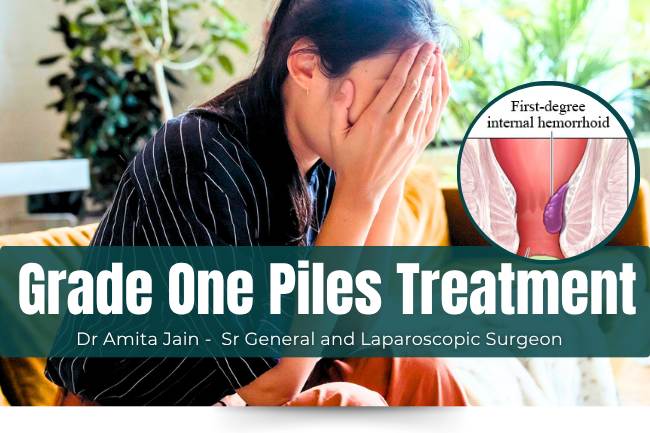
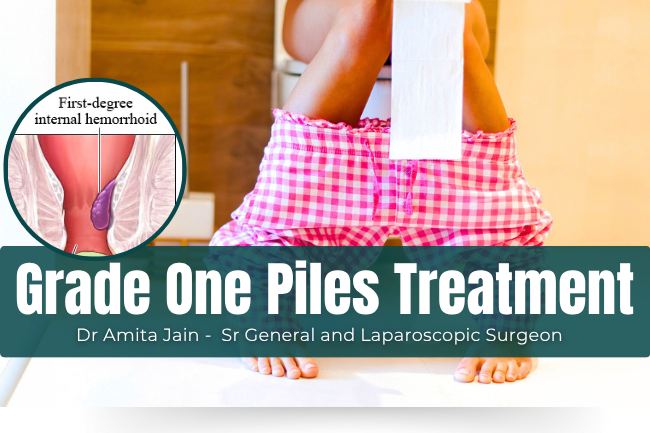
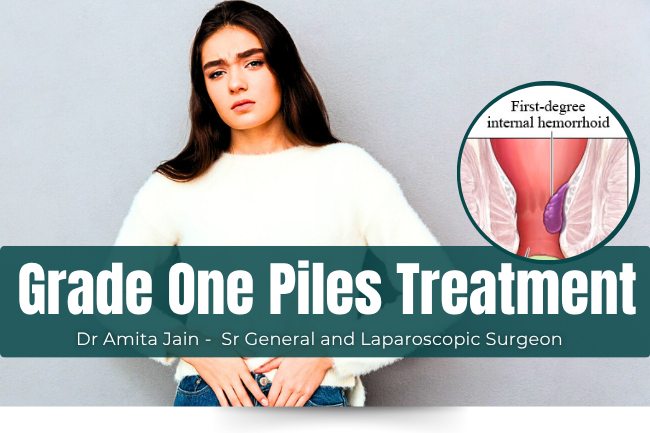
Grade 1 piles are internal vascular swellings located within the anal canal. At this stage, they do not protrude outside and are often noticed only through symptoms rather than physical visibility.
Patients may overlook them initially because discomfort is minimal, but the condition signals early strain on rectal veins.
Dr Jain says that “Grade 1 piles are your body’s early warning system—not a condition to fear, but one to correct. With simple changes in diet, hydration, and bowel habits, most patients can recover without any procedure. The key is consistency, not quick fixes. When treated at the right time, relief is smooth, natural, and long-lasting.”
Early Indicators Patients Often Notice
Instead of severe pain, Grade 1 piles present subtly.
- Light bleeding seen after passing stool
- A sense of incomplete clearance
- Occasional irritation without persistent pain
- Symptoms that worsen with constipation or irregular eating patterns
These signs are often intermittent, which is why many delay seeking medical advice.
How Grade 1 Piles Develop
Rather than a single cause, this condition is usually the result of cumulative lifestyle stress on bowel function. Key contributing patterns include:
- Repeated straining due to hard stool
- Long sitting hours without movement
- Skipping meals or inconsistent diet timing
- Low intake of natural fiber
- Ignoring the urge to pass stool
- Poor hydration habits
Dr Jain focuses on breaking this cycle instead of just addressing surface symptoms.
Treatment Philosophy for Grade 1 Piles
At this stage, treatment is not about procedures—it is about correction.
- Bowel Pattern Reset: The first step is restoring a predictable and strain-free bowel routine. This is achieved through diet structuring, timing discipline, and stool consistency regulation.
- The 3-Minute Rule: Drawing from her surgical experience, Dr Jain emphasizes a 'no-phone' policy in the restroom. "If it doesn't happen in three minutes, leave. Forced straining for extended periods is the leading cause of Grade 1 piles progressing to Grade 2. Respect your body’s timing; don't force it.
- Dietary Rebalancing: Patients are guided toward a fiber-sufficient diet that supports smooth bowel movement without dependence on laxatives.
- Hydration Strategy: Fluid intake is optimized not just in quantity but in timing, ensuring proper digestion and stool formation.
- Dr. Jain’s Precision Tip: Don’t just track total liters; track your timing. I advise patients to drink two glasses of lukewarm water immediately upon waking to trigger the 'gastrocolic reflex.' This natural 'internal alarm' helps the colon contract, making morning clearance effortless without straining.
- Local Symptom Relief: Simple measures are used to reduce irritation and improve comfort during recovery.
- Role of Medical Support: While many cases improve with lifestyle correction, some patients require short-term medical support. This may involve - Medication to regulate bowel movement, Supportive therapy to reduce vascular congestion and Symptom-specific local treatment.
Structured Care Approach by Dr Amita Jain
- Step 1: Clinical Understanding: A detailed review of symptoms, diet, daily routine, and bowel patterns is carried out to identify exact triggers.
- Step 2: Targeted Correction Plan: Instead of generic advice, patients receive a personalized plan addressing their specific habits and risk factors.
- Step 3: Monitoring and Adjustment: Progress is tracked, and the plan is refined to ensure sustained improvement rather than short-term relief.
Precision-Driven Care Approach
Dr Jain’s years as an Indian Army surgeon have shaped a discipline-focused clinical style. Each case is handled with clarity, structured decision-making, and attention to detail.
She explains, “Early-stage piles are the most preventable form of the condition, but only if managed with consistency. Precision in treatment here means correcting habits before the disease demands intervention.”
Long-Term Prevention Focus
Recovery from Grade 1 piles is closely linked to maintaining corrected habits. Patients are guided on:
- Sustainable eating patterns
- Daily bowel discipline
- Activity integration in routine
- Early recognition of warning signs
The goal is not just treatment—but ensuring the condition does not return.
Why Patients Consult Dr Amita Jain?
- Extensive experience in colorectal and minimally invasive care
- Strong focus on non-surgical management in early stages
- Individualized treatment planning
- Clear, structured guidance instead of generic advice
- Emphasis on long-term prevention
- Consistent follow-up and patient education
Grade 1 piles are often a signal—not a serious disease yet, but a warning from the body. With the right intervention at the right time, the condition can be completely controlled without procedures. A disciplined, medically guided approach ensures not only relief from current symptoms but also protection against future progression.
Consultation in Delhi
Currently, the Head of Department at Artemis Lite Hospital, Dr Jain brings a level of expertise shaped by her time at AIIMS and her service as a trauma surgeon in the Indian Army.
Apart from Artemis Lite, she is also a senior general and laparoscopic surgeon at Rosewalk Luxury Maternity Hospital, Panchsheel Park, Delhi, Fortis C-DOC, Chirag Enclave, Delhi and Rainbow Children’s Hospital, Malviya Nagar, South Delhi. She has a Post Doctoral Fellowship in Trauma & Critical Care from AIIMS, New Delhi.
Note : Medically Reviewed by Dr. Amita Jain | Senior Surgeon and HOD | Updated March 2026
Dr Amita Jain is Specializes in following treatments
Hernia Surgery Painless Piles Surgery Appendix Surgery Hernia Repair Surgery Surgery for Gallbladder Stone Fissure Treatment Varicose Vein Anorectal SurgeryFAQ for Grade 1 Piles Treatment
What Are the Early Signs of Grade 1 Piles?
As explained by Dr Amita Jain, grade 1 piles are the earliest stage and symptoms are usually mild but noticeable:
- Occasional Bleeding: Bright red blood during or after bowel movements.
- Mild Discomfort: Slight irritation or heaviness in the rectal area.
- Itching or Irritation: Especially after passing stool.
- No Prolapse: Piles remain inside and do not come out.
- Intermittent Symptoms: Symptoms may come and go depending on diet and bowel habits.
Grade 1 piles often present with occasional bleeding during bowel movements and mild discomfort that may not be constant. Many patients also experience itching or irritation, especially after passing stool, but the piles typically remain internal without prolapse.
Can Grade 1 Piles Be Treated Without Surgery?
According to Dr Amita Jain, most early-stage piles can be managed without surgical intervention:
- Diet Modification: High-fiber foods help prevent constipation.
- Increased Fluid Intake: Keeps stools soft and easy to pass.
- Medications: Ointments and oral medicines reduce inflammation.
- Lifestyle Changes: Avoid prolonged sitting and straining.
- Early Medical Care: Timely consultation prevents progression.
Most patients respond well to diet modification and increased fluid intake, which help regulate bowel movements. Medications may be prescribed to reduce inflammation, and early care plays an important role in preventing the condition from worsening.
How Long Does It Take for Grade 1 Piles to Heal?
Dr Jain explains that recovery depends largely on consistency in care:
- Quick Response: Symptoms often improve within a few days.
- Lifestyle-Dependent Healing: Regular bowel habits speed recovery.
- Ongoing Care Needed: Neglect can delay healing.
- Recurrence Risk: Symptoms may return if habits are not corrected.
- Preventive Focus: Long-term relief depends on diet and routine.
Grade 1 piles often show improvement within a few days when proper care is followed. However, healing depends on maintaining good bowel habits and diet, as neglect or inconsistency can lead to delayed recovery or recurrence.
When Should Someone See a Doctor for Grade 1 Piles?
As per Dr Amita Jain, early consultation helps avoid complications:
- Persistent Bleeding: Bleeding that continues for several days.
- Increasing Discomfort: Pain or irritation that worsens over time.
- No Improvement: Symptoms not resolving with home care.
- Frequent Recurrence: Repeated episodes of bleeding or irritation.
- Doubtful Diagnosis: To rule out other conditions.
Medical advice should be sought if bleeding persists or symptoms do not improve with basic care. Increasing discomfort or repeated episodes may indicate the need for guided treatment and proper evaluation.
Can Grade 1 Piles Turn Into a Serious Condition?
Dr Jain highlights that early-stage piles are manageable but should not be ignored:
- Progression Risk: Can advance to higher grades if untreated.
- Increased Symptoms: Pain, swelling, and prolapse may develop later.
- Lifestyle Link: Poor diet and constipation worsen the condition.
- Preventable Complications: Early care reduces long-term issues.
- Timely Intervention: Simple treatment avoids surgery later.
If left untreated, grade 1 piles can gradually progress to more severe stages with increased symptoms like pain or prolapse. However, with timely lifestyle changes and medical care, complications can usually be prevented effectively.
How Soon Can Normal Routine Continue After Treatment?
Recovery depends on symptom severity and treatment approach:
- Conservative Care: Most women continue daily activities with gradual relief.
- After Minor Procedures: Light routine usually resumes within a short period.
- Activity Precautions: Straining and prolonged sitting should be limited early.
- Ongoing Care: Diet and bowel habits remain important for recovery.
- Medical Advice: Activity level guided by Dr Amita Jain for safe healing.
Blog, Articles and News on Piles Treatments and Hemorrhoid Surgeries
Check out the latest updates on piles treatments by
Dr Amita Jain
What can you do if piles keep coming back? Answers Dr Amita Jain, who is a leading general and laparoscopic surgeon and one of the best specialist doctors and surgeons for piles treatments in Delhi...... Read more

Recovering from piles surgery can feel like a daunting process, but with the right care, smart lifestyle choices, and a positive mindset, healing can be smoother than you think, shares Dr Amita Jain who is one of the most experienced piles surgeons in India..... Read more