Dr Amita Jain is a senior General and Laparoscopic Surgeon in Delhi known for her structured, safety-first management of pregnancy-related piles. Expecting mothers often experience pain, swelling, bleeding, or difficulty during bowel movements due to pressure and hormonal changes. These symptoms can disrupt sleep, mobility, and overall well-being during an already demanding phase of life.
Dr Jain provides carefully planned, evidence-based care pathways designed specifically for pregnant patients. Her focus is to ease symptoms, prevent worsening, and intervene safely when needed—while keeping maternal comfort and fetal safety central to every decision.
Her clinical discipline is deeply influenced by her years as a surgeon in the Indian Armed Forces. Working in demanding, protocol-driven environments strengthened her ability to make calm decisions, perform with technical exactness, and uphold uncompromising safety standards. This military foundation continues to shape her meticulous approach to delicate conditions.
Dr Jain notes, “Pregnancy increases pressure within the abdomen and slows bowel movement, making swollen veins near the bowel outlet more likely. Most cases settle with conservative care, but persistent pain or bleeding should not be ignored. Timely, well-planned treatment prevents complications and improves daily comfort.”
Why Military Surgical Training Matters in Pregnancy Care?
Treating piles during pregnancy requires gentle clinical handling and thoughtful timing of interventions. Decisions must balance symptom relief with safety considerations. Dr Jain follows disciplined care protocols refined through military surgical service, where accuracy and preparedness are essential.
Dr. Jain shares her philosophy: “In the Indian Army, 'precision' wasn't just a goal—it was a survival standard. I bring that same military discipline into the operating room today. Whether it’s a minor laser procedure or a complex case, my approach is built on a ‘zero-error’ mindset. In pregnancy care, this means every movement is calculated to ensure the highest safety for both the mother and the baby, leaving no room for clinical ambiguity.”
- Precision Under Sensitive Conditions: Treating piles during pregnancy requires gentle clinical handling and thoughtful timing of interventions. Decisions must balance symptom relief with safety considerations. Dr Jain follows disciplined care protocols refined through military surgical service, where accuracy and preparedness are essential.
- Experience with High-Responsibility Cases: Some patients develop severe swelling, clot-related pain, repeated bleeding, or symptoms that continue after childbirth. Others may have anemia, constipation, or pregnancy-related medical risks. Dr Jain is experienced in managing such situations through stepwise, risk-aware treatment planning.
- Individualized Care Strategy: No two pregnancies are alike. Treatment planning considers trimester stage, symptom intensity, bowel habits, nutrition, mobility, prior history, and overall health status before recommending any intervention.
- Recovery That Respects Maternal Comfort: Relief is not only about reducing swelling—it is about restoring ease in sitting, walking, and daily routines. Care plans prioritize low-impact treatments that minimize strain and support gradual recovery.
Clinical Expertise and Services
Dr Amita Jain brings decades of minimally invasive surgical experience to modern piles management, emphasizing safe outcomes and patient-centered care. Dr Amita Jain explains,
“Piles during pregnancy are commonly mistaken for routine discomfort, but certain signs help differentiate them from other conditions. Swelling that worsens after prolonged standing, bright red bleeding during bowel movements, and pain that improves with rest typically indicate piles. In contrast, persistent deep pain, fever, pus discharge, or bleeding mixed with stool may signal other intestinal disorders and need immediate evaluation. Recognizing these differences ensures timely and appropriate care.”
Services Offered
- Conservative piles management during pregnancy
- Medication-guided symptom control
- Laser procedures for persistent cases (when appropriate)
- Post-delivery minimally invasive treatment
- Care for painful clot-related swelling
- Management of recurrent piles
- Specialized care for medically high-risk patients
Dr Amita Jain's Hospital Affiliations
She serves as Senior Consultant and Head of Department (General & Laparoscopic Surgery) at leading hospitals in Delhi, including:
- Fortis C-DOC Hospital: B-16, Chirag Enclave, Opposite Devika Tower, New Delhi 110048
- Rosewalk - Luxury Maternity Hospital in Delhi, Panchsheel Park, Delhi
- Rainbow Children Hospitals, Malviya Nagar, Delhi
Advanced Training
She holds advanced laparoscopic training through a Post-Doctoral Fellowship from a premier national institute, reflecting formal expertise in precision-focused minimally invasive procedures.
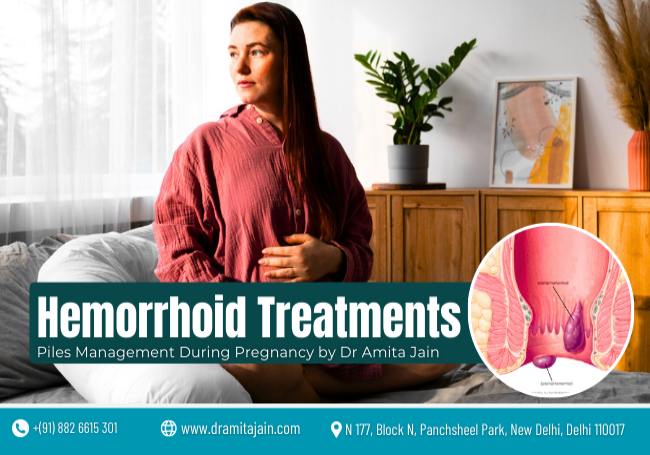
What Causes Piles During Pregnancy?
Piles are enlarged veins that develop due to increased abdominal pressure, hormonal vessel relaxation, reduced activity levels, and constipation. The growing uterus further adds strain, especially in later months. Symptoms may appear gradually and sometimes intensify near delivery.
Typical Symptoms
- Pain while sitting or walking
- Swelling near the bowel outlet
- Bleeding during bowel movements
- Itching or irritation
- Hygiene difficulty due to local discomfort
Many cases improve with supportive care. Persistent symptoms benefit from medical supervision.
When Should You Seek Medical Care?
Professional evaluation is important if you experience:
Safe Treatment Approaches During Pregnancy
Management focuses on minimizing discomfort while avoiding unnecessary procedures.
Non-Surgical Care
- Fiber-rich nutrition planning
- Hydration optimization
- Pregnancy-safe medications
- Bowel regulation strategies
- Warm water sitting therapy
- Local soothing care
Procedures When Necessary
If symptoms are severe or persistent, carefully selected minimally invasive options may be considered—most often after childbirth unless urgent relief is required.
Treatment principles include:
- Minimal tissue disturbance
- Targeted vein treatment
- Preservation of normal muscle control
- Low procedural stress

Care Pathway with Dr Amita Jain
Detailed Evaluation: Assessment may include:
- Clinical examination
- Symptom severity grading
- Pregnancy stage review
- Diet and lifestyle assessment
This helps to:
- Confirm the condition
- Understand contributing factors
- Gauge severity
- Choose the safest management plan
Protocol-Guided Treatment
Her military medical background reinforces structured clinical sequencing, sterility discipline, and careful patient monitoring throughout care. This enables:
- Reliable symptom control
- Maternal safety prioritization
- Reduced complication chances
- Clear decision pathways
Guided Recovery Support
Patients receive structured advice on:
- Comfortable movement and posture
- Bowel routine regulation
- Nutrition planning
- Local care practices
- Gradual activity resumption
Why Expecting Mothers Choose Dr Amita Jain?
Her approach combines clinical discipline with compassionate care.
Key Strengths
- 29+ Years of Surgical Experience
- Former Army Surgeon with Precision-Led Practice
- Former Army Surgeon with Precision-Led Practice
- Advanced Minimally Invasive Techniques
- Personalized Treatment Pathways
- Strong Focus on Safety and Outcomes
- Dedicated Follow-Up Support
Pregnancy piles care is not just symptom management—it restores comfort, mobility, and peace of mind through experienced, safety-focused medical guidance.
Book An Appointment with Dr Amita Jain
FAQ for Piles Treatment and Surgery During Pregnancy
Note : Medically Reviewed by Dr. Amita Jain | Senior General and Laparoscopic Surgeon & HOD | Updated March 2026
Is It Normal to Get Piles During Pregnancy?
As explained by Dr Amita Jain, piles are a common condition during pregnancy due to hormonal changes and increased abdominal pressure:
- Hormonal Effects: Pregnancy hormones relax vein walls, making swelling more likely.
- Increased Pressure: Growing uterus puts pressure on pelvic veins.
- Constipation Risk: Slower digestion leads to straining during bowel movements.
- Common in Later Months: Symptoms often appear or worsen in the third trimester.
- Usually Temporary: Many cases improve after delivery with proper care.
What Symptoms of Pregnancy Piles Should Not Be Ignored?
Dr Amita Jain advises medical consultation when symptoms begin affecting comfort and routine:
- Pain While Sitting: Discomfort that interferes with rest and daily activity.
- Bleeding During Bowel Movements: Bright red spotting on tissue or stool.
- Persistent Itching or Burning: Ongoing irritation around the affected area.
- Swelling or Lump Sensation: Noticeable enlargement causing tenderness.
- Increasing Severity: Symptoms that worsen instead of improving.
How Can Piles Be Safely Treated During Pregnancy?
According to Dr Amita Jain, treatment focuses on symptom relief and safety for mother and baby:
- Diet Correction: Fiber-rich foods help prevent constipation and straining.
- Adequate Hydration: Proper fluid intake keeps stools soft and easier to pass.
- Pregnancy-Safe Medications: Prescribed ointments reduce pain and swelling.
- Warm Sitz Baths: Sitting in warm water improves comfort and circulation.
- Medical Supervision: Regular monitoring ensures safe symptom control.
Can Pregnancy Piles Harm the Baby?
Dr Amita Jain reassures that piles affect the mother’s comfort but do not directly harm the baby:
- Localized Condition: Swollen veins do not impact fetal development.
- Indirect Effects: Severe discomfort may affect rest and daily routine.
- Manageable with Care: Timely treatment keeps symptoms under control.
- Delivery Planning: Doctors guide safe management near childbirth.
- Post-Delivery Relief: Symptoms often reduce after pregnancy.
When Is a Procedure Needed for Piles During Pregnancy?
Dr Amita Jain explains that procedures are considered only when conservative care fails:
- Persistent Severe Pain: Symptoms not relieved by medication and lifestyle care.
- Recurrent Bleeding: Frequent episodes causing weakness or distress.
- Large Swelling: Significant enlargement causing mobility difficulty.
- Clot-Related Pain:Acute painful episodes due to blocked blood flow.
- Specialist Decision: Procedure planned only if clearly necessary.
How Soon Can Normal Routine Continue After Treatment?
Recovery depends on symptom severity and treatment approach:
- Conservative Care: Most women continue daily activities with gradual relief.
- After Minor Procedures: Light routine usually resumes within a short period.
- Activity Precautions: Straining and prolonged sitting should be limited early.
- Ongoing Care: Diet and bowel habits remain important for recovery.
- Medical Advice: Activity level guided by Dr Amita Jain for safe healing.